




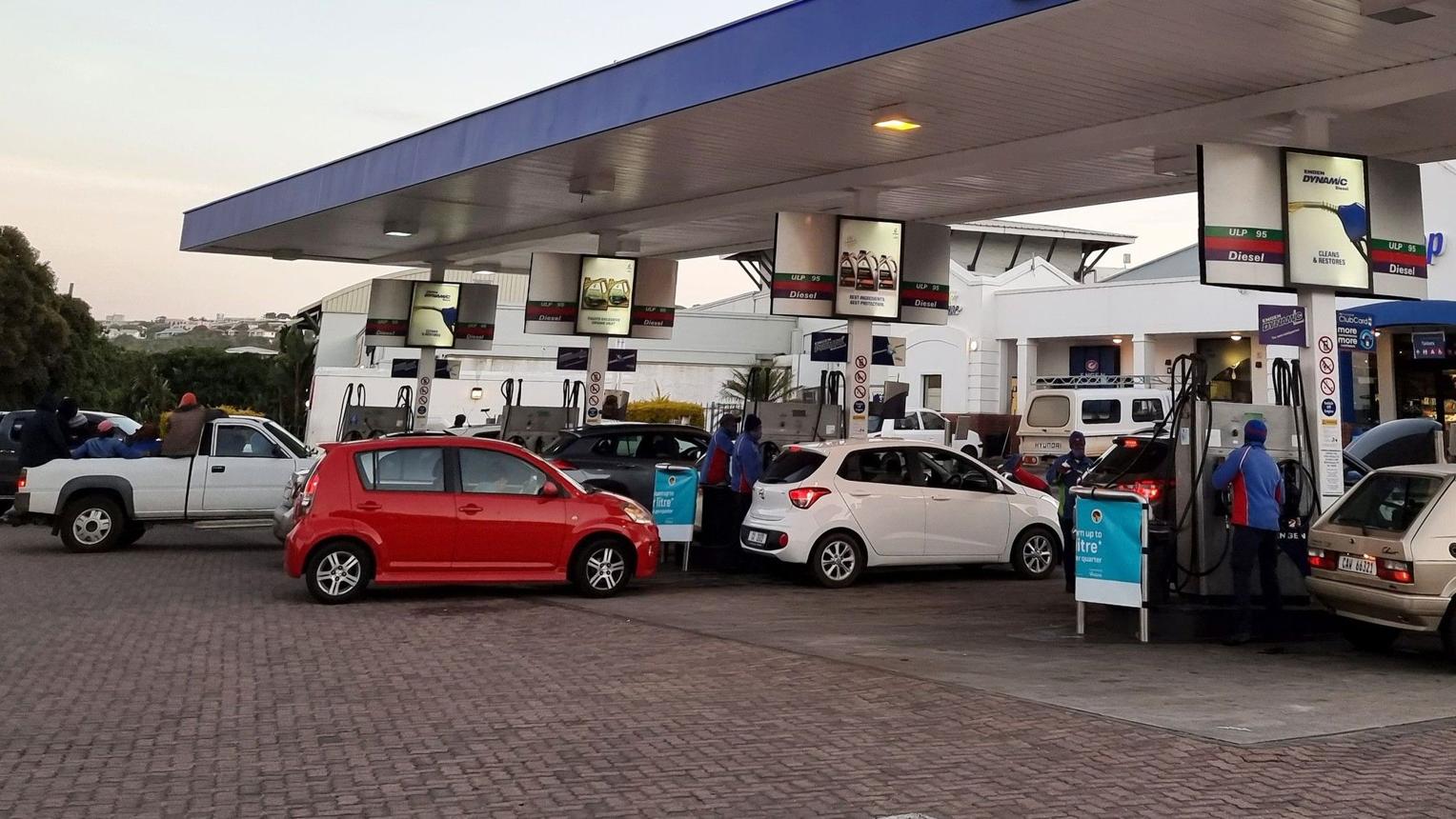
“South African motorists receive limited petrol price relief from 4 November 2026, with both petrol grades decreasing by just one cent per litre, while diesel prices decline by R1.10 and R1.20 per litre, depending on the grade. The reductions are substantially constrained by a 48-cent increase in the Slate Levy, demonstrating how fuel pricing, government taxation and international oil-market movements influence household budgets, transport expenses and the prices of goods and services.”
South Africa’s November Fuel Price Cuts Take Effect as Higher Slate Levy Limits Petrol Relief and Household Savings
JOHANNESBURG, 4 November 2026 – South African motorists are receiving a new round of fuel price adjustments from Wednesday, 4 November, but the latest changes offer considerably less relief to petrol consumers than many households had anticipated. Petrol prices decline by just one cent per litre for both grades, while diesel prices fall by approximately R1.10 and R1.20 per litre, respectively. The adjustments arrive alongside temporary government fuel levy reductions intended to cushion households and businesses against rising energy costs.
The Department of Mineral and Petroleum Resources confirmed the November adjustments following sustained pressure from international oil markets, a weaker rand and higher petroleum import costs. The government’s announcement illustrates how international commodity markets, domestic taxation and exchange-rate movements directly influence everyday consumer expenditure in South Africa.
Petrol relief remains exceptionally limited
The November adjustment provides virtually no meaningful immediate saving for petrol motorists. Both 93-octane and 95-octane petrol decline by only one cent per litre, despite the introduction of temporary fuel levy reductions designed to ease the financial pressure on consumers.
According to the Department of Mineral and Petroleum Resources, the average Brent crude oil price increased from approximately US$101 to US$108 per barrel during the review period. International petroleum product prices also increased, reflecting supply constraints, geopolitical uncertainty and elevated shipping and insurance costs.
The rand weakened against the United States dollar during the same period, depreciating from an average of approximately R16.21 to R16.55 per dollar. Since South Africa imports crude oil and refined petroleum products at internationally determined prices, currency depreciation increases the domestic cost of importing fuel.
The combination of higher international oil prices and a weaker exchange rate placed considerable upward pressure on the basic fuel price. These increases absorbed much of the benefit associated with government intervention.
The November adjustment consequently highlights the vulnerability of South African consumers to international energy market developments, particularly when domestic purchasing power is already constrained by elevated transport expenses and the cost of essential goods.
Government intervention cushions the cost of fuel
Finance Minister Enoch Godongwana announced temporary fuel levy reductions during the Medium-Term Budget Policy Statement on 21 October 2026.
Under the intervention, the General Fuel Levy is reduced by R1.50 per litre for petrol and R3 per litre for diesel from 4 November until 1 December 2026. The relief subsequently decreases to R1 per litre for petrol and R1.50 per litre for diesel until 5 January 2027.
The government’s intervention is intended to provide temporary assistance to households, transport operators, agricultural producers and businesses facing higher operating costs.
However, the relief is time-limited and does not permanently alter South Africa’s exposure to international oil prices.
Reuters reported that the government’s approximately R10-billion fuel levy intervention was made possible by improved fiscal conditions, while maintaining a commitment to longer-term fiscal sustainability.
The temporary measures demonstrate how government taxation can influence consumer prices and purchasing power, even when underlying international commodity costs continue increasing.
Slate Levy increase weakens consumer benefits
A major factor limiting the November petrol reduction is the increase in the Slate Levy.
The Department of Mineral and Petroleum Resources confirmed that the levy increased by approximately 48.18 cents per litre, moving from 87.66 cents to 135.84 cents per litre.
The adjustment reflects the accumulated financial imbalance within the fuel pricing mechanism, which records differences between actual fuel costs and amounts recovered through domestic fuel prices.
The department reported a cumulative negative slate balance of approximately R15.876-billion for petrol and diesel at the end of September 2026.
The mechanism is intended to recover accumulated under-recoveries and maintain financial balance within the petroleum pricing system.
For consumers, however, the increase demonstrates how adjustments within the fuel pricing formula can offset government efforts to reduce prices.
Consequently, motorists receive only marginal petrol relief despite the temporary reduction in fuel taxation.
Diesel users receive comparatively greater relief
Diesel consumers benefit more significantly from the November adjustment.
The price of diesel with 0.05% sulphur decreases by approximately 109.82 cents per litre, while the lower-sulphur 0.005% grade declines by approximately 119.82 cents per litre.
The reductions provide some financial assistance to logistics operators, freight companies, agricultural businesses and commercial transport providers.
Diesel plays an important role in South Africa’s distribution networks because trucks, agricultural machinery and many commercial vehicles depend on it.
Lower diesel prices can therefore reduce operating expenses for businesses transporting food, manufactured goods, construction materials and other essential commodities.
Nevertheless, the benefits will depend on whether businesses pass these savings through to consumers instead of absorbing them into operating margins.
The November adjustment also highlights differences in the effects of fuel taxation across petroleum products, with diesel receiving a larger temporary levy reduction than petrol.
Transport costs continue to pressure household budgets
The latest fuel adjustment arrives against a challenging inflationary background.
Statistics South Africa reported that annual consumer inflation increased to 4.5% in September 2026, compared with 4.4% in August and 4.3% in July.
Transport was among the leading contributors to the inflation rate, accounting for approximately one-third of overall inflation.
The transport category includes fuel, vehicle purchases, maintenance, passenger transport and courier services.
Statistics South Africa reported that fuel prices increased by 27.9% over the twelve months to September. Petrol prices rose by 25%, while diesel prices increased by 46%.
Passenger transport costs also increased considerably, with minibus taxi fares rising by 13.8%, long-distance bus fares by 14.1% and airfares by 18.6%.
These increases illustrate how higher fuel prices influence consumer spending beyond the immediate cost of filling a vehicle.
For households dependent on public transport, rising operating expenses can translate into higher commuting costs, reducing the disposable income available for groceries, electricity, education and other necessities.
Fuel prices influence the cost of everyday goods
Fuel remains a critical input in South Africa’s production and distribution networks.
When diesel becomes more expensive, businesses transporting agricultural produce, manufactured goods and retail merchandise experience increased operating costs.
These additional expenses may subsequently influence wholesale prices, retail prices and consumer purchasing decisions.
Agricultural producers are particularly exposed because fuel is required for machinery, harvesting, irrigation support and transporting produce to markets.
Higher fuel costs can also affect construction companies, delivery services and small businesses operating vehicles.
Although the November diesel reduction offers some relief, businesses may continue facing higher costs associated with previous fuel increases, insurance, maintenance and other operating expenses.
The extent to which consumers benefit from lower fuel prices therefore depends on market competition, business pricing decisions and the persistence of other production costs.
Household purchasing power remains vulnerable
For many South African households, fuel prices directly influence discretionary spending and the ability to maintain essential consumption.
Motorists who travel long distances to work may struggle to reduce their fuel consumption because commuting remains necessary.
Households can respond to higher prices by reducing leisure travel, consolidating shopping trips, using public transport or purchasing smaller quantities of fuel.
These behavioural adjustments demonstrate the microeconomic relationship between price changes and consumer demand.
When prices increase, consumers frequently adjust purchasing patterns according to income constraints, available substitutes and the importance of the product.
However, fuel demand is relatively inelastic in the short term because many households and businesses cannot immediately replace their vehicles or substantially change commuting arrangements.
This means consumers may continue purchasing fuel even when prices rise sharply, forcing them to reduce spending elsewhere.
The November adjustment therefore provides limited immediate relief for petrol-dependent households, particularly those already experiencing financial pressure.
International developments remain central to domestic fuel pricing
South Africa’s dependence on imported petroleum products makes domestic fuel prices sensitive to international economic and geopolitical developments.
The Department of Mineral and Petroleum Resources identified Middle East tensions, attacks affecting Saudi infrastructure and elevated shipping and insurance costs among the factors contributing to higher crude oil prices.
International diesel markets also experienced pressure from tight supply conditions and seasonal demand.
These developments illustrate how disruptions in international energy markets can influence local consumer prices even when domestic demand and production conditions remain relatively unchanged.
The weaker rand compounds the problem because petroleum imports become more expensive in domestic currency.
Consequently, South African consumers remain exposed to developments beyond the control of local households and businesses.
Temporary relief offers an opportunity rather than a permanent solution
The government’s fuel levy reductions provide a temporary opportunity to ease household and business expenditure.
However, the intervention does not eliminate the underlying structural challenges associated with imported fuel dependence, exchange-rate volatility and global commodity market fluctuations.
The gradual reduction in levy relief during December and January also means that consumers should not assume the November savings will continue indefinitely.
The effectiveness of the intervention will depend partly on international oil prices, exchange-rate movements and subsequent adjustments within the domestic fuel pricing mechanism.
Businesses may also need to reconsider operational efficiency, distribution arrangements and transport management to reduce exposure to fuel volatility.
For households, careful budgeting and evaluating alternative transport arrangements may help mitigate continuing fuel expenditure pressures.
Conclusion
South Africa’s November 2026 fuel price adjustments demonstrate the complex interaction between international oil markets, government taxation, exchange rates and consumer purchasing power.
While diesel users receive comparatively substantial reductions, petrol motorists benefit from only marginal relief.
The higher Slate Levy illustrates how accumulated fuel pricing adjustments can offset the benefits of government intervention, limiting the immediate savings experienced by consumers.
More importantly, fuel remains a central determinant of household budgets and business operating expenses, influencing transport affordability, production costs and the prices of everyday goods.
The November adjustment offers temporary assistance, but sustained improvements in affordability will depend on broader economic conditions, greater transport efficiency and reduced vulnerability to international energy market volatility.



