




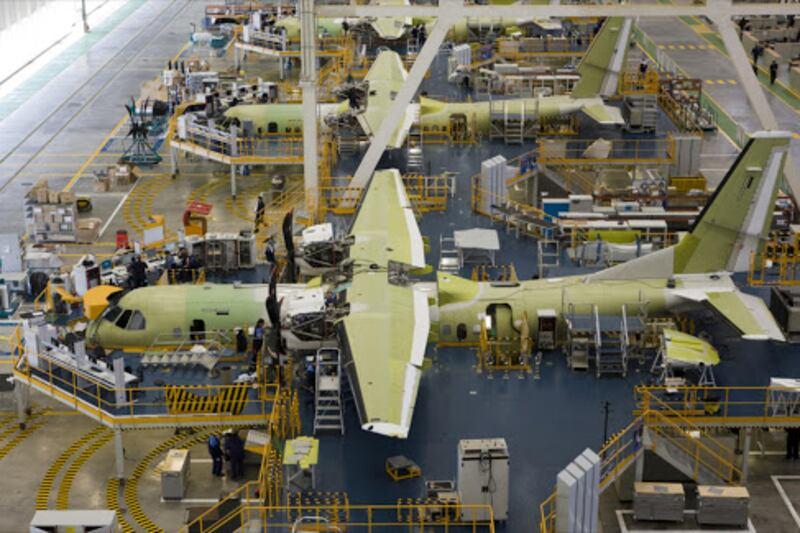
“Denel, once internationally recognised for its defence engineering capabilities and advanced military technology, has experienced a severe financial and operational decline, with revenue falling from approximately R8.06 billion to R1.27 billion. Its deterioration highlights the financial risks facing South Africa’s state-owned enterprises and raises broader questions about governance, operational efficiency, public funding and the sustainability of strategic industrial institutions.”
South Africa’s defence manufacturing industry is confronting a significant financial and industrial challenge following the dramatic deterioration of Denel, one of the country’s historically important state-owned enterprises. Once internationally respected for its engineering capabilities, sophisticated military technology and successful export operations, the company has experienced a prolonged decline that has substantially weakened its financial position, production capacity and commercial reputation.
An investigation published by Daily Investor on 4 November 2026 highlights the scale of Denel’s deterioration, with annual revenue falling from approximately R8.05 billion in 2017 to R1.27 billion in 2025. The reduction represents a decline of approximately 84.22%, illustrating the magnitude of the financial difficulties confronting the defence manufacturer. The report attributes the deterioration to financial mismanagement, corruption, operational interruptions, liquidity constraints and difficulties delivering products to customers.
The company’s decline has implications beyond its balance sheet. Denel historically contributed to South Africa’s industrial capabilities, defence procurement requirements, engineering employment and international technological reputation. Its financial difficulties therefore raise important questions about the management of strategic state-owned enterprises, the protection of specialised industrial expertise and the effectiveness of public-sector financial oversight.
Denel’s Historical Importance to South Africa
Established in 1992 following the restructuring of the former Armscor organisation, Denel was created to operate as a commercial defence manufacturing and research enterprise. Armscor retained its responsibilities as the state’s defence procurement agency, while Denel inherited manufacturing and research facilities intended to develop military products for domestic and international markets.
The commercial structure was designed to allow Denel to operate independently, compete internationally and expand beyond dependence on the South African National Defence Force.
During its strongest years, Denel developed products that attracted international attention. These included the G5 and G6 artillery systems, the Rooivalk attack helicopter and mine-resistant vehicles associated with South Africa’s military engineering capabilities.
Its technologies also included the Casspir, a vehicle widely associated with mine-resistant transport and demining operations.
These achievements helped establish Denel as an important contributor to South Africa’s defence-industrial capabilities. The company developed products that demonstrated sophisticated engineering expertise and supported the country’s international reputation in selected military technology sectors.
Financial performance reflected this earlier success.
According to Daily Investor’s analysis of Denel’s annual reports, revenue increased from approximately R3.89 billion in 2008 to R8.23 billion in 2016. The company also moved from losses during the mid-2000s towards profitability in 2015, 2016 and 2017.
The expansion indicated that Denel had developed meaningful commercial opportunities outside its traditional domestic procurement environment.
However, the financial performance of the subsequent years demonstrated how quickly these advantages could deteriorate.
Revenue Collapse and Financial Instability
The most visible indication of Denel’s financial deterioration is the decline in revenue.
The company’s revenue fell from approximately R8.05 billion in 2017 to R1.27 billion in 2025. This represents a reduction exceeding four-fifths of its earlier business activity.
Such a contraction is particularly serious for a manufacturing enterprise operating in a technologically demanding industry.
Defence manufacturing generally requires substantial investment in engineering, research, equipment, specialised components and skilled personnel. These activities involve long production cycles and considerable financial commitments before products can be delivered and payments received.
When revenue declines sharply, a manufacturer may struggle to maintain the resources necessary to complete existing contracts, develop new products and support its workforce.
Denel’s difficulties were compounded by working capital shortages that reportedly began in 2018.
Working capital is essential for financing day-to-day operations. Manufacturers require sufficient liquidity to purchase materials, pay suppliers, maintain production equipment and meet employment obligations while awaiting payments from customers.
According to Denel’s explanations in its annual reports, shortages of working capital prevented the company from paying suppliers promptly. This contributed to supply-chain interruptions and periodic operational stoppages.
The resulting difficulties weakened production and reduced the company’s ability to fulfil customer commitments.
A business that cannot consistently deliver products risks losing commercial credibility, particularly when customers depend on reliable delivery schedules and technical support.
Supplier Confidence and Customer Relationships
The relationship between financial stability and commercial reputation is especially important in defence manufacturing.
Customers purchasing sophisticated military equipment typically require assurances that manufacturers can complete contracts, provide maintenance services and support products throughout their operational lifetimes.
When a manufacturer experiences repeated production interruptions, customers may reconsider future procurement decisions.
Denel’s financial problems reportedly contributed to a deterioration in supplier and customer confidence.
Daily Investor also reports that allegations of corruption and state capture during the late 2010s damaged the company’s reputation. Commercial banks subsequently withdrew credit facilities, intensifying its working capital difficulties.
These developments illustrate how governance problems can produce consequences extending well beyond individual financial transactions.
A company’s reputation influences its ability to obtain credit, attract investment, retain customers and establish partnerships.
For a state-owned enterprise operating internationally, reputational damage can become particularly difficult to reverse because customers and suppliers may have alternative commercial partners.
The Badger Programme and Project Delivery Challenges
One of the most prominent examples of Denel’s operational difficulties is the Badger infantry fighting vehicle programme.
The project, known as Project Hoefyster, was launched in 2007 to develop an infantry fighting vehicle for the South African National Defence Force.
The initial programme cost was approximately R1 billion.
However, Daily Investor reports that the project’s budget subsequently expanded to approximately R16 billion over 19 years, while no Badger vehicles had been delivered to the SANDF by the publication date.
The programme illustrates the difficulties associated with prolonged defence procurement projects.
Military equipment development frequently involves complicated engineering requirements, specialised components, testing procedures and certification processes.
Nevertheless, extended delays and escalating costs can create serious financial consequences for both the manufacturer and the government.
For Denel, delays in completing major programmes potentially undermine its ability to demonstrate operational reliability and secure confidence in future contracts.
For the SANDF, prolonged procurement difficulties complicate planning for equipment modernisation and operational requirements.
The programme’s financial scale also highlights the importance of effective project management, contract oversight and transparent reporting.
Employment, Skills and Industrial Capacity
Denel’s financial problems have also affected its workforce.
The company reportedly experienced difficulties paying employees on time, while operational instability encouraged skilled engineers and technicians to seek employment elsewhere.
This represents a particularly serious challenge because specialised engineering expertise cannot necessarily be replaced quickly.
Defence manufacturing requires personnel with experience in systems engineering, electronics, materials science, mechanical engineering, software development and specialised production processes.
When experienced workers leave, companies lose institutional knowledge accumulated through years of research and development.
The consequences can include reduced productivity, weaker project execution and difficulties maintaining technological capabilities.
A prolonged loss of specialised personnel may also affect the broader South African industrial economy.
Engineers trained or experienced in defence manufacturing can contribute to other industries, but the departure of these professionals from Denel may reduce the company’s ability to recover commercially.
Rebuilding a specialised workforce requires financial resources, training programmes and a stable operating environment.
Declining Defence Expenditure and Market Pressures
Denel has also identified declining South African defence expenditure as a contributing factor to its revenue problems.
The SANDF has historically been among the company’s largest customers.
Daily Investor reports that South Africa’s defence spending declined from approximately 1.5% of gross domestic product in 2013 to 0.9% in 2025.
Lower defence expenditure can constrain domestic procurement opportunities, particularly when government budgets prioritise competing public services.
However, reduced government spending alone does not explain the full extent of Denel’s deterioration.
The company’s historical commercial model depended partly on exporting products and establishing international customers.
Consequently, financial recovery would require more than an increase in domestic defence procurement.
It would also require operational improvements, reliable production, stronger customer relationships and competitive commercial offerings.
A sustainable recovery strategy would need to address both domestic procurement requirements and international market opportunities.
Financial Governance and Accountability
Denel’s experience reinforces the importance of effective financial governance in state-owned enterprises.
Publicly owned companies operate under a responsibility to manage resources efficiently while protecting strategic national interests.
Financial management failures can create substantial risks when enterprises depend on public funding, government procurement or state-supported financing arrangements.
Effective governance requires transparent financial reporting, appropriate internal controls, reliable procurement processes and accountability for management decisions.
It also requires early identification of financial problems before liquidity shortages become operational crises.
In Denel’s case, the reported progression from working capital difficulties to supplier interruptions, customer losses and workforce instability demonstrates how financial problems can become increasingly difficult to contain.
Once a company loses access to credit, experiences declining revenue and struggles to deliver products, recovery becomes more complicated.
A financial restructuring programme would therefore need to consider operational realities alongside accounting measures.
Implications for South Africa’s Public Finances
Denel’s difficulties also raise questions about the potential financial burden associated with supporting struggling state-owned enterprises.
Government support can preserve strategically important capabilities and protect employment. Nevertheless, financial assistance without operational reform risks prolonging problems rather than resolving them.
Public funding has competing demands, including infrastructure investment, education, healthcare, public safety and economic development.
The allocation of additional resources to a struggling enterprise therefore requires careful consideration of its potential benefits, financial risks and long-term sustainability.
For policymakers, the central challenge is determining whether a state-owned manufacturer can regain commercial viability while maintaining capabilities that are important to national defence.
That assessment should consider realistic revenue projections, contract performance, operating costs, workforce requirements and the company’s ability to compete internationally.
What a Recovery Strategy Could Require
A meaningful recovery strategy would need to address several interconnected problems.
First, the company would need a stable financial position that enables it to pay suppliers and employees consistently.
Second, management would need to establish credible production schedules and demonstrate that existing contracts can be completed efficiently.
Third, governance reforms would need to strengthen accountability and restore confidence among customers, financial institutions and commercial partners.
Fourth, Denel would need to rebuild its commercial relationships and identify realistic export opportunities.
Finally, investment in skilled personnel, research and development and production infrastructure would be necessary to support long-term competitiveness.
These measures would require coordinated planning between the company, government, defence procurement authorities and relevant industrial partners.
Any recovery programme would also need transparent performance indicators so that progress could be evaluated objectively.
Conclusion: A Financial Crisis With Industrial Consequences
Denel’s decline represents more than the deterioration of a state-owned company’s financial performance.
The reduction in revenue from approximately R8.05 billion in 2017 to R1.27 billion in 2025 reflects a profound contraction in commercial activity and industrial capacity.
The company’s difficulties demonstrate how liquidity shortages, governance failures, operational interruptions and declining customer confidence can reinforce one another.
They also illustrate the importance of protecting specialised engineering expertise and maintaining effective financial oversight in strategically important public enterprises.
For South Africa, the challenge is to determine whether Denel can rebuild its financial stability and commercial competitiveness while preserving capabilities relevant to national defence and industrial development.
The company’s future will depend on the effectiveness of its financial restructuring, management accountability, contract execution and ability to restore confidence among customers and suppliers.
Ultimately, Denel’s experience offers a broader lesson for public-sector financial management: strategic importance cannot substitute for sound governance, operational efficiency and sustainable commercial performance.



