




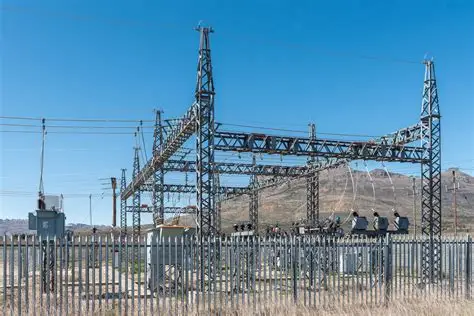
“The National Transmission Company South Africa (NTCSA) has successfully completed the 400/132 kV Aquila substation, a key infrastructure project aimed at modernizing the national grid. This development is expected to enhance transmission capacity, improve reliability, and facilitate the integration of renewable energy sources into South Africa’s power system.”
South Africa’s energy sector has long been plagued by instability, aging infrastructure, and the challenges of transitioning from coal-heavy generation to a more sustainable mix of renewables. Against this backdrop, the completion of the 400/132 kV Aquila substation by NTCSA marks a significant step forward in modernizing the country’s transmission network. This project is not just about wires and transformers—it represents a strategic investment in South Africa’s energy future.
Background: Why Transmission Matters
Electricity transmission is the backbone of any power system. In South Africa, the grid has struggled to keep pace with growing demand and the integration of renewable energy projects. Loadshedding, a term now synonymous with the country’s energy woes, has often been exacerbated by bottlenecks in transmission capacity. The Aquila substation directly addresses these challenges by expanding the grid’s ability to handle higher voltages and distribute power more efficiently.
Technical Details of the Aquila Substation
- Voltage Capacity: 400/132 kV, enabling high-voltage transmission with step-down capability for regional distribution.
- Location: Strategically placed to connect renewable projects and strengthen supply to urban and industrial centers.
- Technology: Incorporates modern switchgear, protection systems, and automation for real-time monitoring and control.
- Integration: Designed to accommodate future renewable energy projects, including wind and solar farms.
This combination of features ensures that the substation is not just a short-term fix but a long-term asset for the grid.
Strategic Importance
The Aquila substation is part of NTCSA’s broader mandate to modernize South Africa’s transmission infrastructure. Its completion is expected to:
- Reduce Loadshedding: By improving grid stability and reducing bottlenecks.
- Support Renewables: Enabling the integration of Independent Power Producers (IPPs) into the national grid.
- Boost Industrial Growth: Providing reliable electricity to manufacturing hubs and mining operations.
- Enhance Regional Supply: Strengthening interconnections between provinces and reducing reliance on single transmission corridors.
Economic and Social Impact
Reliable electricity is a cornerstone of economic development. The Aquila substation will:
- Support Job Creation: Both during construction and through the industries that benefit from stable power.
- Lower Costs: By reducing reliance on expensive emergency generation.
- Improve Investor Confidence: Signaling that South Africa is serious about addressing its energy challenges.
Communities near the substation are expected to benefit from improved supply reliability, reducing the frequency of outages that disrupt daily life.
Renewable Energy Integration
South Africa is experiencing a surge in renewable energy projects, particularly wind and solar. However, many of these projects have faced delays in connecting to the grid due to transmission constraints. The Aquila substation directly addresses this issue by providing the necessary infrastructure to absorb and distribute renewable power. This aligns with the government’s Integrated Resource Plan (IRP), which envisions a significant increase in renewable capacity by 2030.
Challenges and Criticisms
While the completion of the Aquila substation is a positive development, challenges remain:
- Funding: Transmission projects are capital-intensive, and NTCSA will need sustained investment.
- Maintenance: Ensuring long-term reliability requires ongoing maintenance and skilled personnel.
- Policy Alignment: Coordination between NTCSA, Eskom, and IPPs is critical to maximize the benefits of new infrastructure.
- Community Concerns: Some local communities have raised concerns about land use and environmental impacts.
Expert Opinions
Energy analysts have praised the project as a “game-changer” for South Africa’s grid. According to experts, the substation’s ability to integrate renewables could significantly reduce reliance on coal and help the country meet its climate commitments. However, they caution that transmission upgrades must be accompanied by reforms in generation and distribution to achieve lasting stability.
Future Outlook
The Aquila substation is just one piece of a larger puzzle. NTCSA has outlined plans for additional substations and transmission corridors to further strengthen the grid. If these projects are executed successfully, South Africa could see a dramatic reduction in loadshedding and a smoother transition to a renewable-heavy energy mix.
🧭 Conclusion
The completion of the Aquila substation represents a turning point in South Africa’s energy journey. It demonstrates that with strategic investment and modern technology, the country can overcome its transmission challenges and pave the way for a more reliable, sustainable power system. While hurdles remain, this project offers a glimpse of a future where electricity supply is no longer a constraint on economic growth and social development.



