




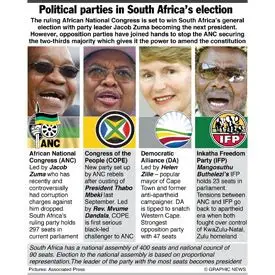
“South Africa’s political parties are intensifying preparations for the November 2026 local government elections, with the ANC facing unprecedented challenges after losing its national majority in 2024. The rise of coalition politics means that local councils will be battlegrounds for power-sharing, shaping service delivery and governance across towns and cities.”
South Africa’s political landscape has entered a new era defined by coalition politics, following the African National Congress (ANC) losing its outright majority in the 2024 national elections. As the country prepares for the November 2026 local government elections, the release of the 2026 Voter’s Guide has become the focal point of political discourse, offering insights into the parties, their leaders, and their strategies.
The 2024 Turning Point
For the first time since 1994, the ANC secured just over 40% of the vote in 2024, forcing it into a Government of National Unity (GNU) with ten other parties. This coalition arrangement stabilized national governance but exposed vulnerabilities at the local level, where councils are negotiated town by town. The Democratic Alliance (DA), uMkhonto weSizwe (MK), and the Economic Freedom Fighters (EFF) emerged as significant players, reshaping the balance of power.
Key Parties and Their Positions
- African National Congress (ANC): Once dominant, now reliant on coalition partners.
- Democratic Alliance (DA): Positioned as the main opposition, focusing on governance and service delivery.
- uMkhonto weSizwe (MK): A rising force, capitalizing on disillusionment with traditional parties.
- Economic Freedom Fighters (EFF): Advocating radical economic transformation, appealing to younger voters.
- Inkatha Freedom Party (IFP): Maintaining regional influence, particularly in KwaZulu-Natal.
Coalition Politics Explained
Local elections differ from national ones: voters cast ward and proportional ballots, which combine to form councils. A party or coalition needs just over 50% of council seats to govern, meaning alliances are critical. This system has made smaller parties like the Patriotic Alliance (PA) and Freedom Front Plus (FF+) influential in coalition negotiations.
Implications for Service Delivery
Municipal governance directly affects daily life—fixing potholes, ensuring water supply, and managing budgets. The fragmentation of political power raises concerns about whether coalitions can deliver effectively. Voters are increasingly scrutinizing parties not just for ideology but for their ability to manage local services.
Voter Engagement and Challenges
The Electoral Commission of South Africa (IEC) has emphasized voter education and combating disinformation, publishing a draft Electoral Code of Conduct on July 6, 2026. This move aims to safeguard electoral integrity amid rising concerns about misinformation campaigns.
Strategic Outlook
The ANC’s weakened majority means it must campaign aggressively to retain influence in metros like Johannesburg, Tshwane, and Cape Town. The DA seeks to consolidate its urban strongholds, while the EFF and MK target disaffected voters. Smaller parties are positioning themselves as kingmakers in coalition talks.
Conclusion
The 2026 local government elections will be a litmus test for South Africa’s coalition politics. With over 300 registered parties, the challenge for voters is to navigate a crowded political field and choose representatives who can deliver tangible improvements in governance. The 2026 Voter’s Guide provides a crucial roadmap, but the real test will come in November when ballots are cast and councils are formed.



