




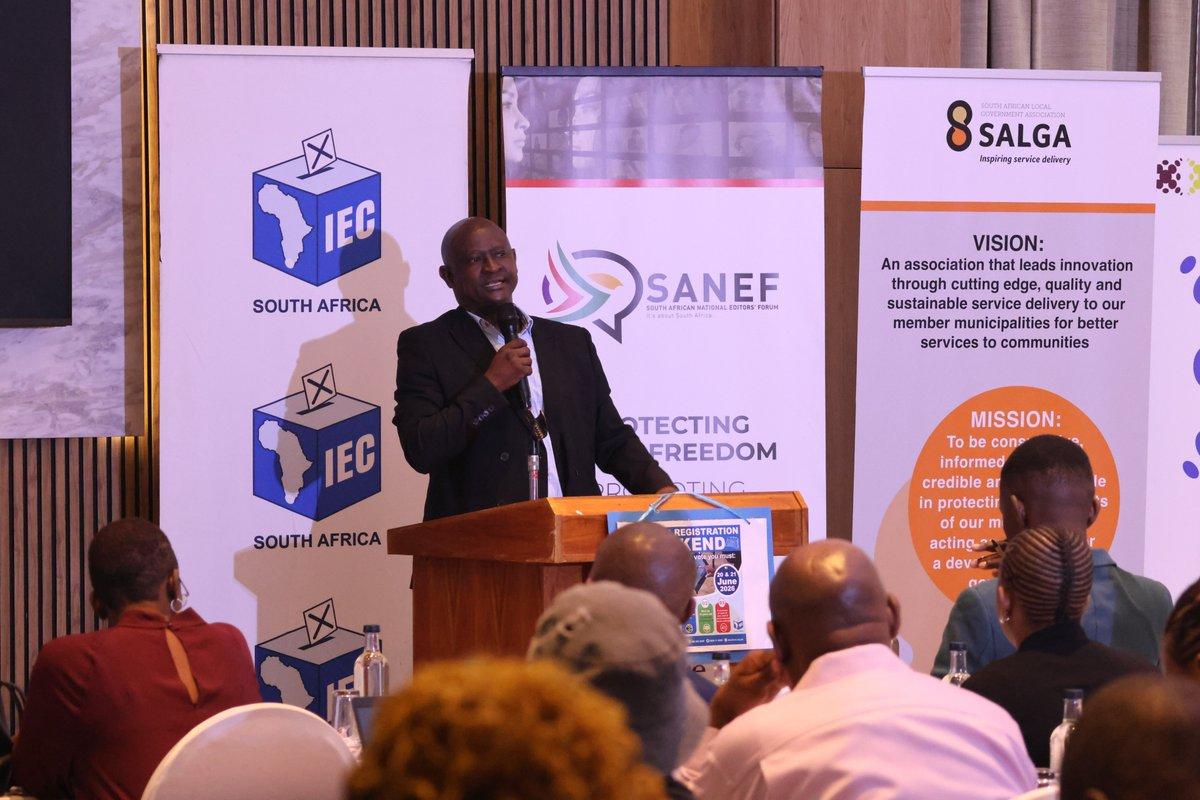
“Electoral stakeholders in South Africa are intensifying efforts to identify and counter misinformation and disinformation ahead of the 4 November 2026 Local Government Elections, with a recent pre-bunking workshop bringing together the IEC, PIIE, Moxii Africa and other partners. Monitoring presented at the workshop recorded 184 digital-harm complaints between 31 July and 31 August, with 60% relating to elections.”
South Africa election misinformation workshop puts digital integrity at centre of November vote
South Africa’s preparations for the 4 November 2026 Local Government Elections have entered a new phase, with election stakeholders focusing increasingly on misinformation and disinformation as a threat to informed participation. A report published on 27 September by the Citizen’s Brakpan Herald details a workshop involving the Electoral Commission of South Africa (IEC), the Partnership on Information and Integrity in Elections (PIIE), Moxii Africa and other stakeholders, where participants examined digital harm and ways to strengthen public resilience before voters go to the polls.
The report says a real-time digital harm monitoring tool recorded 184 complaints in a single month. The figure does not mean that all the complaints were confirmed cases of election disinformation, but it illustrates the volume of problematic online content being flagged as South Africa approaches the municipal elections. The workshop was held on 1 September, while the report was published on 27 September, making the issue timely as campaigning intensifies.
Why misinformation matters in local elections
Local government elections are especially exposed to targeted information because political disputes often centre on individual wards, municipalities, service-delivery problems and local personalities. False information can therefore be produced for a small audience while still affecting voters deciding which candidates or parties to support.
The IEC has warned that generative artificial intelligence could make this problem harder to detect. In February, IEC chairperson Mosotho Moepya said the information environment could shift from broad national misinformation towards hyper-local deception aimed at particular wards. The commission also warned about the possibility of deepfakes and other manipulated material during the 2026 municipal campaign.
IEC introduces a formal disinformation code
The latest workshop comes after the IEC took a formal regulatory step earlier in September. On 4 September, the commission promulgated the Electoral Code of Conduct Countering Disinformation in the Local Government Elections. SAnews reported that the code forms part of the broader Electoral Code of Conduct under section 88(a) of the Local Government: Municipal Electoral Act 27 of 2000.
The code applies to political parties, candidates and people acting on their behalf in election-related communication, whether online or offline and whether paid or unpaid. At the same time, the IEC says the rules protect lawful criticism, opinion, commentary, fair reporting, satire, parody and legitimate democratic debate.
Among the obligations are requirements for parties and candidates to check information before sharing it and to take responsibility for content published on their behalf. If they become aware that false or misleading information has been distributed, they must publicly retract and correct it within 36 hours. The code also addresses deceptive practices such as fake accounts, bot networks, coordinated inauthentic behaviour, doxxing and cyberbullying.
Artificial intelligence and political advertising
A notable element of the rules is the treatment of AI-generated content. Parties and candidates must label synthetic or AI-generated material clearly before distributing it. Political advertising must also be clearly identified so that the public can understand who is responsible for the communication.
The issue matters because AI-generated material can make campaign communications appear authentic even when they have been manipulated. The IEC has identified generative AI and hyper-localised disinformation as emerging risks for the 2026 elections, particularly where false narratives are tailored to specific communities or wards.
An AI label does not automatically determine whether content is truthful or false. It instead gives audiences additional information about how material was produced. Voters still need to assess underlying claims and, where possible, compare them with information from reliable sources.
The role of Real411 and public reporting
The IEC has designated Real411 as the platform for reporting suspected election-related disinformation. According to SAnews, individuals, political parties, candidates and organisations can use the platform to report suspected disinformation involving the electoral process, contestants, the IEC or its staff.
The reporting system reflects a wider challenge: election authorities cannot monitor every social-media post, private group or community conversation themselves. Cooperation between election officials, journalists, civil-society organisations, technology platforms and voters therefore becomes important when misleading information spreads quickly.
The September workshop demonstrated how such monitoring can provide early warning. Real411 data presented by PIIE showed 184 complaints between 31 July and 31 August, averaging 46 complaints a week, with 60% connected to elections. Reported recurring narratives included claims of political collusion, fraudulent IEC recruitment posts, unverified corruption allegations and legitimate scrutiny mixed with speculation.
Election preparations move forward
The misinformation workshop is taking place against the background of extensive preparations for the November election. The IEC announced in September that 136,790 candidates had met the statutory requirements to contest the 2026 local government elections. They will compete across eight metropolitan municipalities, 44 district municipalities and 205 local municipalities.
The candidate total includes 98,219 candidates nominated by parties to represent wards and 38,571 candidates nominated by parties for proportional-representation elections. The IEC also reported 621 independent candidates nominated to contest wards. The number is substantially higher than the 95,427 certified candidates recorded for the 2021 municipal elections.
The commission has also opened applications for special votes. According to SAnews, the application period closes on 12 October 2026. Special votes are intended for qualifying voters who cannot participate normally on election day.
Political parties sign election conduct commitments
On 23 September, parties and independent candidates publicly reaffirmed their commitment to the Electoral Code of Conduct and the supporting disinformation code. SAnews reported that IEC chairperson Mosotho Moepya stressed the importance of protecting an equal campaign environment.
SABC News separately reported that parties and candidates were reminded of their legal duty to verify the factual authenticity of material they publish, share or distribute. The commission also reiterated the 36-hour correction requirement and the obligation to label AI-generated campaign material.
The issue also matters because confidence in election administration can be affected by false claims about procedures, results systems or voting arrangements. The IEC has therefore linked the disinformation rules to voter education and information efforts. For citizens, official election notices should be treated as the reference point for dates, registration, voting arrangements and procedures, while political claims should be assessed separately from electoral information. This distinction can help preserve space for vigorous political debate without allowing fabricated information to masquerade as fact.
What voters can do
For voters, the developing rules underline the importance of checking election information before sharing it. A message claiming that voting dates have changed, that a voting station has moved, that a particular candidate has been disqualified, or that the IEC has made a major procedural change should be checked against official election information before it is forwarded.
This does not mean criticism of political parties, candidates or the IEC should be suppressed. The IEC’s own disinformation code explicitly protects legitimate criticism, commentary, satire and democratic debate. The central issue is whether information is presented deceptively or falsely in a way that can interfere with an informed electoral process.
The road to 4 November
With the local government elections scheduled for 4 November, the focus on information integrity is likely to remain an important part of South Africa’s election preparations. The 27 September report on the misinformation workshop highlights the practical side of the challenge: monitoring harmful digital content, building cooperation among institutions and improving the ability of communities to recognise questionable information.
The IEC’s new code adds formal obligations to that effort, including correction deadlines, reporting requirements and rules on synthetic content. The large number of candidates and the localised nature of municipal politics mean that election information will be produced and circulated through many different channels.
Ultimately, the information environment depends on several actors. Election authorities must communicate clearly and respond to credible concerns; political parties and candidates must comply with campaign rules; media organisations must verify information; technology and civil-society partners can help identify harmful content; and voters can pause before sharing material that has not been checked.
As South Africa moves closer to 4 November, the latest workshop report shows that the election contest is taking place not only at rallies, debates and voting stations, but also across digital spaces where many citizens receive political information. Protecting the integrity of those spaces will remain part of the broader effort to ensure that voters can make their choices using information they can examine and verify.



