




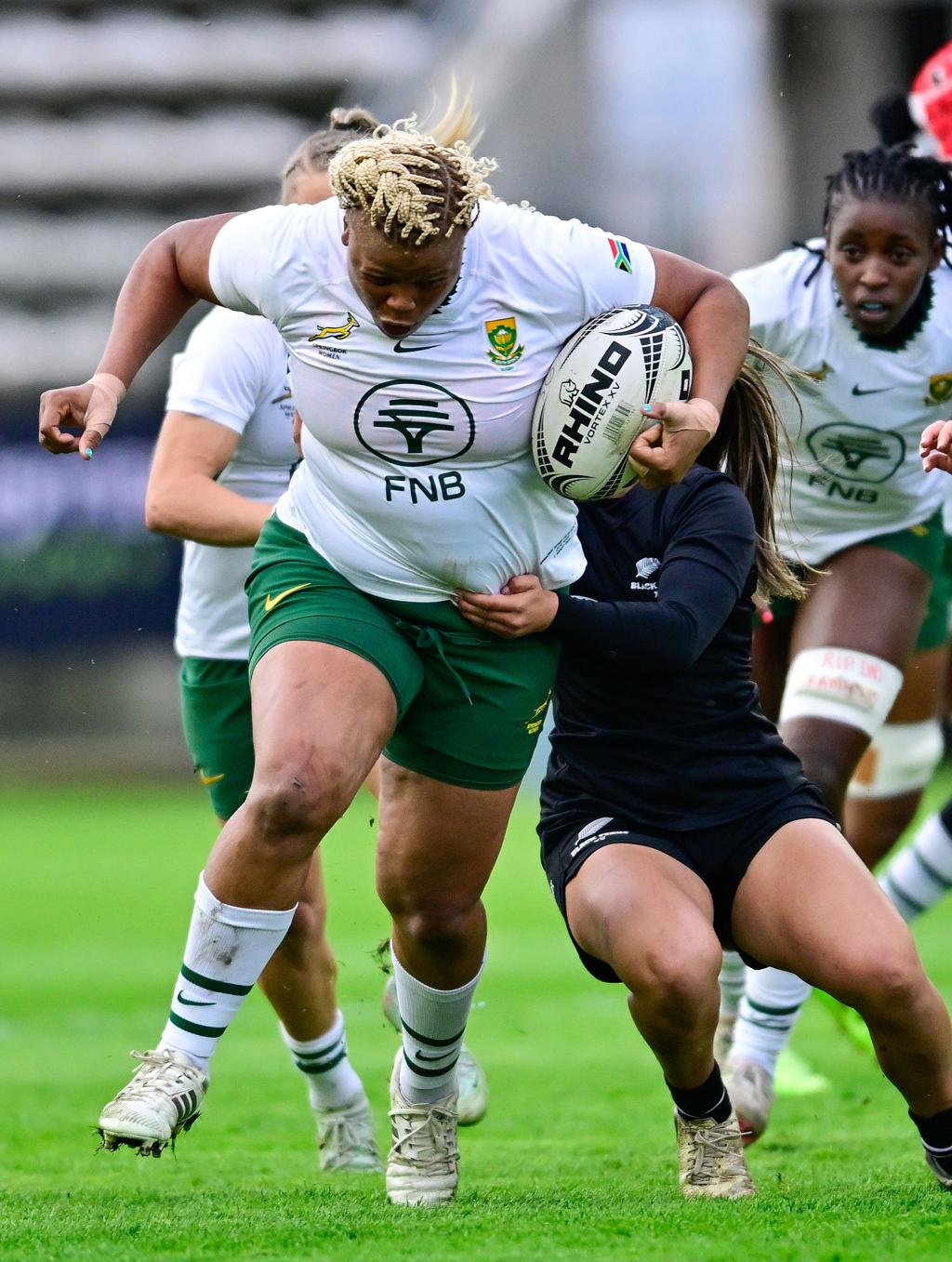
“The Springbok Women suffered a 40–27 defeat against Ireland at Athlone Stadium in Cape Town on Saturday, 24 October 2026, despite scoring five tries in an entertaining first match of their WXV Global Series double-header. Ireland’s stronger second-half performance, clinical finishing and ability to exploit South Africa’s defensive errors proved decisive, leaving the hosts with work to do before the teams meet again on 31 October.”
Springbok Women’s promising start undone by Ireland’s second-half dominance
The Springbok Women were left searching for answers after Ireland secured an impressive 40–27 victory in Cape Town, demonstrating the importance of consistency, defensive organisation and accurate decision-making at international level. Although South Africa produced five tries and showed that they could challenge their visitors physically and offensively, Ireland’s ability to turn attacking pressure into points ultimately separated the teams.
The encounter at Athlone Stadium on Saturday, 24 October, was the first of two WXV Global Series Tests between the sides on South African soil. It was also an important opportunity for the Springbok Women to demonstrate their progress against a highly competitive European opponent. Instead, the defeat provided a demanding assessment of their current strengths and weaknesses ahead of the return match scheduled for Saturday, 31 October.
For the South African team, the result was particularly frustrating because the match offered several opportunities to take control. Their attacking players created scoring chances, their forwards provided periods of effective physical pressure, and the home side briefly established a seven-point advantage during the first half.
However, Ireland remained composed when the momentum shifted. The visitors gradually improved their control of possession, exploited gaps in the South African defence and established a commanding lead after the interval.
Ireland strike first as both teams search for attacking rhythm
Ireland began the match with determination, using direct running and organised forward play to put the Springbok Women under early pressure.
The visitors opened the scoring in the eighth minute when centre Aoife Dalton broke through close-range defensive resistance. Fly-half Dannah O’Brien converted the try, giving Ireland an early 7–0 advantage.
South Africa initially struggled to establish the attacking continuity required to move Ireland around the field. Handling mistakes and missed opportunities disrupted their progress, allowing the visitors to maintain pressure.
Nevertheless, the Springbok Women responded with a moment of individual brilliance. Aseza Hele found space on the left and used her pace and running ability to break through the Irish defensive line, scoring in the 21st minute. Jakkie Cilliers could not convert, leaving South Africa trailing 7–5.
The try demonstrated the danger South Africa could create when they delivered the ball accurately and allowed their attacking players to run into space.
Ireland captain Erin King was subsequently sent to the sin-bin following a dangerous tackle. South Africa immediately took advantage of their numerical superiority, increasing the intensity of their forward attack and moving closer to the Irish try line.
Lock Vainah Ubisi eventually forced her way over from close range, and Cilliers converted to give the hosts a 12–7 lead.
For a period, the Springbok Women appeared capable of building a decisive advantage. Their forwards were finding opportunities to carry the ball, while the backs threatened to exploit space on the outside.
However, Ireland recovered their composure and prevented South Africa from turning that promising spell into sustained dominance.
First-half battle reveals the importance of composure
The match developed into an entertaining contest in which both sides demonstrated their attacking potential but also exposed defensive vulnerabilities.
Ireland continued to rely on powerful carries through the middle, forcing South Africa to commit defenders to the breakdown and close-range channels. Linda Djougang proved particularly effective in this area, helping the visitors regain momentum.
South Africa responded by moving the ball into wider areas and exploiting the opportunities created by their forward runners.
Maria Tshiremba crossed for another Springbok Women try in the 38th minute after the home side shifted the attack towards the left corner. The score restored South Africa’s advantage and highlighted the potential of their attacking structure when possession was retained.
Yet Ireland delivered a crucial response before half-time. Jane Clohessy powered over after sustained forward pressure, and O’Brien’s conversion restored the visitors’ lead.
Ireland entered the interval ahead 21–17, despite having spent part of the first half with 14 players.
That scoreline was significant because it showed how effectively Ireland had managed the contest under pressure. South Africa had enjoyed promising attacking periods, but the visitors repeatedly found ways to turn possession and territory into points.
The closing stages of the first half also illustrated how quickly momentum can change in international rugby. A team may dominate a particular period without securing the scoreboard advantage necessary to protect its position.
For South Africa, the challenge after the break was to regain control, reduce unforced errors and prevent Ireland from establishing an early second-half lead.
Instead, the visitors delivered exactly the kind of start the home side needed to avoid.
Ireland exploit defensive gaps after the interval
The second half began with Ireland immediately increasing their advantage.
Winger Béibhinn Parsons found space out wide and raced over for a try shortly after the restart. The score extended the visitors’ lead and forced South Africa to chase the match.
Ireland continued to apply pressure through patient attacking phases, direct running and improved control of possession. Their approach forced the Springbok Women to defend for extended periods, increasing the likelihood of missed tackles and communication errors.
A particularly costly moment followed a South African clearance attempt from deep inside their own territory. Ireland recovered possession and constructed another attack, with King eventually crossing the try line.
O’Brien converted, extending Ireland’s lead to 33–17.
The sequence illustrated the consequences of surrendering possession while under pressure. Against an opponent capable of maintaining attacking intensity, a poorly executed exit can leave a team defending its own try line almost immediately.
South Africa were not without opportunities. They continued to search for attacking solutions and showed determination in their attempts to close the gap.
However, Ireland’s defensive organisation and ability to control the tempo made it difficult for the hosts to build sustained pressure. South Africa needed greater accuracy in their passing, cleaner possession at the breakdown and more effective execution inside the opposition’s 22-metre area.
The visitors, meanwhile, demonstrated the value of converting territorial pressure into points rather than allowing the opposition to escape difficult situations.
By the middle of the second half, Ireland had established the advantage required to manage the match on their terms.
Springbok Women fight back but cannot complete the comeback
South Africa continued fighting, refusing to allow Ireland’s growing lead to end their attacking ambitions.
The Springbok Women created opportunities near the Irish try line and continued to use their forwards to challenge the defensive structure.
Ireland were temporarily reduced to 14 players again when Eve Higgins received a yellow card in the second half. South Africa capitalised on the numerical advantage when replacement forward Lerato Makua crossed from close range.
Cilliers converted, reducing the deficit to 33–24 and giving the home side renewed hope.
The try demonstrated the value of sustained pressure near the opposition’s line. It also suggested that South Africa could still trouble Ireland when they maintained possession and committed their forwards to direct attacking play.
However, the visitors responded with another decisive score.
Djougang powered over for her second try of the afternoon following further pressure close to the South African try line. O’Brien added the conversion, taking Ireland to 40 points and restoring a substantial advantage.
South Africa continued to compete until the final stages. Alichia Arries collected a cross-field kick and scored in the corner late in the match, producing the final points of the contest.
The conversion attempt was unsuccessful, leaving the final score at 40–27.
Although South Africa scored five tries, Ireland’s six tries and superior conversion success proved decisive. The visitors’ ability to score at critical moments ensured that the Springbok Women never managed to complete their attempted comeback.
Coaching staff identify clear areas for improvement
The South African coaching staff acknowledged that the defeat was influenced by errors and missed opportunities rather than a complete absence of attacking quality.
Springbok Women co-head coach Franzel September said the team had done several things well but had allowed unforced errors to give Ireland opportunities to regain momentum. He also pointed to missed chances in the opposition’s red zone and difficulties executing rolling mauls close to the try line.
Co-head coach Laurian Johannes-Haupt similarly highlighted the difference in clinical finishing between the teams. South Africa managed five tries, but the coaches believed the team could have scored more had it converted its attacking opportunities more effectively.
The defensive performance also requires attention. Ireland repeatedly found ways to advance through the middle and exploit gaps around the breakdown. Better communication, more accurate tackling and improved coordination between forwards and backs could help South Africa reduce those opportunities in the return fixture.
Another important consideration is decision-making under pressure. International matches frequently turn on small details: whether a team retains possession, chooses the correct kicking option, supports a ball carrier or commits enough players to a defensive breakdown.
South Africa displayed sufficient attacking ability to trouble Ireland, but their performance showed that individual moments of brilliance must be supported by consistent execution across the entire match.
The coaching challenge is therefore to preserve the team’s attacking ambition while improving its discipline and ability to manage difficult passages of play.
Significance for South African women’s rugby
Beyond the immediate result, the match offered important lessons for the development of women’s rugby in South Africa.
The Springbok Women have an opportunity to use international fixtures to increase public interest in the sport, strengthen their competitive standards and encourage more girls to participate in rugby.
The Cape Town crowd provided support throughout the match, even as Ireland extended their lead. That atmosphere underlined the importance of giving supporters performances that demonstrate progress, resilience and a clear identity.
Vice-captain Unam Tose acknowledged the disappointment of failing to secure a result that the team believed was within its capabilities. She also recognised the responsibility players feel to inspire young girls who may be considering taking up the sport.
That responsibility extends beyond winning. Competitive performances can help demonstrate the opportunities available in women’s rugby, while visible improvement can encourage investment in coaching, facilities, player development and grassroots participation.
However, sustained progress depends on learning from difficult matches. South Africa must develop the ability to compete for the full 80 minutes against teams that can punish mistakes quickly.
The Ireland encounter showed that the Springbok Women possess attacking weapons and the determination to remain competitive. Their next challenge is to translate those qualities into a more disciplined and consistent performance.
The return Test offers an immediate opportunity to demonstrate that the coaching review has produced tangible improvements.
Ireland earn a valuable victory ahead of the rematch
For Ireland, the victory represented an important achievement on their first tour to South Africa for a women’s Test. Their performance demonstrated the benefits of patience, physicality and composure when confronted by a determined home team.
Despite losing the lead during the first half, Ireland remained organised and continued to trust their attacking approach. Their improved second-half execution allowed them to build a substantial advantage and manage the closing stages.
The result also provides Ireland with valuable confidence ahead of the second meeting. Nevertheless, their own defensive vulnerabilities during the first half will require attention, particularly because South Africa demonstrated that they could exploit space and score from different areas of the field.
Both teams therefore have lessons to take from the encounter. Ireland will want to preserve their attacking efficiency, while South Africa must improve their defensive structure and convert more of their opportunities.
What happens next?
The Springbok Women and Ireland are scheduled to meet again at Athlone Stadium in Cape Town on Saturday, 31 October 2026, at 15:00 South African Standard Time, in the second Test of the WXV Global Series double-header.
South Africa’s priorities will be to reduce handling errors, improve defensive accuracy, secure better possession from set pieces and make their opportunities count inside the opposition’s 22.
Ireland, meanwhile, will aim to build on the composure and finishing that secured their 40–27 victory.
The first Test delivered an entertaining contest, but the result underlined a central lesson of international rugby: attacking talent must be matched by discipline, tactical awareness and consistent execution.
For the Springbok Women, the defeat is a setback rather than the end of the contest. Their response next weekend will reveal how effectively they can learn from the mistakes made in Cape Town and turn a disappointing result into an opportunity for improvement.



