




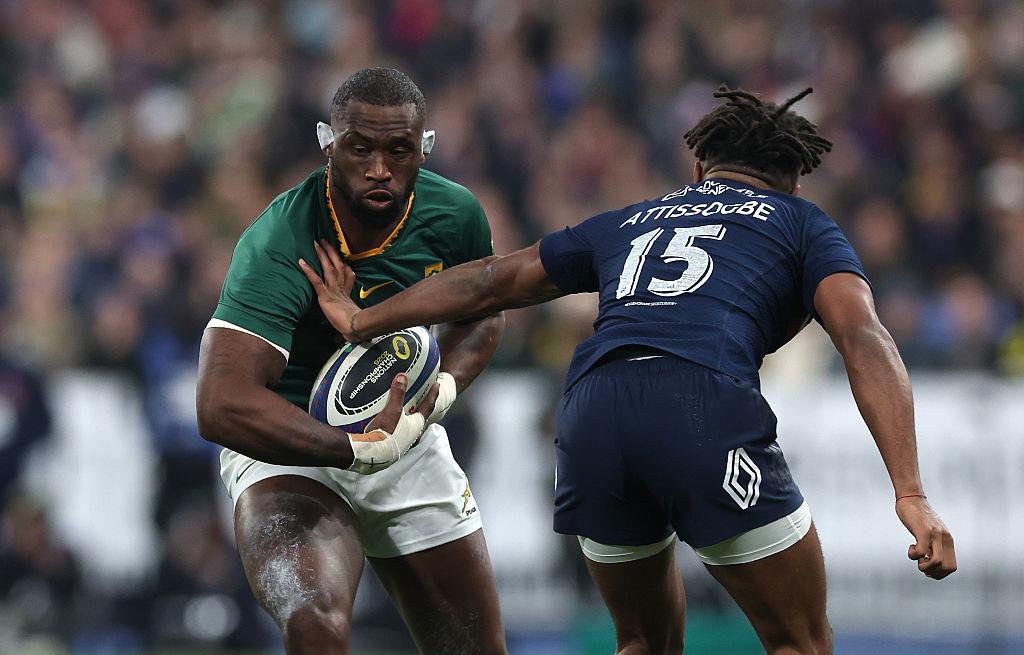
“Springbok captain Siya Kolisi has expressed his enthusiasm for leading South Africa into Sunday’s inaugural Nations Championship final against France, describing the competition as an exciting new challenge for international rugby. Despite the disruption caused by head coach Rassie Erasmus’s suspension and the absence of injured forward Pieter-Steph du Toit, Kolisi has insisted that the Springboks will not use these difficulties as excuses as they pursue another major international title.”
Siya Kolisi leads Springboks into historic Nations Championship final against France as South Africa targets another international triumph
South African rugby is preparing for another major international occasion as the Springboks get ready to face France in the inaugural Nations Championship final at Allianz Stadium, Twickenham, on Sunday, 29 November 2026. Captain Siya Kolisi has welcomed the opportunity to compete for another prestigious international trophy, emphasising the importance of the occasion for South Africa and the wider development of international rugby.
The final represents an important moment in the international rugby calendar. It brings together two of the strongest national teams in the world, with South Africa representing the southern hemisphere and France emerging as the leading northern hemisphere side in the competition.
For Kolisi, who has already experienced the extraordinary achievement of lifting two Rugby World Cup trophies, the opportunity to lead the Springboks into another major final remains special. Despite his considerable experience and success, the South African captain continues to approach important matches with determination and enthusiasm.
The Nations Championship has introduced a different competitive structure to international rugby, creating additional opportunities for leading national teams to compete against opponents from different rugby regions. Consequently, Sunday’s encounter is expected to attract considerable international attention.
According to reporting published on 26 November, Kolisi has praised the competition’s format and highlighted the significance of the upcoming meeting with France.
South Africa faces a challenging French opponent
France enters the final after demonstrating its strength throughout the competition. The French national team has established itself as one of the most dangerous opponents in international rugby, combining physical forwards, creative attacking players and considerable individual talent.
South Africa, meanwhile, has experienced a demanding campaign. Although the Springboks secured their place in the final, consecutive defeats against France and Ireland exposed areas requiring improvement.
Their defeat against Ireland on 21 November was particularly significant. Ireland secured a 20–17 victory at the Aviva Stadium, with Robert Baloucoune scoring twice and Rónan Kelleher adding another try.
South Africa responded through tries from Morné van den Berg and Malcolm Marx, while Sacha Feinberg-Mngomezulu contributed conversions and a penalty.
Despite losing the match, the Springboks secured the bonus point needed to qualify for the championship final. Their position at the top of the southern hemisphere standings therefore remained sufficient to secure a place in Sunday’s decisive encounter.
The result demonstrated that international rugby competitions can involve complicated qualification calculations, particularly when teams earn bonus points despite losing matches.
For South Africa, the immediate priority is to transform its qualification achievement into a championship victory.
Siya Kolisi’s leadership becomes increasingly important
Kolisi’s leadership will be particularly important as South Africa prepares for the final.
The Springbok captain has become one of the most recognisable figures in international rugby. His achievements include captaining South Africa to Rugby World Cup victories in 2019 and 2023.
However, his contribution extends beyond trophies and individual recognition. Kolisi has consistently represented the values of teamwork, resilience, discipline and national unity.
His experience in major international competitions provides the Springboks with an important source of leadership as they prepare for a difficult encounter against France.
The captain will need to help maintain concentration, particularly during difficult periods when France attempts to establish attacking momentum.
International finals are often decided by small details. A missed tackle, an unsuccessful lineout, an inaccurate kick or an unnecessary penalty can change the direction of a match.
Therefore, Kolisi’s responsibility will involve ensuring that South Africa remains organised and composed throughout the contest.
His comments about refusing to use difficult circumstances as excuses also demonstrate the mentality the team wants to maintain.
Rassie Erasmus suspension creates additional pressure
Another important development surrounding the Springboks is the suspension of head coach Rassie Erasmus.
Erasmus has played a significant role in shaping South African rugby and developing the team’s competitive identity. His tactical approach, squad management and ability to identify opportunities during matches have helped establish the Springboks as one of the leading international rugby teams.
However, his suspension has created an unusual challenge ahead of the final.
Kolisi has acknowledged that the situation is difficult for the team but has made it clear that the players must concentrate on their responsibilities.
The captain’s message is important because a major final requires complete concentration. The team cannot allow distractions outside the playing environment to undermine preparation.
Erasmus’s absence also places additional responsibility on the remaining coaching staff and senior players.
They must ensure that tactical instructions are communicated effectively, training remains focused and the squad understands its responsibilities.
South Africa has considerable experience in dealing with demanding international situations. Nevertheless, preparing for a championship final without its head coach presents a distinctive challenge.
The team’s ability to maintain consistency during this period could influence its performance against France.
Pieter-Steph du Toit injury delivers a major setback
South Africa has also suffered an important selection setback following confirmation that experienced forward Pieter-Steph du Toit will miss Sunday’s final.
Du Toit sustained an injury during the defeat against Ireland and has subsequently been ruled out of the championship decider.
His absence represents a considerable concern because he is one of the Springboks’ most influential forwards.
The double Rugby World Cup winner contributes physical strength, defensive organisation, breakdown effectiveness and exceptional work rate.
His ability to operate across different areas of the forward battle makes him particularly valuable in high-pressure international matches.
Against France, South Africa will need its forwards to compete aggressively at the breakdown, maintain defensive discipline and establish a strong physical presence.
Without Du Toit, the coaching staff must consider how best to maintain the balance of the loose-forward combination.
The injury also highlights the physical demands of the international rugby calendar, especially during periods when national teams compete against several leading opponents within a relatively short period.
Reuters reported that Du Toit will return to South Africa alongside injured fullback Damian Willemse. At the time of the report, the replacement decision had not been finalised.
Manu Tshituka faces a potential career-defining opportunity
One of the interesting developments surrounding South Africa’s preparations is the potential international debut of loose forward Manu Tshituka.
Born in the Democratic Republic of Congo, Tshituka has earned an opportunity to be involved with the Springboks ahead of the final.
His personal journey provides an inspiring example of the opportunities that sport can create.
Tshituka and his family arrived in South Africa as refugees in 2002 after fleeing political violence and civil conflict in the Democratic Republic of Congo.
Although he and his brother initially considered football, rugby eventually became an important part of their sporting development.
His older brother, Vincent Tshituka, has already represented the Springboks.
Manu’s potential debut would therefore represent an important personal achievement and another significant chapter in his family’s rugby journey.
The opportunity is particularly meaningful because making a first Test appearance in a major international final is an unusual experience.
A player entering such an environment must demonstrate composure, physical readiness and an ability to execute tactical instructions under considerable pressure.
His inclusion also illustrates the depth of talent available within South African rugby.
If selected for the final, Tshituka could make a valuable contribution to the Springboks’ forward resources.
South Africa must improve its attacking consistency
Although the Springboks remain one of the strongest teams in international rugby, their recent performances have demonstrated the importance of improving attacking consistency.
Their defeat against Ireland exposed difficulties in converting periods of territorial and physical dominance into sufficient points.
South Africa’s scrum remains a major competitive strength. Against Ireland, the Springboks secured several penalties through their set-piece superiority.
However, scrum dominance alone does not guarantee victory.
The team must also develop effective attacking combinations, improve decision-making and take advantage of opportunities inside the opposition’s half.
The backline will be particularly important against France.
South Africa possesses players capable of creating opportunities through powerful running, accurate passing and intelligent positional play.
Nevertheless, the team must ensure that its attacking approach is coordinated with the forwards.
Quick ball from the breakdown, effective distribution from the half-backs and accurate kicking decisions will be essential.
France is capable of exploiting defensive weaknesses through quick attacking movements and individual creativity.
Consequently, the Springboks cannot afford to become predictable.
A balanced approach involving forward pressure, tactical kicking and attacking width could provide South Africa with opportunities to control important stages of the match.
France presents a major test of South African ambitions
France will approach the final with considerable confidence.
The French team has developed a reputation for combining physical rugby with attacking creativity.
Its players can challenge opponents through structured forward play while also creating opportunities through quick movement across the field.
For South Africa, the challenge will be to prevent France from establishing its preferred rhythm.
The Springboks will need to maintain defensive organisation, contest possession effectively and minimise unnecessary penalties.
The match is also an opportunity for both teams to demonstrate their ability to adapt to different tactical situations.
South Africa’s experience in major finals could become an important advantage. However, France’s quality means that the Springboks cannot rely on reputation or previous achievements.
Both teams will need to produce their best performances.
The wider significance of the Nations Championship
Beyond the immediate contest, the Nations Championship represents an important development for international rugby.
The competition creates a structured opportunity for leading teams from different hemispheres to compete within a shared international framework.
For South African rugby, participation provides opportunities to test players, strengthen combinations and assess tactical approaches against different styles of opposition.
The competition also offers supporters an additional reason to follow international rugby beyond traditional tournaments.
A final between South Africa and France provides an attractive sporting conclusion to the inaugural competition.
It also reinforces the international appeal of rugby and the importance of competitive fixtures between established rugby nations.
South African supporters prepare for a historic occasion
Supporters are expected to play an important role as the Springboks prepare for their final.
South African rugby enjoys strong domestic and international support, with fans following the team across different continents.
The call for supporters to turn Twickenham green reflects the importance of creating a positive atmosphere for the national side.
For players, visible support can provide additional motivation during difficult moments.
However, the ultimate responsibility remains with the team on the field.
The Springboks must demonstrate discipline, determination and tactical intelligence from the opening whistle until the final moments.
Conclusion: Springboks have another opportunity to make history
The Nations Championship final against France represents another major opportunity for South African rugby.
Kolisi’s leadership, the team’s experience and its history of success provide reasons for optimism. Nevertheless, injuries, coaching uncertainty and recent defeats demonstrate that the challenge will be considerable.
The absence of Pieter-Steph du Toit requires adjustments, while Erasmus’s suspension places additional responsibility on the coaching staff and senior players.
South Africa must also address the attacking weaknesses exposed during its recent performances.
Ultimately, Sunday’s final will test the Springboks’ ability to respond to adversity and perform under pressure.
For Kolisi, leading the team into another international final is an opportunity to add to an already remarkable career.
For the players, it is an opportunity to secure the inaugural Nations Championship title.
For South African supporters, it is another chance to celebrate the national team’s determination and international achievements.
The Springboks now have one important objective: deliver a complete performance against France and finish their Nations Championship campaign with a historic victory.
The final is scheduled for Sunday, 29 November 2026, at Allianz Stadium, Twickenham.



