




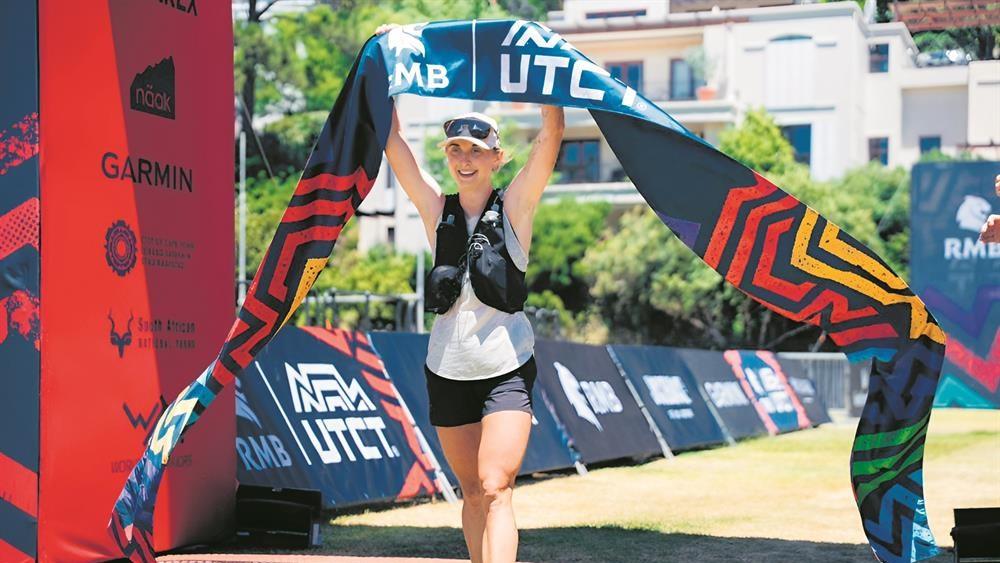
“South African trail-running athlete Rebecca Kohne delivered an outstanding performance in her first-ever 100km race, finishing third in the RMB Ultra-Trail Cape Town in 12:38:30 and securing selection for South Africa’s team for the 2027 World Trail Championships. The 23-year-old George-based runner also received the inaugural RMB Pride of Africa Award as the first African woman to finish the UT100, marking an important milestone in her rapidly developing athletics career.”
Rebecca Kohne’s historic 100km breakthrough puts South African trail running in the international spotlight
A remarkable achievement for South African athletics
South African athletics has received another significant boost following the impressive performance of emerging trail-running athlete Rebecca Kohne, who secured an important international opportunity after finishing third in the women’s 100km race at the RMB Ultra-Trail Cape Town (UTCT).
At just 23 years old, Kohne demonstrated exceptional endurance, determination and competitive maturity during her first attempt at the demanding 100km distance. Her achievement is particularly impressive because she was competing against experienced international athletes who had already established themselves in the highly competitive world of ultra-distance trail running.
Kohne completed the race in 12 hours, 38 minutes and 30 seconds, securing third position overall. She missed second place by only 66 seconds, demonstrating just how closely contested the competition was.
More importantly, her performance secured her a place in the South African team for the 2027 World Trail Championships, which will take place in Cape Town.
The result represents a major milestone for the young athlete and provides further evidence of South Africa’s growing strength in trail running and ultra-distance athletics.
An outstanding debut over 100 kilometres
The 100km distance presents one of the most demanding challenges in competitive endurance running.
Unlike shorter road races, where athletes can concentrate on maintaining a relatively consistent pace, ultra-trail competitions require runners to manage changing terrain, steep climbs, technical descents, fatigue, nutrition and hydration over many hours.
For Kohne, the RMB UT100 represented her first competitive experience at this distance.
Despite the uncertainty associated with entering such a demanding event for the first time, she produced a performance that exceeded expectations.
Her finishing time of 12:38:30 placed her among the leading competitors and established her as one of the standout African performers at the event.
The narrow 66-second difference between Kohne and second-placed Ekaterina Mityaeva also illustrates the importance of consistency, tactical awareness and endurance in elite trail competitions.
American athlete Abby Hall won the race in 12:14:26, while Mityaeva secured second place.
Kohne’s third-place finish was therefore not simply a successful debut. It was a competitive achievement against an international field featuring experienced athletes from different countries.
For South African athletics, the result demonstrates the potential of younger runners to compete successfully on demanding international-standard courses.
National team qualification creates a new opportunity
One of the most important consequences of Kohne’s performance is her qualification for South Africa’s team for the 2027 World Trail Championships.
Representing one’s country is a significant achievement for any athlete, particularly for competitors who are still developing their careers.
For Kohne, the selection represents an important transition from emerging local talent to an athlete with an opportunity to compete on the international stage.
The qualification is especially meaningful because she has not previously represented South Africa in any sport.
Consequently, the forthcoming championships will provide her with an opportunity to experience international team competition, represent her country and test her abilities against some of the strongest trail runners in the world.
Her selection also gives South African supporters another athlete to follow as preparations begin for the international competition.
However, earning selection is only the beginning of the challenge. Competing successfully at a world championship requires preparation that extends beyond simply increasing weekly running distances.
Athletes must develop endurance, technical running ability, recovery strategies, nutritional discipline and the mental strength required to perform under pressure.
Kohne’s first 100km performance provides an encouraging foundation for this preparation.
The importance of the RMB Pride of Africa Award
In addition to her third-place finish, Kohne received the inaugural RMB Pride of Africa Award.
The recognition was introduced to celebrate the first African woman and man to finish the UT100.
Kohne became the first African woman to complete the race, making her achievement particularly significant beyond the overall finishing position.
The award recognises African representation in a competition that attracts international athletes and provides an opportunity to showcase the continent’s endurance-running talent.
It also highlights the importance of creating sporting platforms where African athletes can compete against international opposition on home soil.
For South African trail running, such recognition can help attract additional public attention, encourage sponsorship and inspire young athletes to explore competitive endurance sports.
Kohne received a specially designed trophy featuring a bronze lioness mounted on carved wood. The award also included R25,000 in prize money.
The combination of sporting achievement and continental recognition made her performance one of the memorable highlights of the competition.
From 55km ultra-running to the 100km challenge
Kohne’s success did not happen overnight.
Her progression reflects a gradual introduction to longer-distance running.
Before attempting the 100km race, she had completed a 55km ultra-distance event. That experience helped her discover that longer distances suited her running ability and personal interests.
She has explained that she tends to feel better as the distance increases and enjoys the training required for endurance competitions.
This is an important observation because ultra-distance running requires athletes to understand their physical strengths and weaknesses.
Some runners perform particularly well in shorter distances, while others develop greater competitive confidence over longer events.
For Kohne, the transition from 55km to 100km appears to have been a natural progression.
Nevertheless, doubling the distance introduces considerable additional challenges.
The body must manage prolonged physical exertion, while the athlete must make careful decisions about pacing, food, fluids and energy conservation.
A successful 100km performance therefore requires more than physical fitness. It requires preparation, patience and an understanding of how the body responds to extended periods of exercise.
Kohne’s result suggests that her gradual progression has provided a strong foundation for the next stage of her career.
Cape Town’s demanding trails provide a valuable test
The RMB Ultra-Trail Cape Town is recognised for its challenging mountain and peninsula terrain.
The course presents runners with a combination of climbs, descents, uneven surfaces and changing running conditions.
For athletes accustomed to less technical trails, the event can introduce significant difficulties.
Kohne is based in George, where the surrounding running environment differs from the demanding terrain found around Cape Town.
Although she has experience running in the Western Cape, she acknowledged that the Cape Town descents presented a particular challenge.
Downhill running can place considerable stress on the muscles, especially during long-distance competitions.
Repeated descents can lead to muscular fatigue, affecting coordination, balance and running efficiency.
Technical trails also require athletes to remain mentally alert because poor foot placement can result in falls or injuries.
For Kohne, adapting to these conditions will be an important part of preparing for the 2027 championships.
Training on similar terrain could help improve her confidence, technical ability and ability to manage difficult sections of the course.
This preparation will be particularly important because international competition often involves athletes who have extensive experience running on mountainous trails.
The wider significance for South African trail running
Kohne’s breakthrough comes at an important time for South African endurance athletics.
The country has a long tradition of producing competitive long-distance runners, particularly in road running, cross-country and marathon events.
Trail running provides another pathway through which South African athletes can develop their careers and compete internationally.
The country’s varied landscapes offer opportunities for mountain running, technical trail competitions and ultra-distance events.
Cape Town, in particular, has become an important destination for international trail-running competitions because of its distinctive mountain environment and challenging courses.
The performance of local athletes against international opposition strengthens the reputation of South African trail running.
Kohne’s achievement also demonstrates that young athletes can progress through the sport without immediately beginning at the longest competitive distances.
Her development from shorter events to a 55km ultra and eventually a 100km race provides an example of gradual athletic progression.
This approach could encourage developing runners to establish realistic training goals while building their endurance over time.
It also reinforces the importance of accessible competitions, coaching and opportunities for athletes to gain experience.
The importance of coaching and community development
Away from her own competitive ambitions, Kohne also works as a coach, helping other athletes develop their running abilities.
This aspect of her involvement in athletics is significant because experienced and developing runners contribute to the growth of the sport through knowledge-sharing and community participation.
Coaching can help athletes understand training principles, improve running technique and develop the discipline required for competition.
For young runners, having access to people who understand the demands of endurance sports can make a meaningful difference.
Kohne’s experience may also allow her to inspire other runners who are considering moving from shorter distances into ultra-running.
Her success demonstrates that competitive progress can come through patience, consistent training and a willingness to take on new challenges.
South African athletics would benefit from continued investment in coaching, youth development and trail-running opportunities across different provinces.
Preparing for the 2027 World Trail Championships
The next major challenge for Kohne will be preparing for the 2027 World Trail Championships.
Although her 100km debut was highly successful, the international competition will present a different level of pressure.
Representing South Africa means competing as part of a national team while facing athletes with varying racing backgrounds and experience.
Her preparation will need to address several areas.
First, endurance development will remain essential. Maintaining fitness over the 100km distance requires carefully structured training that balances workload and recovery.
Second, technical trail skills will be important. Practising on steep and uneven terrain could help her improve downhill efficiency and confidence.
Third, nutrition and hydration strategies will need to be refined. Athletes competing over many hours must understand how to maintain energy levels without causing digestive difficulties.
Finally, mental preparation will be important. Ultra-distance events often involve difficult periods when fatigue and discomfort make it challenging to maintain concentration.
Kohne’s experience in Cape Town should provide valuable lessons that can inform her preparations.
A promising future for a young South African athlete
At 23, Kohne has considerable time to develop her abilities and establish herself in international trail running.
Her first 100km race has already delivered three major achievements: a podium finish, national team qualification and continental recognition.
Nevertheless, her long-term success will depend on continued development, suitable coaching, appropriate recovery and opportunities to compete against strong international fields.
Her story also highlights the importance of recognising athletes beyond the most widely followed track-and-field events.
Athletics includes road running, mountain running, cross-country, race walking and trail competitions, all of which contribute to the broader sporting landscape.
The achievements of athletes such as Kohne can help attract attention to these disciplines and encourage greater participation.
For South Africa, the 2027 World Trail Championships will offer an opportunity to showcase its athletes and the country’s capacity to host major endurance competitions.
Kohne’s selection gives supporters another reason to look forward to the event.
Conclusion
Rebecca Kohne’s outstanding third-place finish at the RMB Ultra-Trail Cape Town 100km race represents an important breakthrough for South African athletics.
Completing her first 100km event in 12:38:30, finishing just 66 seconds behind second place and securing selection for the 2027 World Trail Championships demonstrate her considerable potential.
Her inaugural RMB Pride of Africa Award further strengthens the significance of the achievement.
As preparations begin for the next international challenge, Kohne will have an opportunity to build on her experience, improve her technical trail-running abilities and represent South Africa against the world’s leading endurance athletes.
Her performance is an encouraging reminder that South African athletics continues to produce emerging talent capable of competing successfully on the international stage.
For a 23-year-old athlete making her debut over 100km, this is a remarkable beginning.



