




“Wilderness Search and Rescue responded to seven separate emergencies on Table Mountain in a single day, including falls, medical emergencies, stranded hikers and a technically difficult cliff rescue that continued overnight. The incidents come amid a substantial increase in reported mountain rescues, raising questions about hiking preparation, visitor safety, rescue-team capacity and the sustainability of adventure tourism as South Africa approaches its busy summer season.”
Table Mountain Rescue Emergencies Highlight Growing Safety Challenges for South Africa’s Adventure Tourism Sector
Cape Town’s iconic Table Mountain has once again highlighted the challenges facing South Africa’s adventure tourism industry after Wilderness Search and Rescue (WSAR) teams responded to seven emergencies in a single day. The incidents, which included falls, medical emergencies, stranded hikers and a complex cliff rescue, have renewed attention on hiking safety as the country prepares for the busy summer travel season.
The emergencies occurred on Saturday, 24 October 2026, and represented one of WSAR’s busiest days on record. The organisation reported that 235 mountain rescue incidents had been recorded across its operational area by 25 October, compared with 39 during the equivalent period in 2000. The figure also exceeded the previous year-to-date record of 200 incidents recorded in 2024.
The developments are significant for South Africa’s outdoor tourism sector, which attracts local and international visitors through its mountain trails, coastal routes, nature reserves and wilderness experiences. While these activities offer opportunities for recreation and economic development, they also require careful preparation, appropriate equipment and reliable emergency response systems.
A demanding day for mountain rescuers
The series of incidents placed considerable pressure on rescue personnel working across Table Mountain. The call-outs involved hikers experiencing different levels of difficulty, ranging from physical exhaustion and injuries to situations requiring specialist rope techniques and helicopter support.
One of the most challenging operations involved a 24-year-old hiker who fell approximately four metres while attempting to scramble up a break in the cliffs above Union Ravine, away from established trails. The fall left him injured on a small ledge, where rescuers had to reach him across difficult terrain.
Technical rescue specialists abseiled down the cliffs, assessed his condition and provided assistance before preparing to move him to safety. Using ropes, the team raised the injured hiker approximately 130 metres to the summit.
The operation continued through the night because the mountain cableway was no longer operating and weather conditions complicated the evacuation. Rescuers eventually reached shelter near the upper cable station at approximately 4:30am on Sunday.
The Table Mountain Aerial Cableway team subsequently assisted with the evacuation after conditions allowed the cable car to operate despite strong winds. The incident demonstrated the importance of coordination between rescue volunteers, medical personnel and commercial operators when emergencies develop in exposed mountain environments.
Medical emergencies expose the risks of hiking
The other emergencies illustrated how mountain adventures can become dangerous even when visitors are using established routes.
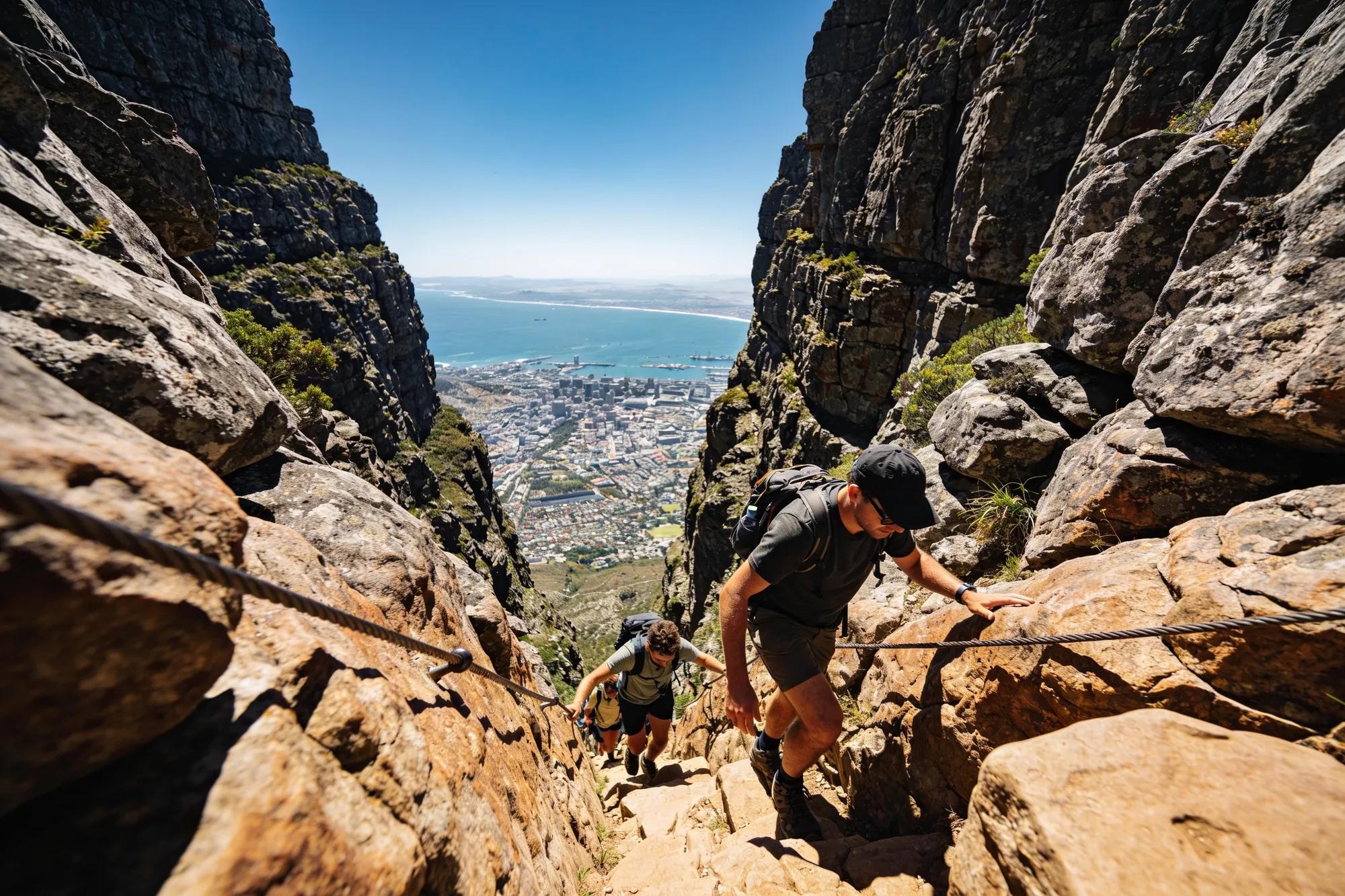
A 56-year-old American visitor collapsed while hiking Platteklip Gorge, one of Table Mountain’s recognised ascent routes. Emergency medical personnel and the Air Mercy Service responded, with a paramedic lowered to reach the patient before he was airlifted to safety and transferred to an ambulance.
Another hiker developed severe muscle cramps near the top of the same route and could no longer continue independently. Emergency medical personnel and SANParks rangers treated the hiker and helped move the individual towards the upper cable station.
Elsewhere, a woman sustained an ankle injury in Cecilia Forest and required assistance reaching the parking area. Two hikers who encountered difficulties while descending the technical sections of India Venster also contacted rescue services, although they later managed to continue their descent without a full rescue.
These incidents demonstrate that hiking risks are not limited to dramatic falls or extreme climbing. Fatigue, injuries, dehydration, insufficient physical preparation and unexpected changes in conditions can all leave visitors struggling to complete a route safely.
For adventure travellers, the lesson is to assess the demands of a hike before setting out rather than relying solely on its popularity or apparent accessibility.
An unfamiliar route leads to another rescue
A further emergency involved a 32-year-old Tunisian visitor who was hiking alone on an unfamiliar route connected to the India Venster trail. As darkness approached, he realised he could no longer navigate the terrain safely and called for assistance.
Rescuers used a different approach to reach him while other personnel were still managing the overnight cliff rescue. Team members abseiled from the cable car before crossing the upper mountain to locate the stranded visitor along the Grotto Fountain Cairn Traverse.
The incident illustrated the importance of recognising danger early. Continuing along an unfamiliar route after losing the trail can increase the likelihood of a fall, particularly when visibility declines and the terrain becomes more difficult to interpret.
Hikers should avoid assuming that a route shown on a mobile phone is necessarily safe under current conditions. Digital navigation tools can help with orientation, but they cannot guarantee that a path is passable or suitable for every visitor.
When uncertainty develops, turning back while conditions remain manageable may be safer than attempting to reach a destination at all costs.
Rising rescue numbers raise questions for tourism
The increase in reported rescue incidents is particularly relevant as South Africa enters a period when outdoor destinations attract more visitors.
Table Mountain is a major attraction for people seeking panoramic views, challenging hikes, photography opportunities and access to nature close to a large city. Its accessibility is part of its appeal, but the variety of trails means visitors can encounter substantially different levels of difficulty.
According to WSAR, the number of incidents recorded by late October 2026 had risen well above previous annual patterns. The organisation cautioned against interpreting the increase as proof that hikers had become more careless. Instead, the figures highlighted the growing demands placed on volunteers, specialist rescue teams and partner agencies.
Understanding the reasons behind this increase requires more than counting emergencies. Visitor numbers, the popularity of particular trails, changing recreational habits, weather conditions and the accessibility of routes may all influence demand for assistance.
Nevertheless, the operational consequences are clear. Rescue teams must maintain the skills, equipment and coordination required to handle simultaneous incidents, including situations that develop after dark or in locations that cannot be reached easily by vehicles.
Volunteer teams remain central to mountain safety
Wilderness Search and Rescue depends on cooperation between government emergency services and civilian volunteer organisations. Its members respond to incidents while balancing professional responsibilities, family commitments and other personal obligations.
The overnight rescue above Union Ravine illustrates the commitment required when a straightforward evacuation is impossible. Technical teams had to reach an injured person, provide assistance, establish a safe rope system and move the patient across exposed terrain before completing the evacuation the following morning.
The other incidents added pressure because several emergencies occurred within the same period. Resources deployed to one location may be unavailable for another, forcing coordinators to assess urgency, access requirements and the personnel needed for each response.
This makes prevention an important part of the wider emergency system. Better preparation among visitors cannot eliminate accidents, but reducing avoidable incidents can help preserve rescue capacity for people who experience unexpected medical emergencies or unavoidable injuries.
Visitors should also understand that calling for assistance when genuinely in difficulty is appropriate. Waiting until a situation becomes critical can make a rescue more complicated, particularly when darkness, wind or deteriorating weather limits the available options.
Practical precautions for adventure travellers
As the summer season approaches, hikers planning to explore Table Mountain should treat preparation as an essential part of their itinerary.
First, travellers should choose routes that match their experience, fitness and equipment. A trail that appears short on a map may involve steep climbs, exposed rock, technical scrambling or difficult descents. Visitors unfamiliar with the area should seek reliable local guidance before attempting demanding routes.
Second, hikers should check weather conditions and daylight hours. Wind, cloud, rain and reduced visibility can change the difficulty of mountain travel. Plans should allow enough time to complete the route without relying on the last available daylight.
Third, suitable footwear, drinking water, food, warm clothing, a charged mobile phone and appropriate navigation resources can make a substantial difference. Travellers should also tell someone their intended route and expected return time.
Groups should agree on a pace that accommodates their members rather than allowing stronger hikers to move far ahead. Solo visitors should be especially cautious when considering unfamiliar or technical terrain.
Finally, hikers should save the appropriate emergency contact details before leaving. The Arrive Alive report covering the October incidents identifies the WSAR emergency contact number as 021 937 0300. Visitors should confirm current contact arrangements and follow official guidance for the area they intend to visit.
Implications for South Africa’s adventure tourism industry
The incidents also have implications for tourism operators, accommodation providers and destination managers. Adventure tourism depends on visitors feeling confident that they can enjoy outdoor activities responsibly, with clear information about route difficulty and the risks involved.
Operators can contribute by explaining trail conditions, communicating weather-related restrictions and encouraging clients to carry appropriate equipment. Clear advice before an excursion is particularly important for international visitors who may be unfamiliar with South African mountain environments.
Destination managers and tourism organisations can also support public education through trail information, visible emergency instructions and partnerships with rescue organisations. These measures should complement, rather than replace, visitors’ own responsibility to prepare adequately.
At the same time, rescue services require public recognition and sustainable support. Specialist equipment, training, transport and medical resources all contribute to effective emergency responses. The October incidents show how rapidly those resources can be stretched when several emergencies happen together.
A safer future for outdoor adventure
Table Mountain remains an important part of Cape Town’s tourism appeal, offering visitors opportunities to experience South Africa’s landscapes at close range. The recent emergencies do not mean travellers should avoid hiking altogether. Instead, they underline the importance of making informed decisions and respecting the challenges of mountain environments.
The reported 235 rescue incidents by 25 October 2026 provide a clear reason for renewed attention to preparation, route selection and emergency planning. With summer approaching, hikers, tour operators and destination authorities have an opportunity to strengthen safety awareness before visitor numbers increase further.
Ultimately, successful adventure tourism depends on balancing access to nature with responsible behaviour and effective emergency support. Visitors who plan carefully, recognise their limits and seek help when necessary can contribute to safer experiences for themselves and others.
The seven emergencies on Table Mountain are therefore more than a record of an exceptionally demanding day for rescuers. They are a reminder that South Africa’s outdoor attractions are best enjoyed when adventure is matched by preparation, sound judgement and respect for the people who respond when things go wrong.



