




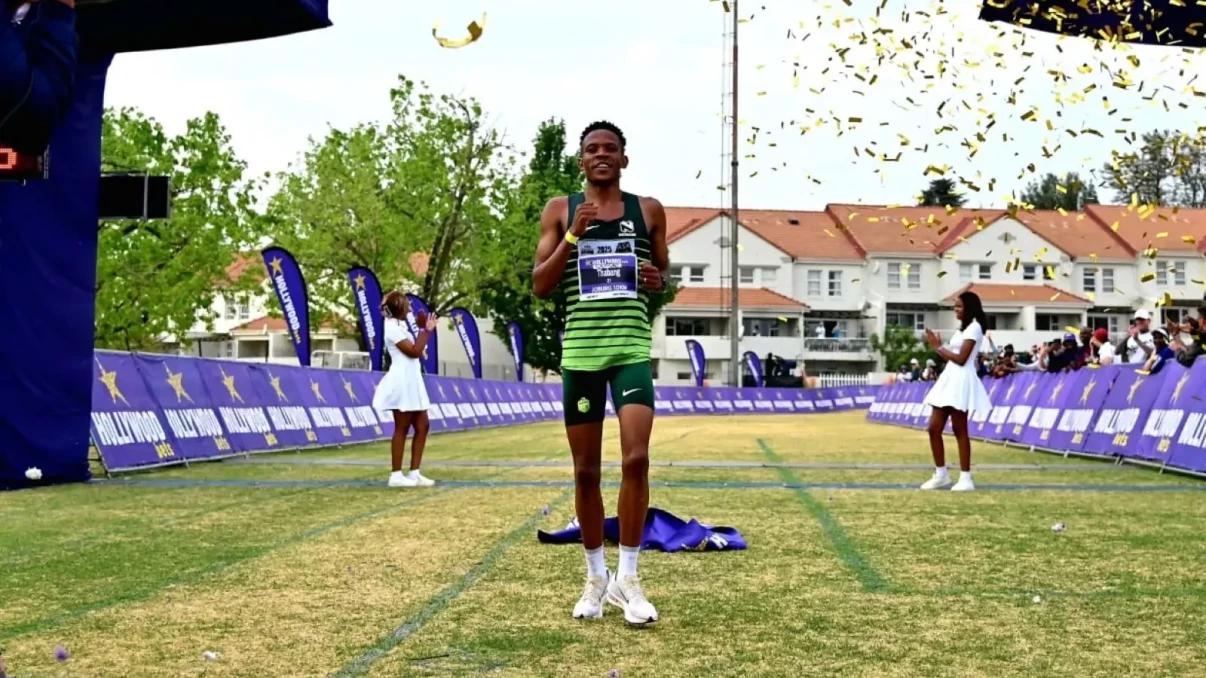
“Thabang Mosiako successfully defended his Hollywoodbets Joburg 10km title in 30 minutes and 43 seconds, overcoming fatigue following his recent marathon in Germany to win in front of a reported field of 12,000 runners. Lesotho’s Neheng Khatala won the women’s race in 33:40, highlighting a competitive weekend for road running in South Africa.”
Mosiako’s Tactical Masterclass Highlights South Africa’s Thriving Road-Running Scene
South African road running delivered another compelling weekend of competition as Thabang Mosiako demonstrated experience, patience and determination to defend his Hollywoodbets Joburg 10km title in Johannesburg on Sunday, 18 October 2026. Competing at Nasrec against a strong field of established distance runners and emerging challengers, Mosiako secured victory despite arriving with concerns about fatigue following a demanding marathon appearance in Germany.
His performance was one of the leading developments in South African athletics coverage over the weekend. The Johannesburg event attracted approximately 12,000 participants, according to SABC Sport, reinforcing the popularity of mass-participation road races and the growing interest in competitive distance running across the country.
Mosiako Delivers When It Matters Most
Mosiako, representing the Nedbank Running Club, crossed the finish line in 30 minutes and 43 seconds to retain the men’s title. His victory earned him a reported prize of R40,000 and confirmed his ability to compete successfully over shorter distances despite recently undertaking the physical demands of marathon racing.
The defending champion’s preparation was far from straightforward. He had competed in the Cologne Marathon in Germany on 4 October, finishing eighth in 2:11:59. That performance demonstrated his endurance over the marathon distance, but the short recovery period presented a significant challenge ahead of the Johannesburg race.
According to coverage by SABC Sport and Sowetan, Mosiako experienced tiredness during the early stages of the 10km contest. Rather than immediately forcing the pace, he adjusted his strategy, remained connected to the leading group and waited for the right opportunity to make his decisive move.
This approach proved effective. Mosiako recognised that his rivals remained competitive after an early acceleration and chose not to waste unnecessary energy trying to establish a substantial advantage too soon. His decision to conserve strength demonstrated the importance of tactical awareness in elite road racing.
At the 5km mark, he tested the opposition with a surge. However, when the leading runners continued to respond, he reduced his effort and waited for the final stages. The strategy allowed him to preserve enough energy to contest the closing kilometres.
The race was not simply a test of speed. It required athletes to manage their effort over a demanding route while responding to changes in pace and the movements of their opponents.
Edward Mothibi and Rebaone Obotseng Complete the Podium
The men’s contest remained competitive, with experienced runners challenging the defending champion throughout the race.
Edward Mothibi, a former Comrades Marathon champion representing Hollywood Athletics Club, finished second in 30:51. Rebaone Obotseng of Distance Running Club also recorded 30:51 to secure third place.
The narrow margins illustrated the depth of competition in South African road running. Mosiako’s winning advantage over the two runners behind him was only eight seconds, making his tactical decisions particularly important.
For Mothibi, the result represented another strong performance from an athlete whose experience in demanding distance events has established his reputation in South African running. His ability to remain close to the winner demonstrated that the leading competitors were capable of maintaining a high pace over the course.
Obotseng’s podium finish also deserves recognition. Finishing alongside Mothibi on the clock placed him among the day’s leading performers and underlined the competitive opportunities available to runners representing different clubs.
For spectators, these close results provided an exciting conclusion to the men’s race. For developing athletes, they offered a reminder that success at this level requires more than raw speed. Consistency, positioning, pacing and the ability to respond under pressure all contribute to competitive performance.
Neheng Khatala Leads the Women’s Field
The women’s race produced another notable result, with Lesotho international Neheng Khatala winning in 33 minutes and 40 seconds.
Emma Brown finished second in 35:04, while experienced South African runner Irvette van Zyl claimed third in 35:17. The results showed the international character of the competition and the continued strength of South African women in road racing.
Khatala’s victory was particularly significant because the route demanded careful management of effort. She explained after the race that familiarity with sections of the course helped her anticipate the difficulty of the closing stages.
Instead of attacking the course recklessly, she focused on maintaining a manageable pace and preserving enough strength to reach the finish successfully. Her strategy reflected the same fundamental principle that shaped Mosiako’s performance: a well-executed race plan can be more effective than an aggressive start.
Brown’s second-place finish was another encouraging result, while van Zyl’s podium appearance demonstrated the value of experience in a field featuring athletes with different racing backgrounds.
For South African athletics, the women’s results are important because visible competition at major road races can encourage more girls and women to participate in organised running. Strong performances also provide aspiring athletes with examples of disciplined preparation and competitive ambition.
Why the Nasrec Race Matters
The Hollywoodbets Joburg 10km has become a prominent event on the local running calendar. Its reported participation of 12,000 runners indicates the appeal of an event that brings elite competitors and recreational runners together.
The 2026 edition moved to a route starting and finishing at the Nasrec Expo Centre, with runners tackling sections of Soweto and the surrounding Johannesburg area. The course included challenging hills, requiring participants to adjust their pace and manage their energy efficiently.
For elite athletes, the event offers an opportunity to compete for prize money, improve performances and test strategies against strong opposition. For recreational participants, it provides a structured environment in which to pursue personal goals, improve fitness and experience the atmosphere of a large organised race.
These different motivations are central to the popularity of road running. Although professional athletes may focus on podium positions and finishing times, thousands of other participants measure success through completing the distance, improving their personal records or maintaining a healthy lifestyle.
Large events also create opportunities for sponsors, running clubs, event organisers and local businesses. However, their long-term success depends on safe routes, reliable organisation, accessible participation and a positive experience for runners.
The Importance of Recovery and Training
Mosiako’s victory offers a useful illustration of the physical demands associated with competing across different distances.
A marathon places substantial demands on an athlete’s muscles, energy reserves and recovery systems. Racing over 10km shortly afterwards requires careful judgement because the body may not have fully recovered from the previous effort.
Mosiako acknowledged that fatigue affected him during the Johannesburg race. Nevertheless, he adapted his approach instead of attempting to sustain an unsustainable pace from the start. His performance illustrates why experienced athletes frequently adjust race tactics according to their physical condition on the day.
For developing runners, the lesson is not that recovery can be ignored. Rather, it is that training schedules should account for recovery, race intensity and individual fitness levels. Athletes attempting multiple competitions in a short period should seek appropriate coaching and medical advice when necessary, particularly if pain or persistent fatigue develops.
Coaches also have an important role in helping runners balance ambition with long-term performance. Effective preparation includes progressive training, adequate nutrition, hydration, sleep and appropriate recovery between demanding sessions.
Opportunities for South African Athletics
The Johannesburg race took place during a busy period for the country’s distance-running calendar. The weekend also featured the Boxer Super Run in Durban and the Athletics South Africa 10km Championships in Potchefstroom, illustrating the range of road-running opportunities available to elite and developing athletes.
At the national championships in Potchefstroom on 17 October, Zanele Maisa won the women’s 10km title in 35:44, with Bianca Stoltz second in 36:10 and Tinyiko Ndala third in 36:52. The result provided another important storyline in the development of South African women’s distance running.
Together, these competitions demonstrate how different racing formats contribute to the broader athletics ecosystem. Short road races reward speed and tactical awareness, while longer events test endurance and pacing. National championships also provide athletes with opportunities to compete for formal honours and measure their progress against the country’s strongest runners.
Sustaining this environment requires investment in coaching, accessible facilities, youth programmes and club structures. It also requires pathways that allow talented school and university athletes to progress into senior competition without losing access to education and other essential support.
What Comes Next for Mosiako?
Following his Johannesburg triumph, Mosiako turned his attention towards the Diamond and Doring Kimberley Big Hole Marathon weekend, where he indicated that he intended to contest the half-marathon and target a top-three finish. His comments to SABC Sport suggested that he was keen to continue competing while remaining realistic about the challenge ahead.
The next test will require another adjustment in pacing and preparation. A half-marathon is considerably longer than a 10km race, meaning athletes must manage their effort over a different distance and avoid relying exclusively on short-distance speed.
Whether Mosiako can reproduce his Johannesburg success remains to be seen. His title defence, however, has already demonstrated the value of experience, composure and tactical flexibility.
Conclusion
Thabang Mosiako’s successful defence of the Hollywoodbets Joburg 10km title was a standout result in South African athletics coverage on 18 October 2026. His 30:43 performance, achieved despite fatigue from his recent marathon, highlighted the importance of intelligent pacing and disciplined execution.
Neheng Khatala’s women’s victory, the close men’s podium and the event’s substantial participation further illustrated the appeal of road running in the country.
For South African athletics, the broader significance extends beyond the winners. Events such as the Joburg 10km create competitive opportunities, encourage public participation and strengthen the relationship between elite sport and community fitness. Continued investment in athlete development, coaching and accessible competition will be essential to sustaining that momentum.



