




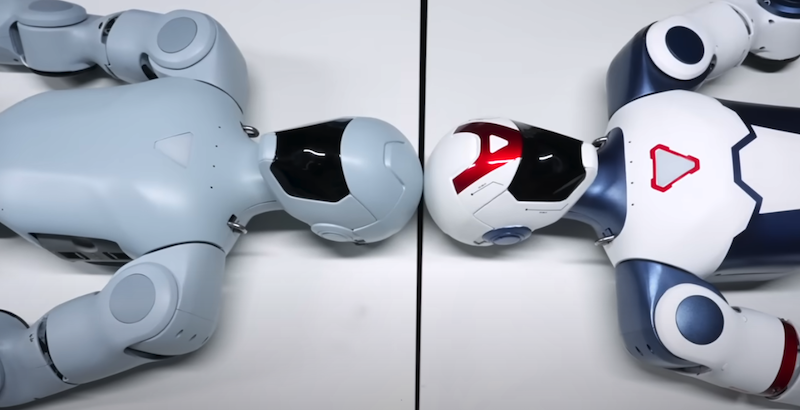
“The Unitree R1 humanoid robot will begin worldwide deliveries at the end of June 2026, with South Africa included in the first allocation. MCM Robotics, the official reseller, reports unprecedented demand as universities, research labs, and startups race to secure units for cutting-edge embodied AI research and applications.”
South Africa Joins Global Robotics Milestone with Unitree R1 Launch
South Africa is set to make history in robotics this month as the Unitree R1 humanoid robot begins its worldwide rollout. For the first time, South Africa will be part of a synchronized global launch of a humanoid platform, with deliveries scheduled for the end of June 2026. This event is not just a product release—it represents a turning point in how embodied artificial intelligence (AI) becomes accessible to researchers, educators, and innovators across the country.
Why the R1 Matters
The Unitree R1 is designed to be the most accessible humanoid robot in its category. Priced comparably to a high-end workstation, it offers full bipedal locomotion, multimodal AI capabilities, and customizable design features. With 20–26 degrees of freedom, stereo vision, and natural voice-image interaction, the R1 is capable of advanced human-robot collaboration. Its ability to recover from falls, perform dynamic movements like cartwheels, and navigate complex terrain makes it a versatile tool for both research and applied robotics.
For South Africa, this is particularly significant. Robotics research has often been limited by high costs and delayed access to new technologies. The R1’s simultaneous global launch ensures that South African institutions are not left behind, giving them equal footing with counterparts in Europe, Asia, and North America.
Demand Surges Across Institutions
MCM Robotics, the official Unitree reseller in South Africa, has reported that reservations are filling faster than any previous robotics launch. Universities such as the University of Cape Town, Stellenbosch University, and the University of the Witwatersrand are expected to integrate the R1 into their robotics and AI programs. Startups focusing on automation, service robotics, and AI-driven applications are also lining up to secure units.
This surge in demand reflects a broader trend: South Africa’s robotics ecosystem is rapidly expanding. The R1’s affordability and adaptability make it an attractive option for both established labs and emerging innovators.
Technical Highlights
- CPU & GPU Options: Standard 8-core CPU, with optional NVIDIA Jetson Orin upgrade.
- Connectivity: WiFi 6 and Bluetooth 5.2 for seamless integration.
- Perception Systems: Binocular stereo vision, 4-microphone array, and built-in speaker.
- Battery: Hot-swappable with ~1 hour runtime.
- OTA Updates: Continuous software improvements post-shipment.
These features position the R1 as a platform not just for robotics research but also for AI policy development, human-robot interaction studies, and industrial prototyping.
Implications for South Africa
The launch of the R1 in South Africa is more than a technological milestone—it is a statement about the country’s role in the global robotics community. By gaining access to the R1 at the same time as other nations, South Africa avoids the lag that has historically hindered its adoption of advanced technologies.
This could accelerate progress in several areas:
- Education: Robotics courses can now offer hands-on humanoid interaction.
- Healthcare: Research into assistive robotics may benefit from the R1’s adaptability.
- Industry: Automation and logistics firms can prototype embodied AI solutions.
- Startups: Lower entry costs enable new ventures in service robotics and AI integration.
Looking Ahead
The Unitree R1’s arrival is expected to catalyze collaborations between South African institutions and international partners. With embodied AI now within reach, the country’s robotics researchers can contribute more directly to global innovation.
As MCM Robotics continues to process reservations, the message is clear: South Africa is ready to embrace the future of humanoid robotics, standing shoulder-to-shoulder with the rest of the world.



