




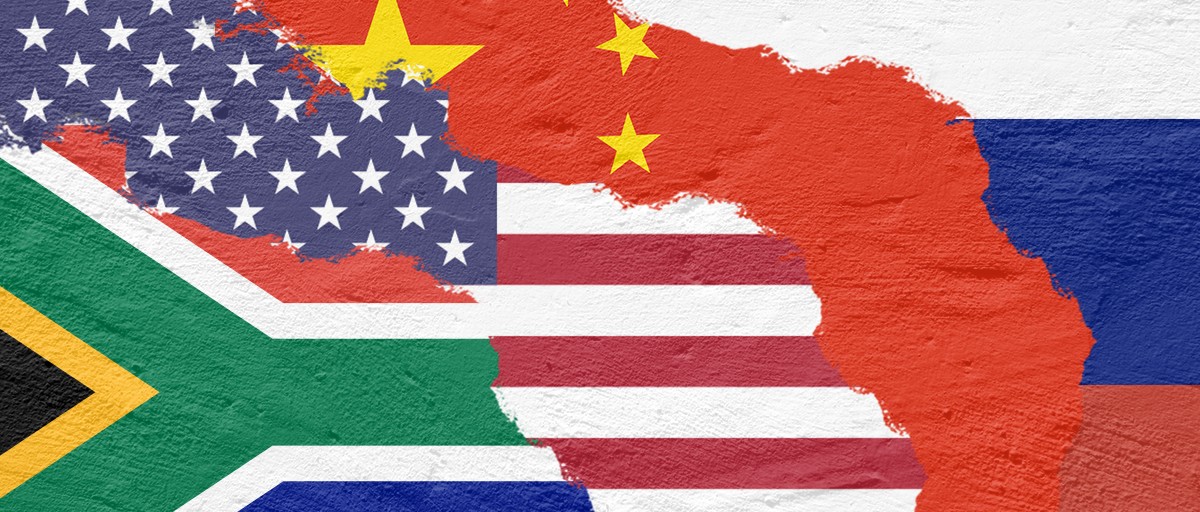
“A proposal introduced in the US Congress to review relations with South Africa has sparked debate about how geopolitical tensions shape investor perceptions of Africa’s most industrialized economy. While the proposal is at an early stage, it underscores how foreign policy narratives increasingly influence sovereign risk assessments and capital market sentiment.”
Introduction
South Africa’s macroeconomic outlook has been thrust into the global spotlight following a proposal in the United States Congress that calls for a reassessment of Washington’s relationship with Pretoria. Although the legislative initiative remains at its earliest stage, the mere suggestion of potential policy shifts has already reverberated across financial markets, highlighting the growing role of geopolitics in shaping macroeconomic stability and investor confidence.
The Proposal and Its Context
The proposal, introduced by US Representative Greg Steube, seeks to review direct assistance programmes and consider measures targeting specific officials. Importantly, no sanctions have been enacted, nor is there immediate legislative momentum. Yet, the symbolic weight of such a proposal is significant: it signals that South Africa’s foreign policy positioning—particularly its ties with BRICS partners like China and Russia—is under scrutiny in Washington.
Investor Sentiment and Sovereign Risk
For investors, the episode is less about imminent policy changes and more about the narratives that shape risk perception. In emerging markets, sovereign debt pricing, capital inflows, and currency stability are often influenced by political signals long before concrete measures materialise. South Africa, as Africa’s most sophisticated financial market, is especially sensitive to shifts in global investor sentiment.
- Bond markets: Yields on South African sovereign debt are closely tied to perceptions of political stability and international alignment.
- Currency volatility: The rand often reacts sharply to geopolitical developments, amplifying macroeconomic uncertainty.
- Ratings agencies: Political risk assessments feed into sovereign credit ratings, which in turn affect borrowing costs and fiscal space.
South Africa’s Balancing Act
Pretoria’s foreign policy has long sought to balance relationships with diverse global powers. As a BRICS member, South Africa maintains close ties with China, Russia, and India, while also engaging with the US and EU. This balancing act provides opportunities for trade and investment diversification but also exposes the country to heightened scrutiny during periods of geopolitical tension.
The current US proposal illustrates how this balancing act can complicate macroeconomic management. Investors must weigh the benefits of South Africa’s global partnerships against the risks of potential diplomatic fallout.
Broader Macroeconomic Implications
The geopolitical spotlight comes at a time when South Africa is attempting to consolidate macroeconomic gains:
- GDP growth: Forecast at 1.6% in 2026, with potential to reach 2% by 2028 if reforms accelerate.
- Inflation: Moderating under a new 3% target, supporting household incomes and consumption.
- Fiscal discipline: The government has committed to stabilising public debt, reinforcing policy credibility.
- Investor confidence: Boosted by South Africa’s removal from the FATF grey list and a sovereign ratings upgrade.
Yet, these gains remain fragile. Structural constraints—such as high unemployment, infrastructure bottlenecks, and energy shortages—continue to weigh on long-term growth prospects.
Geopolitics as a Macroeconomic Variable
The US proposal underscores a broader trend: geopolitics is no longer peripheral to macroeconomic analysis. For South Africa, foreign policy choices now directly influence:
- Capital flows: Investors may reduce exposure if geopolitical tensions escalate.
- Trade access: Diplomatic alignment affects market access and export competitiveness.
- Development finance: Assistance programmes and multilateral funding can be conditioned on political positioning.
Market Reactions and Scenarios
While immediate market reactions have been muted, analysts warn of potential scenarios:
- Status quo: The proposal stalls, with no legislative momentum. Investor sentiment stabilises.
- Heightened scrutiny: Even without sanctions, continued debate in Washington keeps South Africa under the geopolitical microscope, raising risk premiums.
- Policy action: If measures were enacted, South Africa could face reduced access to US assistance and potential capital outflows.
Conclusion
South Africa’s macroeconomic trajectory in 2026 is shaped not only by domestic reforms and fiscal discipline but also by its geopolitical positioning. The US Congressional proposal serves as a reminder that in today’s interconnected world, foreign policy narratives can be as influential as economic fundamentals in determining investor confidence and sovereign risk.
For policymakers in Pretoria, the challenge is clear: sustain reform momentum, reinforce fiscal credibility, and navigate global partnerships with strategic caution. For investors, the lesson is equally stark: in emerging markets, geopolitics is now a core variable in macroeconomic risk assessment.



