




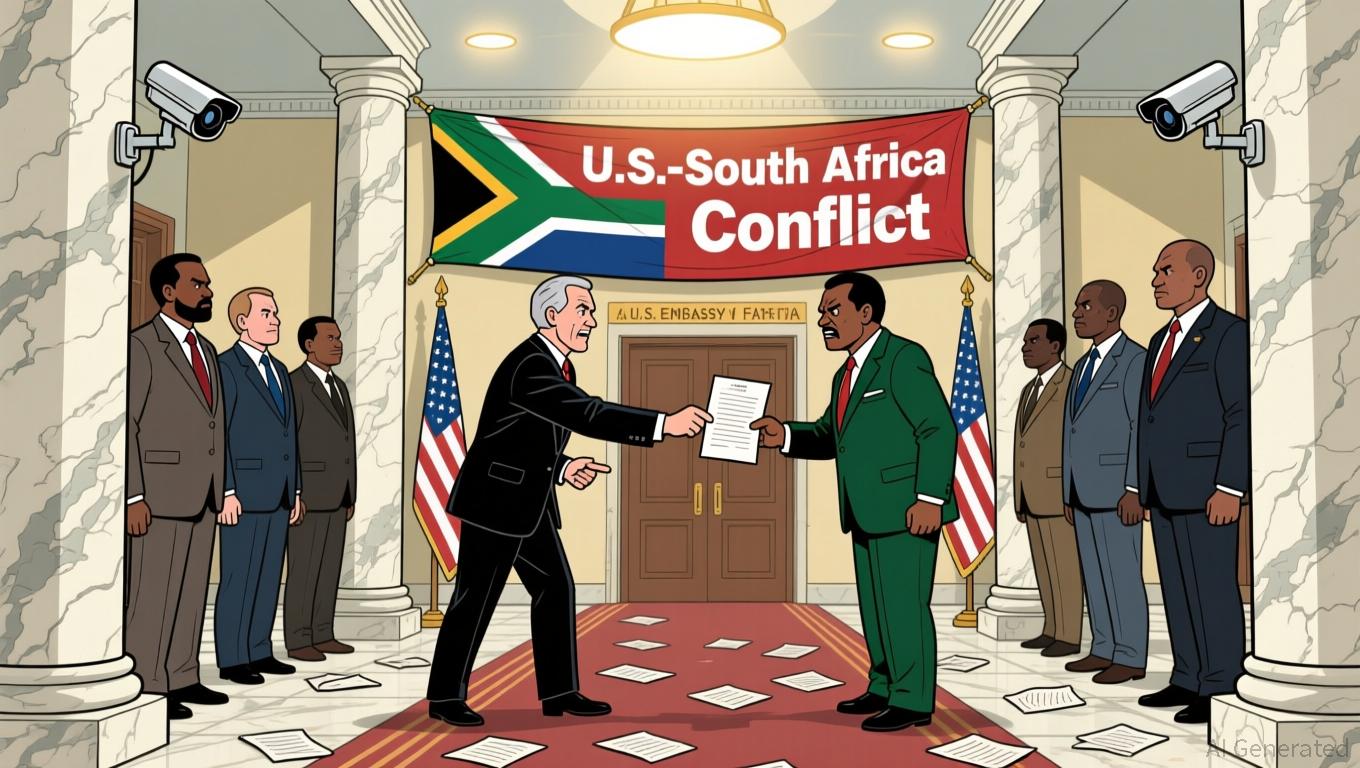
“The United States has imposed visa restrictions on South Africans linked to land reform and race-based economic policies, intensifying already strained relations. South African leaders, including International Relations Minister Ronald Lamola, have condemned the move as a violation of sovereignty and warned of worsening diplomatic fallout.”
Relations between South Africa and the United States have reached a critically low point, marked by Washington’s decision to impose visa restrictions on individuals associated with land reform and race-based economic policies. The announcement, made by US Secretary of State Marco Rubio, has ignited a storm of diplomatic protest in Pretoria, underscoring the widening gulf between the two nations.
Background to the Dispute
The visa restrictions come amid long-standing tensions over South Africa’s land expropriation policies and its commitment to Black Economic Empowerment (BEE). Rubio stated that the measures would target those deemed responsible for “race-based discrimination, inciting violence, or enabling land confiscation without compensation.” While no specific individuals have yet been named, the policy casts a wide net over lawmakers, officials, and activists involved in land reform.
Pretoria had recently attempted to mend ties by appointing veteran negotiator Roelf Meyer as ambassador to Washington. However, the US decision to exclude South Africa from the upcoming G20 Summit signaled growing isolation, further complicating diplomatic efforts.
South Africa’s Response
The Department of International Relations and Cooperation (Dirco) rejected the US move, calling it a mischaracterization of South Africa’s domestic policies. Spokesperson Chrispin Phiri emphasized that the country remains committed to constitutional processes and democratic institutions in addressing land reform challenges. He argued that unilateral measures undermine constructive engagement.
The African National Congress (ANC) echoed this sentiment, accusing Washington of “bullying South Africa” and spreading misinformation about race laws and alleged genocide. The MK Party went further, labeling the sanctions a direct attack on sovereignty and an attempt to intimidate South African leaders.
Lamola’s UNGA Intervention
International Relations Minister Ronald Lamola, speaking at the United Nations General Assembly (UNGA) in New York, warned that South Africa must prepare for a “worst-case scenario.” He accused the US of attempting to sabotage the economy and criticized what he described as a race-based Afrikaner refugee program. Lamola insisted that issues such as BEE and land reform are matters of national sovereignty, not subjects for external interference.
Lamola’s remarks highlight Pretoria’s growing frustration with Washington’s stance. He stressed that South Africa’s progressive foreign policy, rooted in human rights and aligned with the UN Charter, cannot be dictated by external powers.
Broader Diplomatic Implications
The dispute has far-reaching consequences for bilateral relations. South Africa risks further economic penalties, reduced trade cooperation, and exclusion from key international forums. The US, meanwhile, faces criticism for adopting a confrontational approach that could alienate one of Africa’s most influential nations.
Observers note that the clash reflects deeper ideological differences: Washington’s skepticism of South Africa’s redistributive policies versus Pretoria’s insistence on addressing historical injustices through land reform and economic transformation.
Domestic Political Reactions
Within South Africa, the visa restrictions have become a rallying point for political parties. The ANC and MK Party have framed the issue as a defense of sovereignty, while opposition voices argue that the government’s policies have invited international backlash.
Civil society groups remain divided. Some warn that the restrictions could harm ordinary South Africans by limiting academic, cultural, and business exchanges. Others argue that the measures expose flaws in Pretoria’s approach to land reform.
Conclusion
The US–South Africa diplomatic rift underscores the fragile nature of international relations in an era of competing narratives about sovereignty, human rights, and economic justice. As Lamola leads South Africa’s delegation at the UNGA, the country faces a pivotal moment: whether to double down on its policies despite mounting isolation or seek compromise to restore ties with Washington.



