




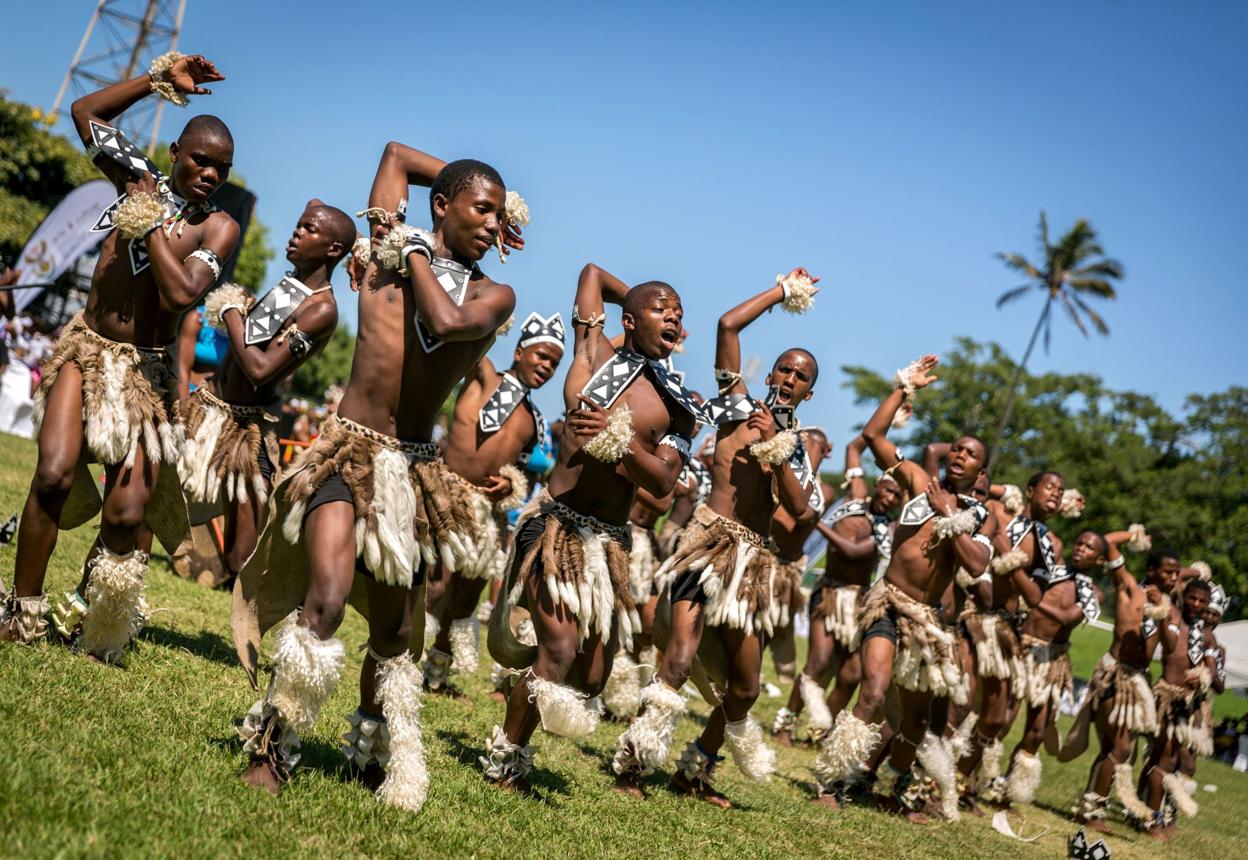
“The inaugural KwaZulu-Natal International Arts Festival is bringing together traditional and contemporary music, theatre, dance, poetry, visual arts and cultural exhibitions across KwaZulu-Natal, with its main celebration taking place in Durban on 1 November. The initiative aims to strengthen the province’s creative economy, promote cultural tourism, create opportunities for emerging artists and expand access to professional artistic platforms in communities across the province.”
KwaZulu-Natal International Arts Festival Celebrates South African Heritage and Positions Local Communities as Cultural Tourism Destinations
A new cultural festival brings tourism, creativity and heritage together
South Africa’s cultural tourism sector is receiving another opportunity to showcase its diversity as the inaugural KwaZulu-Natal International Arts Festival brings together artists, performers, cultural organisations and audiences for a three-day celebration from 30 October to 1 November 2026. Taking place across eFolweni, KwaXimba and Durban, the festival aims to demonstrate how artistic expression, cultural heritage and community participation can contribute to tourism development and economic opportunities.
The event arrives at an important time for South Africa’s tourism industry, as destinations increasingly seek to attract visitors through experiences that extend beyond conventional sightseeing. Although wildlife tourism, beaches, mountains and major cities remain important attractions, cultural experiences provide another way for travellers to understand the country’s history, communities, traditions and contemporary identity.
The KwaZulu-Natal International Arts Festival, commonly known as KZNIAF, is designed around this broader understanding of tourism. Its programme combines established artistic disciplines with emerging creative talent, providing opportunities for audiences to experience local culture while supporting the people responsible for producing it.
The festival is being organised in partnership with Stained Glass TV, funded by the National Arts Council through the Presidential Employment Stimulus Programme 7 (PESP7), and supported by Inanda FM. These partnerships connect the initiative with organisations involved in arts development, broadcasting and creative-sector support.
Under the spirit of uMqhele, the organisers intend to showcase the depth of KwaZulu-Natal’s cultural identity while building a platform capable of reaching audiences beyond the province.
Community celebrations open the festival in eFolweni
The festival began on Friday, 30 October, at eFolweni Red Cross Community Hall. This opening programme placed community participation at the centre of the celebrations, bringing artistic performances and cultural activities directly to local audiences.
The programme included music, visual art exhibitions, theatre and a dance challenge. The eGagasini Trio led and hosted the activities, while the Folweni Gospel Choir provided a special performance.
The choice of a community hall as the opening venue reflects an important aspect of the festival’s approach. Rather than concentrating every activity in a major city or established entertainment venue, the organisers have taken artistic programming into communities where residents can participate more directly.
This approach has potential implications for cultural tourism. Travellers often associate cultural experiences with museums, major theatres and internationally recognised festivals. However, smaller community events can offer opportunities to encounter local creative traditions in environments where they are produced and experienced.
For residents, these activities can also create opportunities to support local artists, discover emerging performers and participate in cultural celebrations without necessarily travelling to major urban centres.
The opening programme demonstrated how community venues can become meaningful spaces for artistic exchange and cultural promotion.
KwaXimba showcases theatre, traditional dance and contemporary creativity
On Saturday, 31 October, the festival moved to Isithumba Adventures in KwaXimba, situated within the scenic Valley of a Thousand Hills.
This programme expanded the celebration through theatre, dance, music, poetry and visual arts. It also brought together established and emerging performers, creating an opportunity to present different forms of artistic expression to audiences in a rural setting.
One of the theatrical highlights was Yemuke Nezibopho, a Zulu drama written and directed by Silindile Maphumulo. Its inclusion reflects the importance of indigenous-language storytelling and theatre in preserving cultural expression.
The programme also featured Pantsula dance choreographed by Lungisa Zondi, known as TjoviTjo on the television programme uZalo. Pantsula is an important form of South African township dance culture, combining movement, performance and social expression.
Presenting this dance form in KwaXimba creates an interesting connection between township artistic traditions and rural cultural spaces.
Another featured production was WOMANDLA, an Afro-contemporary and narrative dance production choreographed by Lindokuhle Ziqubu and written and stage-managed by Andiswa Mbanjwa. Through dance and storytelling, the production explores the expressive possibilities of movement as an artistic language.
Music performances by Mr 5-Minutes and Sandile Gwala, alongside local artists, added further variety. Poetry and spoken-word performances featuring Azibuyele Emasisweni, Kelello Mokhele, and Chris Fallen with his son also contributed to the programme.
These performances illustrate the festival’s intention to bring together different generations, artistic backgrounds and creative disciplines.
Visual arts and cultural identity attract attention
Visual arts form another important part of the festival’s programme. Wushwini Arts Gallery, Isizotha Arts and Design, and Mlamuli Shozi’s Pencil Arts were identified among the participating creative contributors.
Their involvement provides an opportunity to showcase artistic practices rooted in KwaZulu-Natal communities.
Visual art can contribute significantly to cultural tourism because it provides visitors with an opportunity to engage with local perspectives, materials, stories and interpretations of identity.
Art exhibitions can also encourage visitors to spend more time at cultural destinations. Instead of attending a single performance and leaving, audiences may explore displays, interact with artists, discover locally produced creative products and learn about the ideas behind individual works.
For artists, exhibitions provide opportunities to introduce their work to new audiences and potentially develop relationships with buyers, cultural organisations and other creative professionals.
The festival also includes conversations about cultural authenticity and the preservation of identity within contemporary music. Special guest artist Zawadi Yamungu participated in a discussion exploring these issues.
This conversation is relevant to a cultural industry in which traditional influences increasingly interact with contemporary commercial music, digital platforms and international audiences.
The challenge is to create opportunities for innovation while maintaining respect for the cultural histories that inspire artistic work.
Durban hosts the main festival celebration on 1 November
The festival reaches its main event on Sunday, 1 November, at the Durban University of Technology’s Courtyard Theatre and outdoor spaces.
The programme is scheduled to run from 10:00 to 18:30, bringing together artistic performances, exhibitions, creative discussions and opportunities for networking.
The organisers have planned a red-carpet experience, food-selling stands, art exhibitions, live drawing, cultural brand displays and live performances.
These activities create a broader cultural experience rather than limiting the event to a conventional stage programme.
Food-selling stands, for example, provide opportunities to connect cultural celebrations with local food businesses. Culinary experiences are an important part of tourism because they allow visitors to discover regional flavours, ingredients and food traditions.
Likewise, exhibitions and cultural brand displays can introduce audiences to creative businesses and products that represent the province’s artistic identity.
The Jazzy Groove Session, curated by Ncebakazi Zima, is among the musical highlights planned for the main celebration.
Creative discussions will feature Dr Mandisi Sindo, a theatre innovator from Cape Town, and Mxolisi Masilela the Great, founder of TX Theatre from Johannesburg.
The programme also includes poetry from Ghubela and a Maskandi music presentation by Saliwa, offering a contemporary cultural perspective on this established musical tradition.
Cameron Govender of ParamAthman Dance Theatre will explore multiculturalism through dance.
The involvement of Stained Glass TV representatives further highlights the relationship between live performance, television and the wider creative industries.
Comedy theatre will also feature through Sabelo Jili’s one-man show, USIPHEPHO.
Programme directors Lungile Nkombela and Okuhle Msithwa will guide the day’s activities. The programme’s inclusion of sign-language contribution also demonstrates an effort to support a more inclusive cultural environment.
Cultural tourism offers opportunities for local businesses
One of the most important potential benefits of the KwaZulu-Natal International Arts Festival is its connection to the wider tourism economy.
Cultural festivals can attract visitors who spend money on transport, accommodation, restaurants, food vendors, retail outlets and other tourism-related services.
Although the festival announcement does not provide projected visitor numbers or confirmed economic-impact figures, its programme offers several opportunities for businesses to participate.
Accommodation establishments may benefit from visitors travelling from other parts of KwaZulu-Natal and South Africa. Restaurants and food vendors can serve audiences attending the performances, while transport operators may receive demand from people travelling between venues.
Local artists and creative businesses may also benefit from opportunities to sell products, promote services and develop professional connections.
For these benefits to become sustainable, cultural events need to involve local businesses from the planning stages through to implementation.
Clear communication about participation opportunities, accessible vendor arrangements and effective visitor information can help ensure that the economic benefits extend beyond the main organisers.
The festival’s community-based approach offers a foundation for this kind of participation.
It also highlights why cultural tourism should be understood as more than attracting visitors to performances. A successful cultural tourism experience connects the visitor with the people, businesses and communities that give a destination its identity.
Developing opportunities for emerging artists
The festival’s objectives extend beyond the immediate three-day programme.
According to the organisers, KZNIAF aims to develop into a long-term platform that progressively reaches all 11 districts of KwaZulu-Natal.
This ambition is significant because access to professional artistic opportunities can be uneven across urban and rural communities.
Artists based outside major cities may encounter challenges accessing established venues, professional networks, funding opportunities and audiences.
A festival that takes quality artistic productions into community spaces can help address some of these barriers.
It can also create opportunities for emerging performers to work alongside established practitioners, gain exposure and develop their professional experience.
However, long-term creative development requires more than occasional performances. Artists also need access to training, mentorship, funding, appropriate remuneration and opportunities to present their work regularly.
The organisers’ intention to build connections between artists, professional stages and audiences is therefore an important part of the festival’s broader vision.
The inclusion of a free workshop on the business of the arts during the KwaXimba programme also recognises that artistic talent must be supported by professional and commercial knowledge.
Creative professionals need to understand marketing, budgeting, contracts, intellectual property, audience development and business planning.
These skills can help artists build sustainable careers rather than depending entirely on occasional festival appearances.
KwaZulu-Natal’s cultural identity becomes a tourism asset
KwaZulu-Natal has a diverse cultural landscape, with traditions, languages, music, dance, storytelling, contemporary art and historical experiences contributing to its identity.
The province’s tourism appeal is strengthened when visitors can experience these cultural dimensions alongside its natural attractions.
The Valley of a Thousand Hills, for example, offers a scenic setting for cultural experiences that connect landscapes with community life.
Durban, meanwhile, provides an urban environment where different cultural influences, creative industries and artistic traditions can meet.
By connecting eFolweni, KwaXimba and Durban through one programme, the festival demonstrates how cultural events can encourage audiences to explore more than one destination.
This geographical connection could become valuable for tourism operators interested in developing cultural itineraries around performances, heritage experiences, local food and creative workshops.
Nevertheless, turning a festival into a lasting tourism attraction requires consistent investment and planning.
Visitors need reliable information about dates, venues, ticket arrangements, transport and accommodation. Tourism businesses also need opportunities to work with organisers and communicate their services to prospective audiences.
A coordinated approach could help the festival develop a stronger profile among domestic travellers and international visitors interested in South African culture.
The future of cultural festivals in South Africa
The inaugural KwaZulu-Natal International Arts Festival represents an opportunity to strengthen the relationship between artistic development and tourism promotion.
Its combination of theatre, music, dance, poetry, visual arts and creative discussions reflects the diversity of South African cultural expression.
More importantly, its intention to reach communities across all 11 districts provides a long-term ambition that could extend the benefits of cultural programming beyond Durban and other established urban destinations.
The success of this ambition will depend on the festival’s ability to maintain partnerships, attract audiences, support participating artists and provide meaningful economic opportunities for local businesses.
It will also depend on whether communities remain active participants in shaping the programme rather than serving only as venues for performances.
For travellers, the festival provides another reason to explore KwaZulu-Natal through its artistic communities and contemporary cultural experiences.
For emerging artists, it offers a potential platform for visibility, professional development and creative collaboration.
For the tourism industry, it demonstrates how culture can help destinations offer richer experiences while creating opportunities for local participation.
Ultimately, the KwaZulu-Natal International Arts Festival is about more than three days of entertainment. It presents a vision in which communities become cultural destinations, artists become contributors to tourism development and heritage continues to inspire contemporary creativity.
If its organisers can translate this inaugural celebration into sustained district-level programmes, the festival could become an important part of KwaZulu-Natal’s cultural tourism landscape and a platform through which South African stories reach wider audiences.
Additional tourism context: A wider cultural festival movement
The KwaZulu-Natal event is part of a broader movement connecting cultural celebrations with destination marketing in South Africa.
For example, the Black Mountain Tourism Expo and Festival in Thaba Nchu, Free State, is scheduled for 30 October to 1 November 2026. The National Department of Tourism describes it as a platform for cultural heritage, youth development, entrepreneurship and community participation.
Similarly, Johannesburg’s Joy of Jazz has demonstrated how major music festivals can support cultural tourism, attract visitors and create business opportunities across the hospitality and entertainment industries.



