




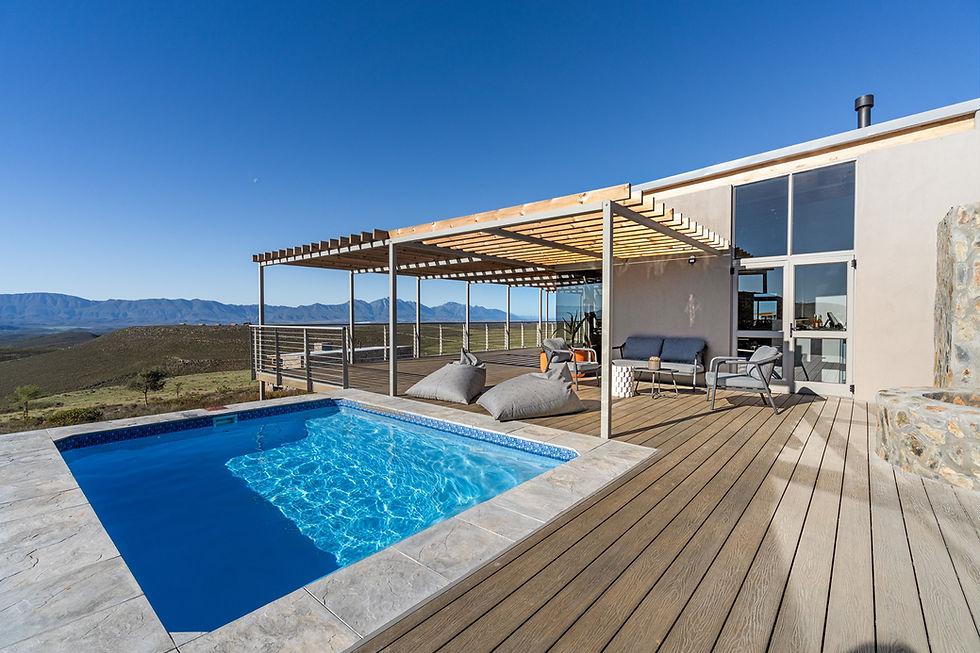
“A luxury safari lodge development near Bonnievale in South Africa’s Western Cape has resulted in a R15-million court-imposed fine after its developer, VEA Group Holdings, pleaded guilty to environmental offences involving construction without the necessary authorisation and the clearing of 4,181 square metres of endangered indigenous vegetation. The case has become an important warning for South Africa’s luxury tourism industry, demonstrating that premium hospitality developments must meet environmental legislation and conservation responsibilities before construction begins.”
Luxury tourism growth meets environmental accountability in South Africa
South Africa’s luxury tourism industry has received an important reminder that exclusive accommodation, sophisticated architecture and exceptional wildlife experiences must be supported by responsible environmental management. A recent court case involving Goats Window Luxury Safari Lodge near Bonnievale in the Western Cape has highlighted the consequences of developing high-end tourism facilities without obtaining the required environmental authorisations.
The development, associated with VEA Group Holdings, attracted national attention after the company pleaded guilty to environmental offences in the Bonnievale Regional Court. The court-imposed fine totals R15 million, although R10 million is suspended for five years, while R5 million is payable to conservation organisation Stop Rhino Poaching in five annual instalments of R1 million. The developer also paid a separate administrative fine of R1.75 million to initiate an application for retrospective environmental approval.
The case is particularly significant because luxury travel increasingly depends on pristine natural environments. Travellers are attracted to South Africa because of its mountains, wildlife, open landscapes, biodiversity and exclusive accommodation. Consequently, protecting these natural resources is essential to maintaining the country’s reputation as an international luxury destination.
The development behind the environmental case
Goats Window was developed on Brakkefontein, a property approximately 11 kilometres south of Bonnievale, within the foothills of the Riviersonderend mountains.
The development included 23 tourism-related units and associated infrastructure. These comprised three directors’ units, two lodge units, ten glamping pods, four lapa units, access roads and parking facilities.
Its concept was positioned around premium accommodation, wildlife encounters, agricultural heritage and nature-inspired hospitality. The property was promoted as a destination where visitors could enjoy sophisticated accommodation while experiencing the surrounding landscape.
However, the development raised serious environmental concerns because construction began without the required authorisations.
According to the reported court proceedings, construction started in June 2024 and was completed in April 2025. The developer continued working despite receiving an environmental notice and a municipal cease-work order.
The development therefore became an important example of the distinction between creating an attractive tourism destination and following the regulatory processes necessary to protect the environment.
Endangered vegetation raises serious conservation concerns
One of the most important aspects of the case involved the clearing of 4,181 square metres of Breede Shale renosterveld vegetation.
Renosterveld is an important indigenous vegetation type in the Western Cape. It supports specialised plant communities and provides habitat for wildlife and other organisms that depend on these ecosystems.
The vegetation cleared for the development was identified as endangered indigenous vegetation. Under South African environmental legislation, clearing more than 300 square metres of natural vegetation in an endangered ecosystem can trigger environmental authorisation requirements.
The lodge was also situated within the Riviersonderend Mountain Catchment Area, a protected area with considerable ecological and water-security importance.
These factors meant that the development required environmental assessment before construction could legally proceed.
For the luxury tourism sector, the issue extends beyond a single property. South Africa’s natural environment is one of its most valuable tourism assets. Mountains, wetlands, indigenous vegetation and wildlife landscapes contribute directly to the experiences that international visitors seek.
When tourism infrastructure damages these resources, it risks undermining the very attractions that make destinations commercially valuable.
Understanding the R15-million financial penalty
The financial consequences of the case demonstrate the seriousness of environmental compliance.
Under the plea and sentence agreement with the National Prosecuting Authority, VEA Group Holdings received a R15-million fine.
Of this amount, R10 million was suspended for five years, while R5 million was allocated to Stop Rhino Poaching. The conservation organisation supports anti-poaching rangers and security operations in wildlife reserves.
The developer also paid R1.75 million in administrative fees to begin the process of seeking retrospective approval for the development.
The court proceedings considered several aggravating circumstances, including the duration of the unauthorised construction, the environmental sensitivity of the location and the extent of indigenous vegetation cleared.
The commercial nature of the development was also relevant. The court documentation highlighted that the developer stood to benefit financially from tourism activities while environmental costs could be borne by the wider public and future generations.
Nevertheless, mitigating factors were also considered. These included the company’s guilty plea, cooperation, remorse, lack of previous convictions and the employment opportunities associated with the tourism project.
The company had indicated that the completed development could have a capital value of approximately R50 million and contribute an estimated R12 million annually to the economy.
Why environmental responsibility matters to luxury travel
Luxury tourism has evolved beyond traditional definitions of expensive accommodation and personalised services.
Today’s premium traveller increasingly considers the destination’s environmental credentials, wildlife protection efforts, sustainability practices and relationship with local communities.
A luxury safari experience may include private accommodation, exceptional dining, scenic views, personalised hospitality and guided wildlife activities. However, these experiences depend on healthy ecosystems.
In South Africa, the Western Cape offers particularly important opportunities for nature-based tourism. Its mountains, indigenous vegetation, wine-growing landscapes and biodiversity attract domestic and international visitors.
The region’s tourism businesses therefore have a responsibility to ensure that their developments are compatible with environmental protection requirements.
For investors, this means conducting environmental assessments before purchasing land or commencing construction. It also means consulting qualified environmental practitioners, understanding protected-area restrictions and obtaining the necessary permissions.
Although regulatory processes can require additional time and investment, they help reduce legal risks and protect the long-term value of tourism properties.
The growing importance of sustainable luxury accommodation
South Africa has considerable potential to expand its luxury accommodation market through carefully managed tourism investment.
High-end travellers increasingly seek accommodation that offers privacy, distinctive architecture, exceptional scenery and meaningful connections with nature.
This demand creates opportunities for boutique lodges, private safari estates, luxury tented camps and exclusive countryside retreats.
However, sustainable development must remain central to these business models.
A luxury property cannot credibly promote conservation while overlooking the environmental requirements governing its construction and operations.
Responsible developers should consider the ecological sensitivity of their proposed locations before designing their accommodation facilities.
They should also assess water availability, waste management, energy consumption, vegetation protection, wildlife movement and the potential impact of visitor activities.
These measures can strengthen tourism businesses while supporting the conservation of natural resources.
Furthermore, environmental compliance can become an important component of a property’s reputation. International travellers, tour operators and hospitality partners increasingly value credible sustainability practices.
For this reason, developers should regard environmental authorisation as a fundamental part of project planning rather than an administrative requirement that can be addressed after construction.
Implications for international tourism investment
The Goats Window case also carries implications for international investors considering opportunities in South Africa’s hospitality sector.
The country offers a diverse tourism environment, including internationally recognised safari destinations, coastal resorts, wine estates, mountain retreats and urban luxury hotels.
These destinations provide opportunities for investors seeking to develop premium accommodation and attract international visitors.
Nevertheless, tourism investment requires careful consideration of local legislation.
Environmental authorisation, land-use permissions, heritage considerations and municipal approvals can influence the feasibility and profitability of a hospitality development.
Investors should undertake appropriate legal and environmental due diligence before committing substantial capital.
The case also illustrates why collaboration between developers, environmental specialists, local authorities and surrounding communities is essential.
Early consultation can identify potential problems, reduce conflict and create development plans that better reflect local environmental conditions.
Local employment and community development
Luxury tourism can provide important economic opportunities for rural communities.
Accommodation facilities require hospitality employees, housekeeping teams, maintenance personnel, guides, security workers, food suppliers and other service providers.
In destinations such as Bonnievale, tourism can contribute to local economic activity by encouraging visitors to spend money on accommodation, restaurants, transport, agricultural products and regional attractions.
The VEA Group’s plea agreement recognised employment and skills-development benefits among the mitigating circumstances.
However, economic benefits should not be treated as a substitute for environmental compliance.
Long-term community prosperity depends on maintaining the natural resources that attract visitors in the first place.
A responsible tourism development should therefore balance employment creation with biodiversity protection, sustainable water management and respect for local environmental regulations.
The future of luxury safari tourism in South Africa
The case arrives at a time when South Africa’s premium tourism market continues to explore new ways of combining nature, exclusivity and personalised hospitality.
Luxury safari accommodation remains an important part of the country’s international tourism identity.
Private reserves, boutique lodges and exclusive nature retreats offer experiences that distinguish South Africa from conventional urban and beach holiday destinations.
Nevertheless, future growth will depend on the industry’s ability to demonstrate responsible environmental practices.
Developers who protect natural habitats, obtain the correct permissions and work with local communities can help build tourism destinations with lasting value.
The Goats Window proceedings demonstrate that a property’s marketing ambitions cannot override environmental legislation.
The property’s website has indicated that the lodge is temporarily closed until further notice. The developer’s future plans therefore remain subject to the necessary regulatory processes. Retrospective application procedures should not be interpreted as automatic approval to operate.
What travellers and tourism businesses should learn
The case offers several important lessons for travellers, accommodation operators and investors.
First, visitors should consider more than architecture, amenities and advertised luxury when choosing accommodation. Responsible tourism also involves understanding how properties interact with their natural surroundings.
Second, tourism developers should complete environmental assessments and obtain all necessary authorisations before starting construction.
Third, hospitality businesses should make sustainability a measurable operational priority. Protecting indigenous vegetation, managing water responsibly and supporting conservation initiatives can strengthen a destination’s long-term appeal.
Finally, investors should recognise that environmental compliance is directly connected to commercial risk management. A development that encounters regulatory difficulties may face delays, financial penalties, reputational damage and uncertainty about its ability to operate.
Conclusion: Luxury must protect the landscapes that make it valuable
South Africa’s luxury travel industry has an opportunity to become a leading example of premium tourism that combines exceptional hospitality with responsible environmental stewardship.
The Goats Window Luxury Safari Lodge case demonstrates why this balance matters. The R15-million court-imposed fine sends a significant message that tourism investment must respect environmental legislation, particularly in ecologically sensitive areas.
The country’s natural beauty is not simply a backdrop for luxury accommodation. It is a valuable resource that supports wildlife, communities, tourism employment and economic development.
As South Africa continues attracting travellers seeking exclusive safari experiences and distinctive destinations, environmental responsibility must remain central to the industry’s growth.
Ultimately, the strongest luxury tourism businesses will be those that understand that protecting nature is not separate from delivering premium travel experiences. It is one of the foundations upon which those experiences depend.



