




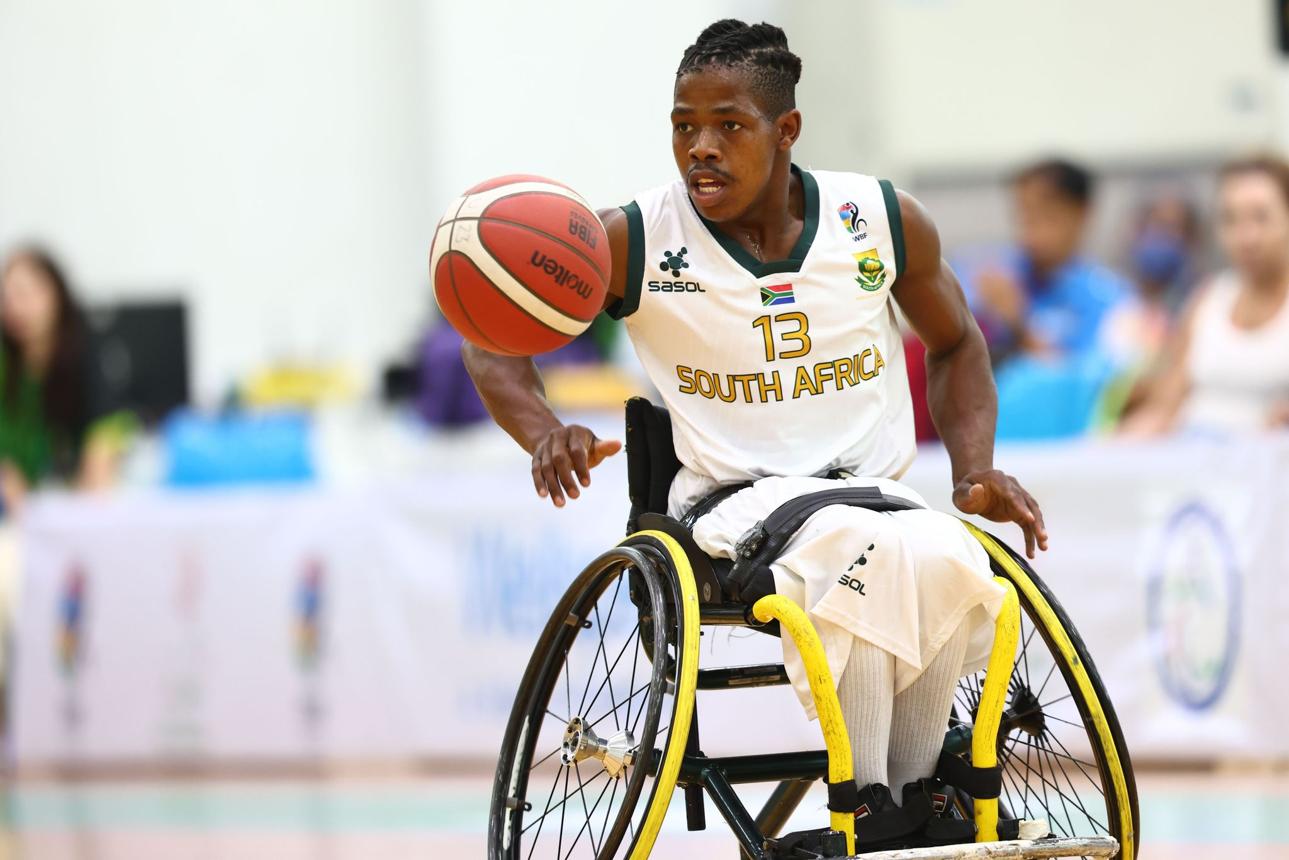
“South Africa’s senior men’s and women’s wheelchair basketball teams have arrived in Cairo for the 2026 IWBF 3×3 Open World Cup, with the AmaWheela Boys drawn against European opposition and the AmaWheela Girls facing a pool that includes hosts Egypt. The tournament, scheduled for 26–28 November, gives both national teams an opportunity to compete internationally while highlighting the growth of wheelchair basketball in South Africa.”
South Africa’s AmaWheela teams take on the world at Cairo 2026
South Africa’s senior men’s and women’s wheelchair basketball teams are preparing to compete on one of the sport’s international stages as the 2026 International Wheelchair Basketball Federation (IWBF) 3×3 Open World Cup begins in Cairo, Egypt. The AmaWheela Boys and AmaWheela Girls have arrived in the Egyptian capital for the competition, which brings together 27 teams from 20 countries. The main tournament runs from Thursday, 26 November, through Saturday, 28 November, at the Dr Hassan Moustafa Sports Complex in 6th of October City.
The tournament represents a significant opportunity for South African wheelchair basketball. Both national teams will face international opposition in a competition designed to reward speed, teamwork and tactical adaptability. For the men’s squad, the event offers another opportunity to build on experience gained earlier in the year, while the women’s team will seek to make an impression against a challenging group of opponents.
South Africa’s participation also carries wider significance for the development of wheelchair basketball across Africa. The country is part of a continental contingent that includes teams from Egypt, Algeria, Kenya, Liberia and Libya. With 10 African teams expected at the championship, the competition provides an important opportunity for athletes from the continent to test themselves against international opposition.
A demanding group for the AmaWheela Boys
The AmaWheela Boys have been placed in Pool D of the men’s competition, which features 18 teams. Their opponents include Poland, Czechia, Slovenia and Cyprus, giving the South Africans a demanding set of fixtures against established European wheelchair basketball programmes.
The men’s draw is particularly significant because the team will need to adapt quickly to different playing styles. In 3×3 wheelchair basketball, teams have limited time to establish control of a contest, and the reduced number of players means every possession carries considerable importance.
The South Africans enter the tournament with useful experience from the IWBF Africa Championship held earlier in 2026 in Luanda, Angola. The men’s team reached the semifinals at that competition, providing a foundation of international experience as they prepare for the challenges of the World Cup.
That continental performance does not guarantee success in Cairo, but it gives the team a recent competitive reference point. The challenge now is to translate that experience into consistent performances against opponents with different tactical approaches and levels of international exposure.
The group-stage format leaves little room for slow starts. Every possession matters, particularly when teams are closely matched. South Africa will need to manage the pace of games, maintain defensive discipline and make effective use of scoring opportunities.
The men’s competition includes 18 teams, making progression beyond the group phase a significant objective. A strong opening performance could help establish momentum, although the final outcome will depend on results across the scheduled matches.
AmaWheela Girls face strong competition
The AmaWheela Girls have been drawn in Pool A of the women’s tournament, where they will compete against hosts Egypt, Canada, Switzerland and Algeria. The women’s competition includes nine teams, creating a smaller but highly competitive field.
The presence of Egypt adds another dimension to the competition. As hosts, the Egyptians will have the advantage of competing in a familiar environment, while South Africa must prepare to face opponents with different competitive backgrounds.
For the AmaWheela Girls, the tournament is an opportunity to demonstrate the progress of South African women’s wheelchair basketball on an international stage. Their participation is also important for the visibility of women in adaptive sport, particularly at a time when international competitions offer increasing opportunities for athletes to gain experience and develop their skills.
The women’s team’s immediate priority will be navigating the group phase and securing a place in the knockout rounds. The tournament structure rewards teams that can combine consistency with the ability to respond to changing game situations.
With the quarterfinals, semifinals and medal matches scheduled for Saturday, the South Africans will be aiming to remain in contention throughout the competition.
Why 3×3 wheelchair basketball matters
The Cairo championship is the second edition of the IWBF 3×3 Open World Cup, following the inaugural tournament held in Sun City, South Africa, in 2025. Its move to Egypt represents another step in the development of the international competition.
Unlike traditional wheelchair basketball, which is played by two teams of five players, the 3×3 format is contested on a half-court with three players per side. Games feature 10 minutes of continuous action, creating a fast-paced contest in which teams must make quick decisions and transition rapidly between attack and defence.
The format places a premium on versatility. Players must be capable of contributing in multiple areas, from creating scoring opportunities to maintaining defensive positioning. With fewer players on court, communication and coordination become especially important.
The smaller playing area also changes the tactical demands placed on teams. Players must identify space quickly, create passing opportunities and respond immediately when possession changes.
For spectators, the concentrated format offers a different way to experience wheelchair basketball. Its shorter games and rapid transitions can make the sport accessible to audiences who may be unfamiliar with the traditional five-a-side game.
The IWBF has identified 3×3 basketball as a means of expanding international participation, particularly for emerging programmes. The open competition model allows countries to take part without first progressing through a qualification tournament, creating additional opportunities for national teams.
Sponsorship and the development of South African basketball
The South African teams’ participation has received support from Sasol, which confirmed its backing of the AmaWheela Boys and AmaWheela Girls ahead of the Cairo tournament.
The company highlighted its partnership with Wheelchair Basketball South Africa (WBSA) and encouraged supporters to follow the teams’ progress. Its involvement reflects the importance of sustained partnerships in creating opportunities for athletes to compete internationally.
Corporate support can play a meaningful role in adaptive sport, where teams often require substantial resources to travel, compete and maintain training programmes. International tournaments provide athletes with valuable exposure, but participation depends on the availability of funding, equipment and organisational support.
For wheelchair basketball, the benefits of sponsorship extend beyond the immediate competition. Strong partnerships can help raise awareness of the sport, encourage participation and support the development of future athletes.
The Cairo tournament provides an opportunity to showcase those investments. South Africa’s national teams will be representing a sporting community that has continued to develop despite the challenges associated with building sustainable adaptive sports programmes.
What to expect during the tournament
The main competition begins on Thursday, 26 November, and concludes on Saturday, 28 November. The group phase will determine which teams advance to the knockout rounds, with the championship culminating in the medal matches.
For the AmaWheela Boys, the opening priority will be to establish themselves in a difficult Pool D. Their experience from the African championship could prove useful, but the quality of the opposition means that consistent performances will be essential.
The AmaWheela Girls face an equally important task in Pool A. Their ability to compete effectively against a varied group of opponents will determine whether they can progress to the knockout phase.
Neither team’s results should be assumed in advance. The tournament is an opportunity to compete, gain experience and measure South Africa’s progress against international opposition.
The event also provides a chance for South African supporters to follow the development of wheelchair basketball beyond the domestic calendar. The national teams’ participation highlights the importance of international competition in strengthening the sport’s profile and encouraging greater public engagement.
A milestone for African wheelchair basketball
The presence of 10 African teams in Cairo underlines the continent’s growing involvement in international wheelchair basketball. Egypt’s role as host provides a further opportunity to showcase African organisational capacity and the competitive potential of national programmes.
For South Africa, participation in both the men’s and women’s competitions is an important achievement. It reflects the country’s commitment to providing athletes with opportunities to compete at an international level.
The tournament also offers a reminder that sporting success is not measured only in medals. Exposure to international competition can help players develop their abilities, identify areas for improvement and bring new knowledge back to their domestic clubs and communities.
The AmaWheela Boys and AmaWheela Girls now have the opportunity to demonstrate their progress on a global stage. As the competition begins in Cairo, South African supporters will be watching closely to see how both teams perform and whether they can secure places in the knockout rounds.
The 2026 IWBF 3×3 Open World Cup represents an important moment for South African basketball, bringing international competition, national pride and the continued development of wheelchair sport together in one tournament.



