




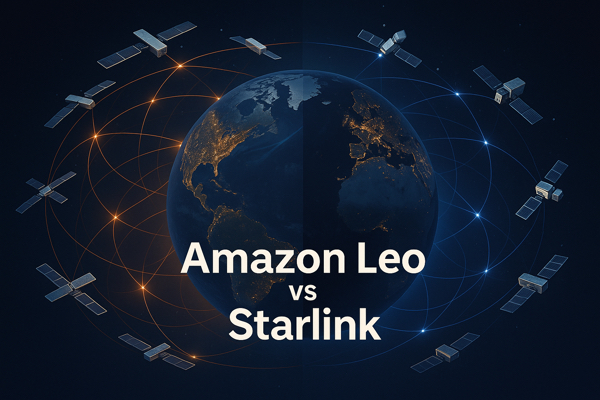
”Amazon Leo has signed a landmark distribution agreement with Herotel, South Africa’s largest fixed internet provider, to launch a new satellite broadband service called evry by 2027. By structuring the deal so that Herotel holds the telecom licence, Amazon sidesteps the 30% BEE ownership requirement that has blocked Starlink, opening the door to widespread satellite internet coverage across underserved regions.”
South Africa’s digital economy is undergoing a seismic shift. On 16 July 2026, Amazon Leo — the low-Earth-orbit satellite network formerly known as Project Kuiper — announced a strategic partnership with Herotel, the country’s largest fixed internet service provider. This collaboration is not just a commercial deal; it represents a profound policy and regulatory milestone in South Africa’s telecommunications sector.
Background: The BEE Barrier
South Africa’s Black Economic Empowerment (BEE) framework requires foreign companies to meet a 30% local ownership threshold to obtain telecom licences. While designed to promote inclusivity and redress historical inequalities, the policy has inadvertently restricted entry for global players like Starlink, which has struggled to secure approval. Amazon’s partnership with Herotel cleverly navigates this barrier by allowing Herotel — already a licensed operator — to hold the necessary licence. This structure effectively bypasses the BEE hurdle without directly contravening the law.
The Partnership Structure
- Amazon Leo’s Role: Provides satellite infrastructure and global expertise.
- Herotel’s Role: Holds the telecom licence, manages distribution, and leverages its existing customer base of over 350,000 households across 550 towns.
- Service Launch: The new broadband service, branded evry, is scheduled for 2027, targeting homes and small businesses in underserved areas.
Policy Implications
This deal raises critical questions about the balance between inclusive ownership policies and technological advancement. While Amazon’s entry promises improved connectivity, critics argue that bypassing BEE undermines the spirit of empowerment legislation. Policymakers may face pressure to revisit regulatory frameworks to ensure that global partnerships still deliver meaningful local participation.
Economic Impact
- Digital Inclusion: Millions of South Africans in rural and peri-urban areas could gain access to reliable broadband for the first time.
- Competition: Starlink, previously blocked, now faces a formidable rival.
- Investment Confidence: The deal signals strong investor confidence in South Africa’s regulatory environment, despite its complexities.
- Job Creation: Expansion of satellite services will require local technicians, customer support, and infrastructure integration.
Strategic Positioning
Amazon Leo’s move is part of a broader strategy to dominate Africa’s satellite internet market. By choosing South Africa as its entry point, Amazon gains access to a relatively advanced regulatory environment, a strong consumer base, and a gateway to continental expansion. Herotel benefits by extending its reach beyond fibre and mobile networks, positioning itself as a hybrid provider of terrestrial and satellite services.
Risks and Challenges
- Regulatory Backlash: Lawmakers may tighten rules to prevent similar bypasses in the future.
- Market Saturation: With Starlink still lobbying for entry, competition could drive down prices but strain profitability.
- Infrastructure Integration: Ensuring seamless connectivity between satellite and terrestrial networks will require significant investment.
- Equity Concerns: Critics argue that the deal dilutes the empowerment objectives of BEE, potentially sparking public debate.
Global Context
Amazon’s entry comes amid heightened geopolitical tensions affecting global trade and technology. Satellite internet is increasingly seen as a strategic asset, not just a commercial service. By securing a foothold in South Africa, Amazon positions itself to influence Africa’s digital future, potentially reshaping regional connectivity and economic growth.
Conclusion
The Amazon-Herotel partnership is more than a business deal; it is a policy test case for South Africa. It highlights the tension between empowerment legislation and global technological integration. As the country prepares for the 2027 launch of evry, stakeholders — from policymakers to consumers — will closely watch how this partnership reshapes the digital economy.



