




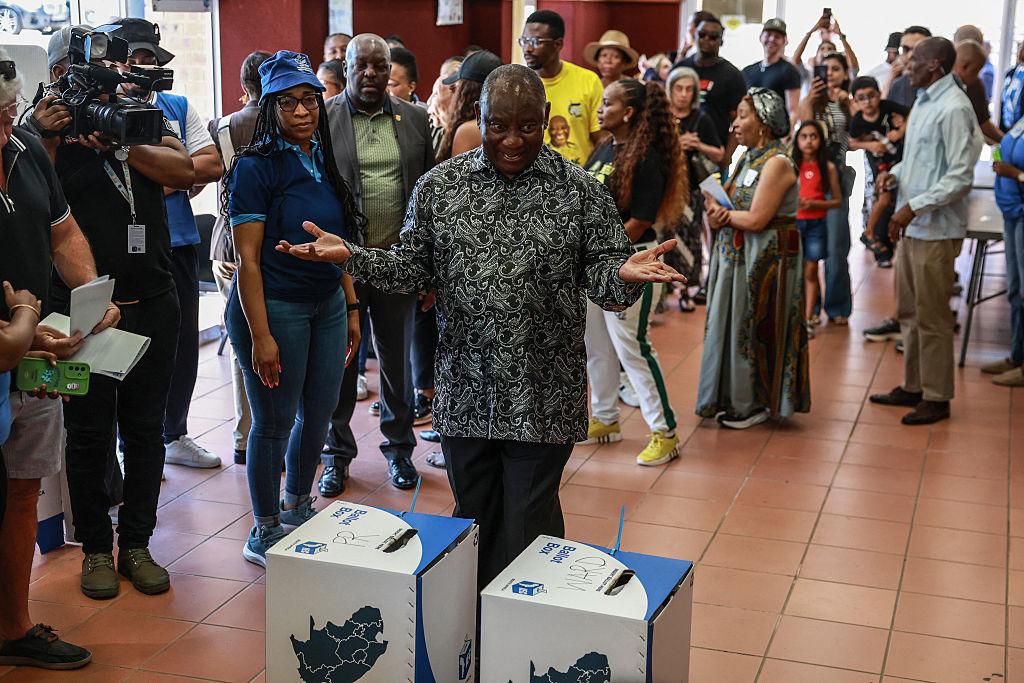
“Early results from South Africa’s 4 November municipal elections showed the African National Congress (ANC) with approximately 32% of counted votes, narrowly ahead of the Democratic Alliance at 28%, signalling another significant decline in support for the country’s historically dominant governing party. The results could reshape municipal leadership, coalition negotiations and business expectations around governance, infrastructure delivery, investment conditions and economic policy as South Africa approaches the next national elections.”
South Africa’s Municipal Election Results Put Governance, Business Confidence and Policy Certainty Under Renewed Pressure
South Africa’s municipal election results have introduced another significant political development into the country’s business and economic landscape, with early figures indicating a substantial decline in support for the African National Congress (ANC). The results, released on Thursday, 5 November 2026, following voting on Wednesday, suggest that South African voters are increasingly demanding accountability, improved public services and more effective local government administration.
According to Reuters, the ANC secured approximately 32% of votes counted in the early stages of the election, narrowly ahead of the Democratic Alliance (DA), which recorded approximately 28%. With around 28% of votes counted at the time of reporting, the figures remained provisional and could change as additional results were processed. Nevertheless, the early outcome indicated a potentially significant political shift, with implications extending beyond electoral competition into business policy, economic governance and investment decisions.
The ANC’s performance represents a considerable decline compared with its previous municipal election result in 2021, when it recorded approximately 46% nationally. That election had already demonstrated the party’s declining electoral dominance. The latest figures therefore reinforce the possibility that South Africa is entering a more competitive political environment in which coalition arrangements and negotiated governance become increasingly important.
Municipal Governance Becomes a Business Policy Priority
Municipal government is particularly important to South Africa’s business environment because local authorities are responsible for delivering essential services that businesses require to operate efficiently.
Electricity distribution, water provision, sanitation, waste management, roads, local infrastructure maintenance and municipal planning directly influence commercial productivity. Consequently, political changes at municipal level can affect business costs, operating conditions and investment decisions.
Businesses operating in municipalities experiencing unreliable electricity distribution, water shortages, deteriorating roads or inefficient administrative systems face additional operational expenses. Manufacturers may need alternative power arrangements, retailers can experience interruptions, and agricultural enterprises may encounter difficulties when water infrastructure is unreliable.
For small businesses, the consequences can be particularly severe. Informal traders, restaurants, retailers, service providers and manufacturing businesses often have limited financial reserves to absorb disruptions. Therefore, municipal election results can influence the economic prospects of businesses across different sectors.
The electoral outcome places renewed attention on whether municipal leadership can improve service delivery and strengthen administrative performance. Business organisations are likely to assess political developments through their implications for infrastructure reliability, regulatory efficiency and local economic development.
Coalition Politics Could Reshape Municipal Economic Decisions
One of the most important implications of the election is the potential expansion of coalition governance.
As support for the ANC declines and opposition parties become more competitive, several municipalities may require coalition arrangements or negotiated political agreements to establish governing administrations.
Coalition governments can create opportunities for broader political representation and improved accountability. However, they can also introduce uncertainty when governing parties disagree over budgets, appointments, infrastructure priorities or administrative responsibilities.
For businesses, the stability of municipal coalitions matters because local governments determine development approvals, infrastructure spending, business licensing processes and numerous operational requirements.
A coalition that agrees on transparent economic priorities and practical service-delivery targets can potentially improve governance. Conversely, prolonged political disagreements may delay decisions, interrupt implementation and weaken administrative continuity.
Investors generally prefer predictable institutional arrangements. Therefore, the ability of political parties to establish stable municipal administrations will be an important consideration in evaluating South Africa’s business environment following the election.
Infrastructure Delivery Remains Central to Business Confidence
Infrastructure reliability remains among the most important considerations for businesses operating in South Africa.
Water shortages, electricity distribution problems, deteriorating roads and inadequate municipal maintenance can reduce productivity and increase operating costs. These challenges affect both established enterprises and smaller businesses attempting to expand.
The election has renewed pressure on municipal authorities to demonstrate measurable improvements in infrastructure management.
Businesses require dependable electricity supplies, functioning water systems, efficient waste collection and transport infrastructure that supports the movement of workers and goods.
Municipalities that improve infrastructure reliability can strengthen local investment conditions and support economic expansion. They can also improve their ability to attract industrial facilities, commercial developments and new enterprises.
However, infrastructure improvement requires more than political commitments. It depends on effective financial management, technical capacity, procurement integrity and consistent maintenance.
Local governments must therefore demonstrate that their policy priorities translate into operational improvements.
Administrative Efficiency and Regulatory Certainty
Another important business-policy consideration concerns municipal administration.
Businesses frequently interact with local authorities when applying for licences, development approvals, trading permissions, building approvals and other administrative requirements.
When these processes become unnecessarily complicated or unpredictable, businesses experience delays and additional expenses.
Small enterprises are particularly vulnerable because they may lack dedicated legal or administrative teams.
The election results create an opportunity for incoming municipal leadership to reconsider administrative systems and introduce more efficient processes.
Improved digital services, transparent application procedures, clear timelines and accessible municipal information could reduce administrative burdens.
In addition, municipalities could strengthen communication with business associations and local entrepreneurs to identify practical obstacles affecting economic activity.
Better administration can contribute to economic development without necessarily requiring major increases in public expenditure.
Investment Decisions and Policy Confidence
Political developments can influence investor perceptions, particularly when they affect expectations about governance and economic policy.
Although municipal elections do not directly determine national economic policy, they provide important information about public attitudes towards government performance.
Investors may interpret declining support for established political parties as evidence that voters are demanding stronger accountability and improved economic outcomes.
However, electoral competition alone does not guarantee better governance or increased investment.
The practical effects will depend on whether political leaders respond with credible policies, effective administration and reliable institutional arrangements.
South Africa’s ability to attract investment remains connected to several factors, including infrastructure, regulatory certainty, public-sector effectiveness and economic growth prospects.
Municipal governments can contribute positively by improving local infrastructure, reducing administrative barriers and supporting commercially viable development projects.
They can also undermine investment confidence if political instability disrupts decision-making or weakens service delivery.
The election therefore highlights the importance of translating political change into stronger economic institutions.
Small Businesses and Local Economic Development
Small businesses are likely to remain among the most important beneficiaries of improved municipal governance.
Local enterprises generate employment, provide essential services and contribute to economic activity in communities across South Africa.
However, many small businesses operate under difficult conditions, including unreliable infrastructure, limited access to financing and complex regulatory requirements.
Municipal governments can support these enterprises through practical measures such as improving trading infrastructure, maintaining markets, simplifying licensing procedures and ensuring dependable public services.
They can also encourage entrepreneurship by making municipal procurement opportunities more accessible to qualifying businesses and strengthening transparent supplier-development programmes.
Importantly, local economic development policies should focus on creating sustainable commercial opportunities rather than relying exclusively on short-term political initiatives.
A predictable regulatory environment can encourage entrepreneurs to formalise their operations, expand their businesses and invest in additional employment.
The electoral results provide an opportunity for municipal leadership to reconsider how local economic development strategies are implemented.
Public Procurement and Financial Accountability
Public procurement remains another significant area of business policy affected by municipal governance.
Municipal expenditure can create commercial opportunities for construction companies, infrastructure contractors, professional service providers, suppliers and maintenance businesses.
However, procurement systems must operate transparently and competitively to ensure public resources deliver measurable value.
Weak procurement oversight can increase costs, undermine public trust and discourage responsible businesses from participating in government contracts.
Municipal administrations therefore need effective procurement controls, transparent tender processes and appropriate monitoring of contract performance.
Financial accountability is equally important.
Municipalities must collect revenue efficiently, manage expenditure responsibly and ensure that budgets support essential services.
Businesses benefit when municipal authorities maintain credible financial systems because reliable public administration improves the predictability of local operating conditions.
The election results could encourage political parties to place greater emphasis on financial management and administrative competence.
National Policy Implications Ahead of 2029
The municipal election outcome also carries implications for South Africa’s broader political environment.
Reuters reported that the early figures could potentially influence competition ahead of the next national elections scheduled for 2029.
The ANC’s declining support may encourage political parties to reconsider their strategies, economic policy proposals and approaches to public-sector governance.
For businesses, national political competition can create opportunities for greater policy debate and renewed attention to economic reform.
However, changes in political positioning may also introduce uncertainty when competing parties propose different approaches to taxation, industrial development, labour regulation, investment incentives or public expenditure.
Businesses will therefore need to monitor political developments while evaluating the practical implications of emerging policy proposals.
The most important consideration will be whether political competition encourages evidence-based economic policymaking and stronger implementation capacity.
Government Accountability and Public Expectations
The election results suggest that voters are placing increasing importance on the performance of local government.
Issues such as crime, corruption, infrastructure failures and unreliable public services have featured prominently in public dissatisfaction with municipal administration.
These concerns also affect business policy because enterprises depend on functioning institutions and reliable public services.
Municipal governments that respond effectively to public expectations can strengthen confidence in local administration.
This requires more transparent reporting, stronger oversight and greater accountability for public expenditure.
It also requires political leaders to acknowledge operational weaknesses and establish realistic improvement plans.
Businesses and communities alike benefit when local government performance is measured against clear objectives and publicly available information.
The Importance of Policy Implementation
South Africa’s business environment is influenced not only by the policies governments announce but also by their ability to implement those policies effectively.
Municipal election results therefore place renewed emphasis on the relationship between political leadership and administrative performance.
Economic development requires coordinated planning, infrastructure investment, financial discipline and consistent regulatory administration.
Without effective implementation, even well-designed policies may fail to produce meaningful improvements.
Municipal authorities must consequently strengthen institutional capacity, retain skilled personnel and improve cooperation between political leadership and administrative departments.
The ability to implement practical reforms will determine whether the election produces meaningful improvements in local business conditions.
Conclusion: Political Change Creates an Opportunity for Better Business Governance
South Africa’s municipal election results represent an important development in the country’s political and economic landscape.
The early decline in ANC support and the stronger performance of opposition parties indicate growing electoral competition and increasing pressure for accountability.
For businesses, the significance of the election lies primarily in what follows: the formation of municipal administrations, the implementation of economic priorities and the improvement of essential public services.
Stable governance, reliable infrastructure, efficient administration and transparent procurement remain central requirements for a competitive business environment.
Municipal governments that demonstrate these qualities can support entrepreneurship, attract investment and strengthen employment opportunities.
Ultimately, the election provides an opportunity for South Africa’s political leaders to demonstrate that electoral competition can translate into improved governance and stronger economic performance.
The coming days, as the full results emerge and coalition negotiations develop, will be important in determining how this political shift influences municipal policy and the broader business environment.
For South African businesses, the priority remains clear: monitor political developments, assess municipal operating conditions and prepare for changes in local governance while continuing to pursue sustainable growth.



