




”Early results from South Africa’s 2026 municipal elections show the ANC facing a significant decline in voter support, with the Democratic Alliance (DA) emerging as a stronger competitor and other parties gaining influence in important municipalities. The results could lead to extensive coalition negotiations, particularly in Johannesburg, Tshwane and other major urban centres, while highlighting voter dissatisfaction with corruption, crime and poor municipal service delivery.”
ANC Faces Major Electoral Setback as South Africa’s Municipal Election Results Reshape Political Landscape
Early results point to declining support for the governing party
South Africa’s political landscape is facing another significant transformation following the country’s 2026 local government elections, with preliminary results indicating a substantial decline in support for the African National Congress (ANC). As vote counting and verification continue across the country, the results are already generating renewed debate about political leadership, municipal governance, coalition arrangements and the future direction of the country’s democratic system.
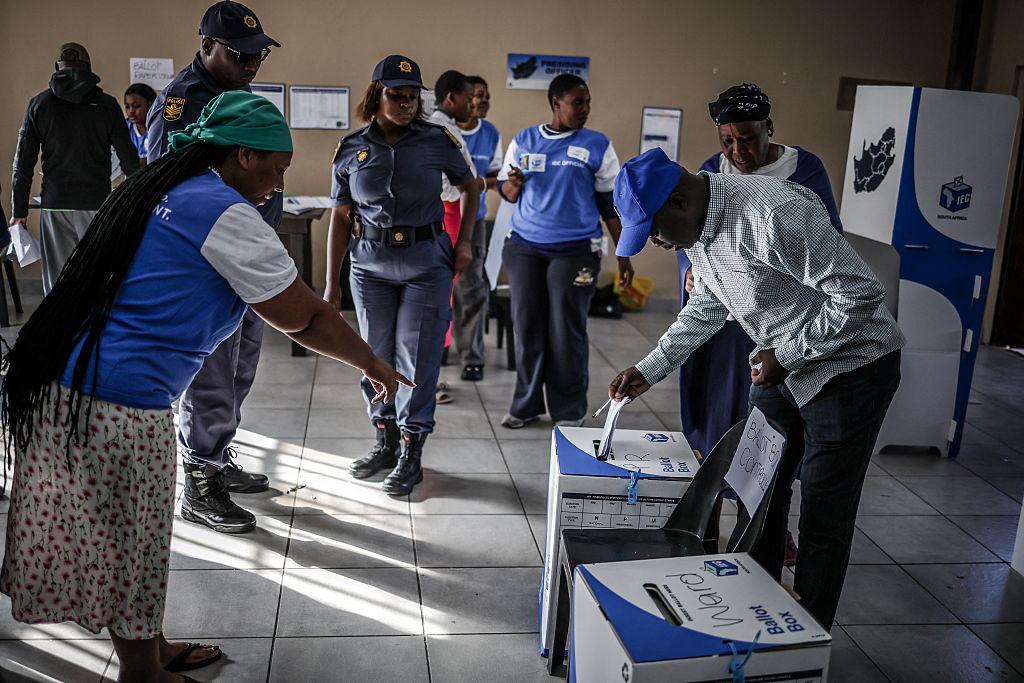
The elections, held on Wednesday, 4 November 2026, were among the most closely watched municipal contests since South Africa’s transition to democracy. They offered voters an opportunity to determine the composition of municipal councils responsible for providing essential services, including electricity, water, sanitation, roads and waste management.
According to early figures reported by Reuters on Thursday, the ANC was polling at approximately 32% nationally, with around 28% of votes counted. The Democratic Alliance (DA) was close behind at approximately 28%. Although the figures remain provisional, they suggest that the ANC could experience another substantial electoral setback compared with its already historically weak performance in the 2021 local government elections.
ANC’s declining electoral dominance
The ANC has governed South Africa nationally since the historic 1994 democratic elections, when Nelson Mandela became the country’s first democratically elected president. For decades, the party maintained a dominant position in national and municipal politics, benefiting from its central role in the struggle against apartheid.
However, its electoral influence has gradually weakened as economic challenges, unemployment, corruption allegations and municipal service delivery failures have become increasingly prominent concerns among voters.
In the 2021 local government elections, the ANC secured less than 50% of the national vote for the first time since the establishment of democratic government. Its subsequent loss of a parliamentary majority in the 2024 national elections further demonstrated the changing political environment.
The 2026 municipal elections now provide another indication of whether the party can recover public confidence or whether its declining support represents a longer-term political transformation.
The preliminary results suggest that many voters are increasingly willing to support alternative political parties, particularly in urban centres where dissatisfaction with municipal administration has become a major electoral issue.
Municipal service delivery dominates voter concerns
Poor service delivery has emerged as one of the central issues influencing the election outcome.
Across South Africa, communities have repeatedly raised concerns about unreliable water supplies, deteriorating roads, sewage problems, electricity interruptions and insufficient waste collection.
These challenges have contributed to public frustration with municipal administrations and increased pressure on political parties to demonstrate practical improvements in local governance.
For many voters, the municipal elections were less about national political ideology and more about everyday living conditions.
Residents want functioning infrastructure, accountable municipal officials, reliable public services and local governments capable of addressing community priorities.
The election therefore represents an important assessment of municipal performance, particularly in municipalities where administrative instability and financial difficulties have undermined service delivery.
DA gains ground as political competition intensifies
The Democratic Alliance appears positioned to benefit from the ANC’s declining support.
Early results reported by Reuters placed the DA at approximately 28%, behind the ANC’s approximately 32% nationally. The figures indicate a competitive national contest, although final results could change as additional votes are counted.
The DA has focused much of its political messaging on municipal management, accountability, infrastructure investment and service delivery.
The party’s electoral prospects are particularly important in metropolitan municipalities where voters have become increasingly concerned about the performance of local administrations.
However, a stronger national vote share does not automatically translate into control of municipal councils. Municipal representation depends on the distribution of votes across individual councils, wards and proportional representation seats.
Consequently, the DA may need coalition partners to govern several municipalities even where it performs strongly.
Johannesburg becomes a major political battleground
Johannesburg remains one of the most consequential municipalities in the election.
The economic importance of the city, its large population and its persistent municipal challenges make its political leadership particularly significant.
The contest is attracting attention because neither the ANC nor the DA is assured of securing an outright majority in the council.
A fragmented council could require several political parties to negotiate coalition arrangements before a mayor and municipal leadership can be established.
These negotiations may involve agreements on mayoral appointments, council leadership positions, municipal budgets and governance priorities.
The possibility of changing political alliances also raises questions about whether future municipal administrations will remain stable enough to implement long-term infrastructure and development programmes.
The election outcome in Johannesburg could therefore influence political discussions well beyond the city itself.
MK Party and EFF increase pressure on established parties
The uMkhonto weSizwe Party (MK Party) and Economic Freedom Fighters (EFF) are also important participants in South Africa’s evolving electoral environment.
The MK Party, associated with former president Jacob Zuma, entered the 2026 municipal elections seeking to expand its influence following its strong performance in the 2024 national elections.
KwaZulu-Natal is particularly important to the party, where it has established a substantial political presence.
The EFF, meanwhile, continues to compete for voters concerned about economic inequality, unemployment, land reform and transformation.
Their performances could determine which parties become essential coalition partners in municipalities where no single political organisation wins a majority.
The increasing presence of these parties demonstrates how South African politics is becoming more competitive and fragmented.
Coalition negotiations could determine municipal leadership
The emerging election results indicate that coalition negotiations could become one of the defining features of South Africa’s municipal political environment.
Where parties fail to secure an outright majority, councillors must negotiate agreements that enable a council to elect leadership and approve municipal budgets.
These arrangements can create opportunities for smaller parties to influence municipal policy and leadership despite receiving relatively limited electoral support.
However, coalition governments can also experience instability when political partners disagree over appointments, financial priorities or governance arrangements.
Analysts have therefore emphasised the importance of transparent agreements, clear policy commitments and administrative continuity.
A stable coalition requires more than an agreement to support a particular mayor. It also needs a functioning municipal administration capable of implementing decisions and maintaining essential services.
Electoral administration and vote verification remain important
The Electoral Commission of South Africa (IEC) continues to oversee vote counting, verification and the preparation of final results.
The commission has indicated that final results are expected by the weekend, allowing political parties and municipalities to begin preparing for the next stage of municipal governance.
Counting and verification are essential to ensuring that the election results accurately reflect voters’ choices.
The IEC has also received complaints and reports of election-related incidents, including concerns involving ballot materials and alleged irregularities.
According to Inside Politics, approximately 15.9 million South Africans participated in the elections, including special voters, while the commission had received more than 800 complaints.
The handling of complaints, verification procedures and the declaration of results will remain important to maintaining confidence in the electoral process.
Implications for South Africa’s democratic future
The 2026 municipal elections could have implications extending beyond local government.
A substantial decline in ANC support may encourage opposition parties to intensify preparations for future national elections.
The results could also influence political negotiations within the national government of unity, where parties must balance competing policy priorities and electoral interests.
For the ANC, the election represents an opportunity to assess voter dissatisfaction and reconsider its approach to municipal governance.
For opposition parties, stronger electoral performances create opportunities to demonstrate that alternative political leadership can deliver better public services.
Ultimately, the credibility of any party’s electoral success will depend on its ability to improve conditions in communities.
Conclusion
South Africa’s 2026 municipal elections are emerging as a significant moment in the country’s democratic development.
Early results indicate that the ANC is facing considerable pressure from the DA and other political parties, while coalition negotiations could determine the future leadership of several important municipalities.
As vote counting continues, the final results will provide a clearer picture of the country’s changing political balance.
Nevertheless, the message from voters is already apparent: municipal governments must become more accountable, improve service delivery and respond effectively to the needs of communities.
The election’s lasting significance will ultimately depend not only on which parties win council seats, but also on whether the new municipal administrations can deliver meaningful improvements in the lives of South Africans.



