




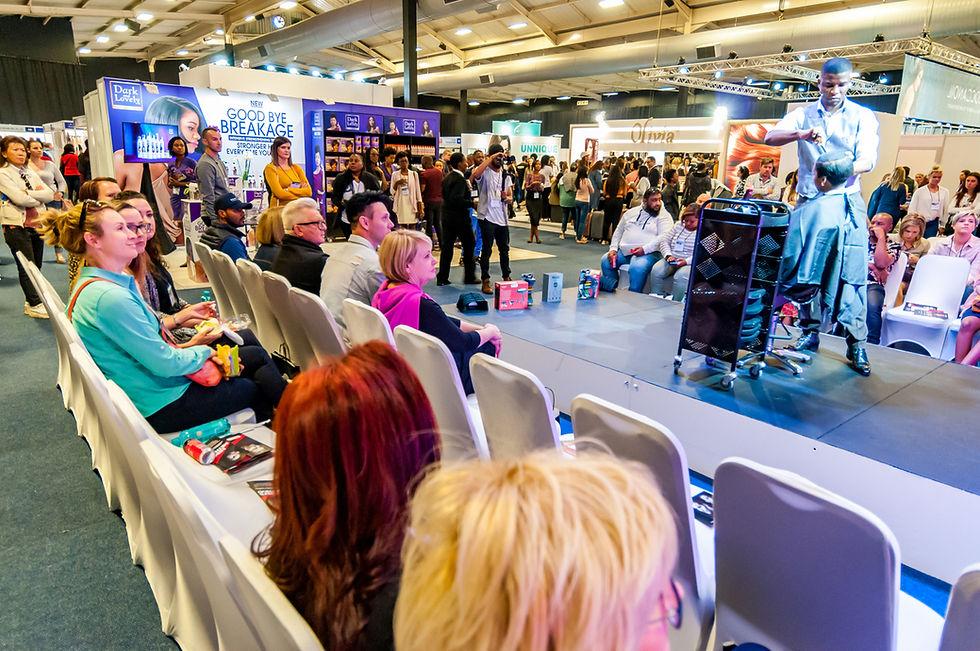
“The Africa International Hair and Beauty Fair in Sandton was cancelled after vendors and ticket holders arrived at the venue and discovered that the event would not proceed, with alleged non-payment to the venue cited as the reason. The cancellation left exhibitors and visitors facing travel expenses and potential financial losses, while organisers said ticket refunds would be processed within seven days.”
Beauty Fair Cancellation in Sandton Leaves Vendors and Ticket Holders Out of Pocket
The cancellation of the Africa International Hair and Beauty Fair in Sandton has become one of the most significant recent stories affecting South Africa’s beauty industry, highlighting the financial and organisational pressures that can surround major industry events. Vendors, beauty professionals, entrepreneurs and ticket holders reportedly arrived expecting two days of networking, shopping, education, demonstrations and business opportunities, only to discover that the event had been cancelled. The development was particularly damaging for exhibitors who had invested substantial amounts in exhibition stands and travelled long distances to participate.
The event had been positioned as a major gathering for Africa’s hair and beauty sector. Information published before the event described the Africa International Hair and Beauty Fair as a platform bringing together beauty professionals, entrepreneurs, brands, educators, distributors, salon owners and consumers. The 2026 event was scheduled for 4 and 5 October in Sandton and was promoted around hair, beauty, nails, fashion, wellness, innovation and professional networking.
Instead, visitors were confronted with a cancellation notice at the venue.
According to reporting by IOL’s The Star, the event was expected to attract approximately 1,000 people over two days. Vendors and ticket holders had travelled from locations including Kimberley, Cape Town, Botswana and Zimbabwe, demonstrating that the event had attracted interest beyond Johannesburg. For small beauty businesses, such travel can represent a significant investment because participation often involves accommodation, transport, staff costs, stock, promotional materials and exhibition fees.
Visitors Say They Were Not Warned
One of the central concerns raised by affected attendees was the lack of advance communication.
Kroes Rocks ambassador Simone Thomas was among those who had purchased tickets. According to the report, she bought two tickets for R300 each in February and travelled from Pretoria to the venue. Rather than finding an operating exhibition, she encountered a cancellation notice when she arrived.
The experience illustrates why communication is particularly important when events involve thousands of people. Visitors make arrangements based on advertised dates and venues, while exhibitors may commit significantly more resources months before an event takes place.
Thomas said she attempted to contact organiser Peace Mthethwa using the number displayed on the cancellation notice. After trying to obtain clarity about the cancellation and refunds, she eventually received an email stating that her ticket refund would be processed within seven days.
However, she questioned how refunds would be handled because she said she had not supplied her banking details.
The situation created additional uncertainty for attendees who had already spent money travelling to Sandton.
Exhibitors Face Bigger Financial Concerns
While ticket holders were affected, exhibitors reportedly faced considerably larger financial exposure.
Thomas said exhibitors had allegedly paid between R25,000 and R75,000 for stands. These figures, if accurately reported, represent substantial investments for small and emerging beauty companies.
For an independent cosmetics company, haircare brand, nail business, salon, barbering business or beauty distributor, an exhibition is more than simply a physical space. It can be an important sales and marketing opportunity.
Exhibitors may bring hundreds of products to an event, hire employees to work at the stand, prepare branded displays, print marketing materials, organise demonstrations and offer special promotions. They also rely on events to establish relationships with retailers, distributors, influencers and prospective customers.
When such an event is cancelled at short notice, much of that preparation cannot easily be recovered.
Some exhibitors reportedly tried to minimise their losses by taking their products to other locations around Johannesburg in an attempt to find customers. That response shows the entrepreneurial resilience that exists within South Africa’s beauty sector, but it also demonstrates the immediate commercial consequences of the cancellation.
A Regional Industry Event
The Africa International Hair and Beauty Fair was not simply intended as a local shopping event. Promotional information described it as a platform for African beauty professionals and businesses.
The event’s planned programme covered areas including haircare, skincare, cosmetics, barbering, nails, aesthetics, fragrances, wellness, salon furniture, professional equipment, packaging and beauty technology. It was also designed to facilitate business networking and industry education.
That broad focus reflects the increasingly interconnected nature of the beauty industry.
Beauty in South Africa is supported by thousands of small businesses and independent professionals. Hairdressers, barbers, nail technicians, makeup artists, skincare specialists, product manufacturers, wholesalers and retailers all form part of an ecosystem that depends on consumers and business-to-business relationships.
Major exhibitions provide opportunities for these participants to meet in one place.
They can introduce new products, demonstrate techniques, negotiate supply arrangements and build customer relationships. They can also gain visibility among audiences who may not encounter their businesses through traditional advertising.
The cancellation therefore represents more than a missed weekend for many businesses. It potentially removes a planned commercial opportunity from their annual marketing calendars.
The Importance of Trust in the Beauty Industry
The incident also raises broader questions about trust and event management.
Beauty is a highly relationship-driven industry. Consumers often purchase products after receiving recommendations from stylists, makeup artists, influencers or other beauty professionals. Similarly, businesses choose suppliers and partners partly on the basis of reliability.
Large exhibitions operate on the same principle.
When exhibitors pay substantial amounts for stands, they expect the organiser to provide the advertised venue and programme. Ticket holders similarly expect the event to take place on the advertised dates.
This is why clear communication becomes essential when difficulties emerge.
According to affected attendees quoted by IOL, communication about the cancellation came only after some people had already travelled to the venue. Thomas described the lack of communication as especially concerning for small businesses.
The organiser was contacted by IOL for comment. Mthethwa responded that it was not a good time to talk, according to the report.
The reported circumstances should therefore be distinguished from established facts: the cancellation and experiences of attendees have been reported, while allegations concerning payment to the venue remain part of the reporting rather than a finding established by a court.
A Major Disruption for Small Businesses
Small businesses are particularly vulnerable when unexpected cancellations occur.
Large corporations may have greater financial reserves and established distribution networks. An independent beauty entrepreneur, however, may rely on a single exhibition to generate substantial sales or new business contacts.
For emerging brands, visibility is especially important.
A beauty entrepreneur may spend months preparing for an exhibition, developing a new product range specifically for the event. A cosmetics company may manufacture additional stock expecting increased demand. A salon may plan promotional packages around the event. A makeup artist may prepare demonstrations to attract clients.
When the event disappears suddenly, these investments remain.
The reported travel distances make the problem even more significant. People reportedly came from Kimberley, Cape Town, Botswana and Zimbabwe, while a group of about 75 people from Kimberley was said to have turned back after learning of the cancellation.
For international exhibitors and visitors, the financial implications can include flights, accommodation and other travel arrangements that are difficult to recover.
Refunds Become a Central Issue
For ticket holders, the immediate question is whether promised refunds will be completed.
The organiser reportedly indicated that ticket refunds would be processed within seven days.
However, the process will be closely watched by affected consumers, particularly those who travelled considerable distances.
Refund management is important because consumers generally judge an organisation not only by what happens when everything goes according to plan, but also by how problems are handled.
A cancellation can occur for many reasons. Venues can become unavailable, suppliers can fail, technical problems can arise and financial disputes can emerge. What determines the long-term reputational impact is often how quickly and transparently organisers communicate with customers.
For an industry event built around beauty, creativity and entrepreneurship, maintaining trust among exhibitors and consumers is especially important.
What the Cancellation Means for African Beauty Events
Despite the controversy surrounding the cancellation, the demand for beauty exhibitions in South Africa remains evident.
The original event was promoted as a major industry gathering, and other professional beauty events continue to demonstrate strong interest in education, product innovation and networking. The wider sector includes exhibitions focused on hair, skincare, nails, cosmetics, spa services and professional beauty technology.
This suggests that the problem is not necessarily a lack of interest in beauty events.
Instead, the incident highlights the importance of strong event infrastructure.
Successful exhibitions require coordination between organisers, venues, exhibitors, ticketing companies, suppliers and visitors. Contracts, payments, contingency planning, communication systems and refund procedures all need to be managed effectively.
For exhibitors, due diligence may also become increasingly important. Businesses could consider checking venue confirmations, organiser track records, cancellation policies and payment terms before committing substantial amounts to future events.
Lessons for Beauty Entrepreneurs
The Sandton cancellation offers several lessons for South African beauty entrepreneurs.
First, businesses should avoid relying entirely on a single exhibition or marketing event. Diversifying sales channels through websites, social media, retailers, salons and direct customer relationships can provide additional protection.
Second, exhibitors should understand cancellation and refund clauses before paying for exhibition space.
Third, businesses should keep documentation of payments, correspondence and promotional commitments.
Finally, entrepreneurs should consider the financial impact of travel and stock preparation when calculating whether an event represents a worthwhile investment.
These precautions cannot eliminate risk, but they can reduce the consequences when an unexpected disruption occurs.
The Future of the South African Beauty Industry
South Africa’s beauty industry continues to have enormous potential. Local entrepreneurs are creating cosmetics, haircare products, skincare ranges, fragrances and professional services for increasingly diverse consumers.
Industry events can play a valuable role in accelerating that growth.
They provide a physical meeting point for businesses that might otherwise struggle to connect. They also allow consumers to discover new brands and give emerging entrepreneurs the opportunity to compete for attention alongside established companies.
That makes reliable event organisation essential.
The Sandton cancellation has placed the spotlight on the responsibilities of event organisers toward the businesses and consumers who support them. For affected vendors, the priority now is recovering money already invested and finding alternative ways to reach customers.
For ticket holders, the immediate concern is receiving refunds and understanding why they were not notified sooner.
For the wider beauty industry, the incident provides a reminder that successful events depend on more than impressive programmes and promotional campaigns. They require financial planning, transparent communication, dependable venues and contingency arrangements.
Ultimately, the strength of South Africa’s beauty sector depends on trust. Entrepreneurs need confidence that industry platforms will deliver what they promise, while consumers need confidence that their money and time will be respected.
The Africa International Hair and Beauty Fair cancellation has therefore become more than an unfortunate event in Sandton. It is a significant story about the realities of doing business in the beauty sector and the importance of protecting the entrepreneurs, professionals and consumers who keep the industry moving.
As affected vendors seek to recover losses and ticket holders await refunds, the beauty community will be watching closely. The episode may also encourage future organisers to strengthen communication, financial planning and contingency procedures so that South Africa’s growing beauty-event industry can continue developing on a more secure and trusted foundation.



