




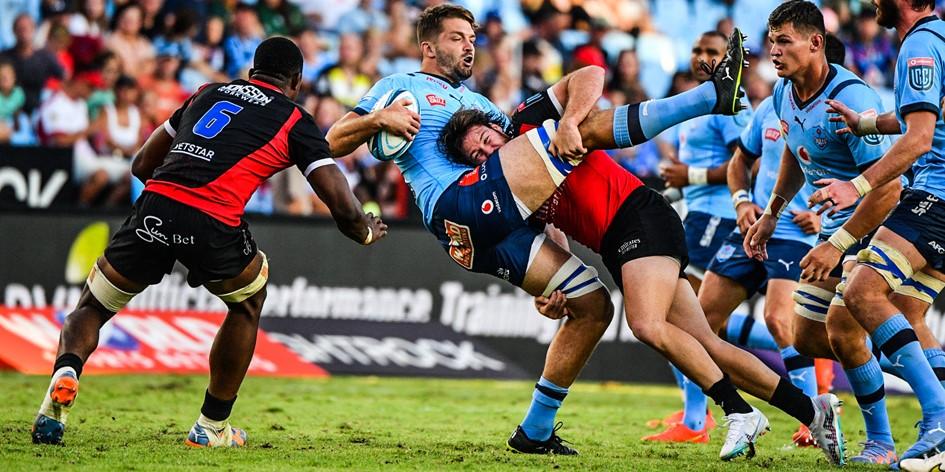
“South Africa’s domestic rugby spotlight falls on two high-profile URC derbies, with the Stormers hosting the Sharks in Cape Town and the Bulls facing the Lions in Pretoria. With 38 Springboks expected to feature across the two matches, the contests offer a major test of provincial strength, squad depth, tactical execution and the influence of international experience.”
South African rugby supporters are preparing for a major weekend of domestic competition as the United Rugby Championship (URC) brings two compelling provincial derbies into focus. The Stormers will host the Sharks in Cape Town, while the Bulls prepare to face the Lions in Pretoria. With 38 Springboks expected to feature across the two matches, the fixtures promise an important showcase of South Africa’s rugby talent, competitive depth and provincial pride.
The significance of these encounters extends beyond local bragging rights. Both matches provide opportunities for established international players to demonstrate their quality, for younger prospects to strengthen their reputations and for coaching teams to assess their squads under pressure. As the URC season progresses, results could also influence the South African teams’ momentum and their pursuit of important competition points.
Cape Town prepares for a heavyweight coastal derby
The Stormers-Sharks encounter is one of the weekend’s most anticipated fixtures because it brings together two sides with strong ambitions in South African and European competition. Playing at DHL Stadium in Cape Town, the Stormers will seek to use home support and familiarity with their surroundings to establish control against a Sharks team determined to make its presence felt.
According to SA Rugby Magazine, the occasion will include the Stormers reviving their famous Men in Black jersey and welcoming 50 former players and their families. The return of Siya Kolisi to the Stormers adds another emotional element to the contest, strengthening the connection between the match, the club’s history and its supporters.
However, nostalgia alone will not determine the outcome. The match will ultimately depend on execution, discipline and the ability to respond when the opposition gains momentum. Both teams will need to maintain defensive organisation while identifying opportunities to attack space and put pressure on their opponents.
One of the most intriguing individual contests involves Springbok forwards Wilco Louw and Ox Nché. Their engagement in the scrum could become a defining feature of the match, particularly if either side establishes an advantage at set-piece time. Scrum dominance can provide penalties, territory and attacking platforms, making the battle between the front rows an important tactical consideration.
The Stormers will also need to manage possession effectively. Retaining the ball for meaningful periods can tire the opposition, create opportunities for their backs and reduce the number of dangerous attacking situations they face. Nevertheless, excessive conservatism could allow the Sharks to dictate the pace.
For the Sharks, the challenge will be to combine physicality with accurate decision-making. They must be prepared to contest breakdowns, defend against sustained attacks and exploit any errors made by the home side. An effective kicking strategy could also help them move the contest into favourable areas of the field.
The Bulls face a difficult examination against the Lions
In Pretoria, the Bulls face a different but equally important challenge against their Gauteng neighbours, the Lions. The fixture at Loftus Versfeld brings together two teams with contrasting recent results and plenty of motivation.
The Bulls are looking to recover after losing 26–22 to Munster in Limerick. Although the narrow defeat suggests they remained competitive, the result leaves them needing a strong response in front of their home supporters. The Lions, meanwhile, arrive with confidence after opening their campaign with victories over Leinster and the Ospreys.
The Bulls have selected a side containing 10 Springboks. Hanro Liebenberg will captain the team in the absence of Marcell Coetzee, while Willie le Roux returns at fullback. Canan Moodie and Sebastian de Klerk provide options in the back three, and Cameron Hanekom returns to the starting lineup after his involvement with the Springboks.
Handré Pollard is among the replacements, offering the Bulls an experienced option at fly-half later in the match. His presence could become important if the contest remains tight during the closing stages.
The Bulls’ selection reflects their desire to restore momentum, but an impressive list of players does not automatically guarantee victory. The team must translate individual quality into a coordinated performance. Handling errors, poor communication and missed defensive assignments can undermine even the strongest lineup.
The Lions will aim to exploit precisely those weaknesses. Their two opening victories provide a positive foundation, although a difficult away derby presents a different test from their earlier matches. Playing at Loftus Versfeld requires concentration, resilience and an ability to silence a passionate home crowd.
Historical results also caution against predicting the outcome too confidently. SuperSport reports that the Lions won last season’s corresponding encounter 43–33 before losing the return match at Ellis Park. Those results demonstrate that the rivalry can produce changing fortunes and that previous performances cannot reliably settle the next contest.
Tactical battles could decide both matches
Across the two derbies, several recurring elements could determine which teams emerge successfully: set-piece efficiency, breakdown control, kicking accuracy and discipline.
First, the scrum and lineout will be essential. Winning stable possession allows teams to launch planned attacking moves, while pressure at the set piece can force penalties and create opportunities to score. The Stormers-Sharks front-row contest is particularly noteworthy because of the international experience involved.
Second, the breakdown remains an area where matches can shift rapidly. Players who arrive with the correct timing and technique can secure possession or disrupt opposition attacks. However, undisciplined attempts to win turnovers may result in penalties that hand territory to the opposition.
Third, tactical kicking will help determine where the game is played. Teams that kick accurately can challenge opponents to return possession under pressure, gain ground and create opportunities from lineouts. Poorly judged kicks, on the other hand, can give dangerous attacking players time and space to counterattack.
Discipline is equally important. Penalties conceded in the wrong areas can allow opponents to accumulate points without needing to cross the try line. In a close derby, a handful of avoidable infringements may prove decisive.
Coaches must also manage substitutions carefully. Fresh forwards can change the intensity of the scrum and breakdown, while replacements in the backline may introduce speed, creativity or additional kicking options. The timing of these changes can influence the final quarter, when fatigue often affects defensive organisation.
Opportunities for emerging South African players
Although international stars attract much of the attention, the weekend also offers an opportunity for younger players to demonstrate their readiness for higher levels of competition.
The presence of established Springboks creates a demanding environment in which emerging players must make decisions quickly and perform consistently. Strong displays against experienced opposition can help young rugby players build confidence and attract greater attention from selectors.
The value of these encounters is not limited to individual recognition. Provincial teams benefit when their developing players learn to perform alongside experienced professionals, understand tactical responsibilities and cope with the emotional pressure of major matches.
For the national coaching setup, the fixtures can provide useful observations about player development and squad depth. SA Rugby Magazine highlights the opportunity for players from successful South African under-20 teams to measure themselves against established stars.
Such opportunities are important because international rugby demands more than physical ability. Players must demonstrate consistency, communication, tactical awareness and composure. Provincial competition allows those qualities to be assessed in a demanding environment.
The importance of provincial rugby to South African supporters
Rugby holds a prominent place in South Africa’s sporting culture, and provincial derbies provide an opportunity for communities to support their teams while celebrating regional identity.
The Stormers-Sharks rivalry connects supporters in the Western Cape and KwaZulu-Natal, while the Bulls-Lions contest draws attention to the competitive landscape in Gauteng. These matches bring together established fans, families and younger supporters who may be discovering the sport through their local clubs.
The economic significance of major fixtures can also extend beyond the stadium. Match weekends may benefit hospitality businesses, transport providers, restaurants and other local services as supporters travel to attend games. Strong attendance and positive match-day experiences can help reinforce the relationship between professional rugby and the communities that sustain it.
Furthermore, the visibility of leading Springboks can encourage participation at school and club level. Young players watching their sporting heroes compete may be inspired to join teams, improve their skills and pursue opportunities in rugby.
Maintaining that connection requires continued investment in grassroots structures, coaching, accessible facilities and youth development. Professional competitions attract national attention, but the long-term strength of South African rugby also depends on participation and support beyond the biggest stadiums.
What the results could mean for the URC campaign
The outcomes of Saturday’s matches could influence confidence and momentum for the teams involved. For the Bulls, a victory over the Lions would provide an encouraging response to their defeat against Munster. For the Lions, winning away would strengthen the significance of their unbeaten opening run.
Similarly, the Stormers will want to use their home fixture to reinforce their competitive ambitions, while the Sharks will view the coastal derby as an opportunity to demonstrate their quality away from home.
Nevertheless, neither match should be treated as a definitive judgement on a team’s season. The URC is a long competition in which injuries, travel demands, squad rotation and the consistency of performances all contribute to final standings.
The most successful teams are usually those that adapt to different opponents, maintain standards across successive fixtures and collect points even when their performances are not perfect. Saturday’s derbies will therefore be important tests, but their broader significance will become clearer as the season unfolds.
Supporters should also distinguish between confirmed information and pre-match expectations. The number of Springboks involved highlights the quality available, but it does not guarantee a particular scoreline or winner. Rugby remains unpredictable, and small moments can determine the result.
Conclusion: A defining weekend for South African provincial rugby
South Africa’s two major URC derbies promise a compelling combination of international quality, local rivalry and tactical competition. The Stormers and Sharks will contest a high-profile coastal encounter in Cape Town, while the Bulls and Lions prepare for a challenging Gauteng showdown at Loftus Versfeld.
With 38 Springboks expected across the fixtures, supporters will have an opportunity to see experienced internationals competing for their provincial teams while younger players seek to establish themselves. The scrum, breakdown, kicking game, discipline and use of replacements could all influence the outcomes.
The Bulls will be eager to respond after their narrow loss to Munster, whereas the Lions will seek to maintain their winning momentum. In Cape Town, the Stormers will look to turn home support into an advantage against a Sharks side capable of making the match highly competitive.
Ultimately, these fixtures represent more than a weekend of sporting entertainment. They provide an important measure of provincial depth, player development and the strength of South African rugby. The results will matter, but so will the quality of the performances and the lessons each team carries into the next round.
For supporters, the anticipation is justified. Two major derbies, experienced Springboks and ambitious provincial sides create the conditions for a memorable weekend of rugby.



