




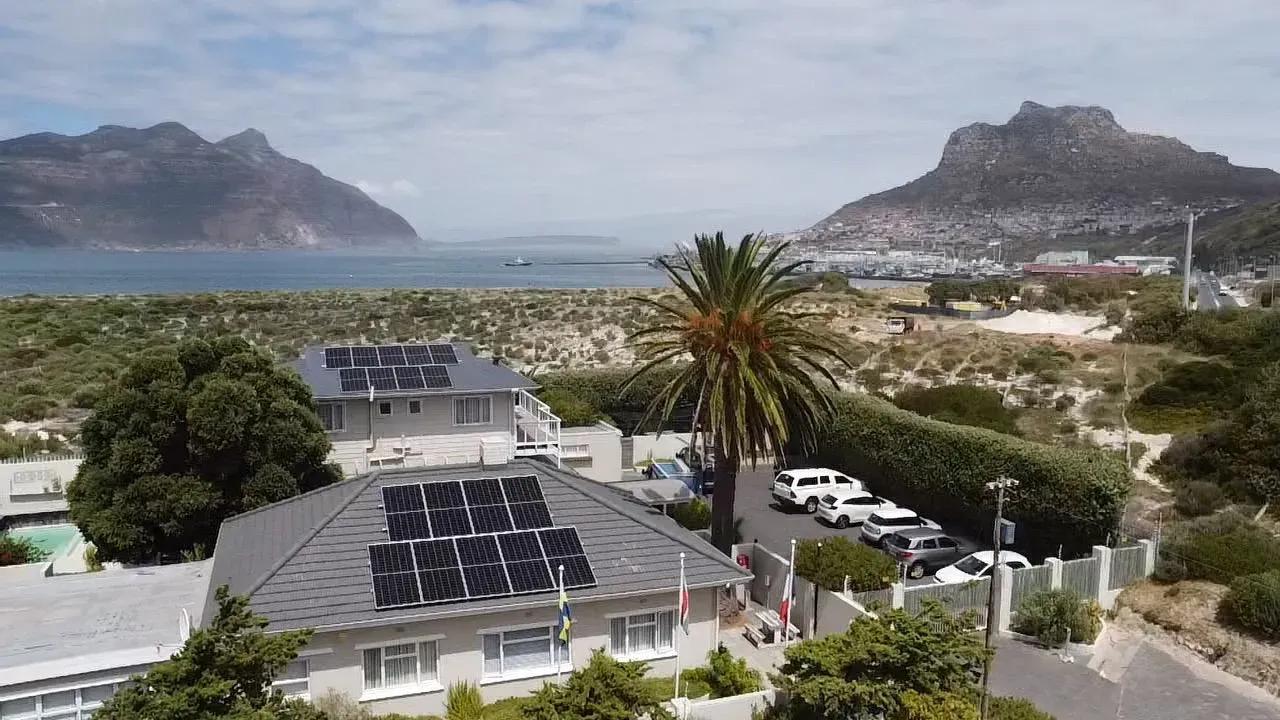
“Cape Town is preparing a residential virtual power plant pilot that will connect approximately 150 homes, primarily using battery storage, to test how household electricity resources can help manage peak demand and improve municipal electricity operations. The initiative, supported by GreenCape, Integrate to Zero and Global Grids Catalyst, represents an important step towards smart residential energy management and more sustainable housing infrastructure in South Africa.”
Cape Town advances smart residential energy technology through virtual power plant initiative
Cape Town is moving towards a new generation of technologically connected residential communities through a virtual power plant initiative designed to coordinate household electricity resources and support a more reliable municipal electricity network. The project represents an important development in South Africa’s residential science and technology landscape, demonstrating how innovation within individual homes could contribute to broader electricity infrastructure improvements.
The initiative comes at a time when electricity affordability, infrastructure reliability and sustainable housing have become increasingly important considerations for residential development across the country. Rather than treating homes exclusively as electricity consumers, the emerging approach recognises residential properties as potential participants in an interconnected energy system.
Household batteries become part of a connected electricity network
The virtual power plant regulatory sandbox pilot is being developed through collaboration between GreenCape, Integrate to Zero and Global Grids Catalyst, with the City of Cape Town participating in the initiative.
According to the published project information, the initial phase anticipates approximately 150 residential properties, primarily using battery energy storage systems. Between one and four virtual power plant providers are expected to participate in the programme.
The central objective is to investigate whether privately operated energy-management platforms can coordinate residential electricity resources effectively within municipal electricity distribution networks.
This represents a significant technological development because household energy infrastructure is increasingly becoming capable of performing functions beyond conventional electricity consumption.
A residential battery, for example, can store electricity for later use. Rooftop solar installations can generate electricity during daylight hours. Intelligent energy-management systems can coordinate these resources according to household requirements, electricity availability and network conditions.
When several residential systems operate together through a coordinated platform, their combined capabilities can potentially create benefits extending beyond individual properties.
Understanding how residential virtual power plants work
A virtual power plant is a digitally coordinated network of distributed energy resources. Instead of relying exclusively on a single large electricity-generation facility, the system connects smaller energy assets through software and communication technologies.
These resources may include rooftop solar panels, residential batteries, smart appliances and other flexible electricity-consuming equipment.
The technology allows participating assets to be managed collectively while remaining physically distributed across different residential properties.
For households, this could eventually mean better management of electricity consumption, improved use of stored solar energy and reduced dependence on electricity during expensive or heavily constrained periods.
For municipalities, coordinated residential resources could potentially provide additional flexibility in managing electricity demand.
However, the Cape Town initiative remains a controlled pilot rather than proof that residential virtual power plants have already transformed municipal electricity systems.
The purpose of the sandbox is to test operating arrangements, technical requirements and regulatory approaches before broader implementation.
Electricity demand management becomes a residential priority
South Africa’s electricity challenges have traditionally been discussed primarily in terms of generation capacity. Nevertheless, electricity distribution and demand management are also important components of the country’s energy transition.
Residential properties represent a substantial source of electricity consumption, particularly through water heating, cooking, refrigeration, lighting and household appliances.
Consequently, improving how homes consume electricity can contribute to broader infrastructure efficiency.
Cape Town’s pilot focuses particularly on shifting electricity consumption from peak periods into off-peak periods.
This approach could help reduce pressure during periods when electricity demand is concentrated.
For example, households may use stored energy during selected peak periods while charging batteries when electricity is more readily available.
Such strategies require sophisticated coordination between residential equipment, software platforms and electricity network operators.
The pilot will therefore provide an opportunity to investigate how these different components can function together within South Africa’s municipal electricity environment.
Smart residential infrastructure is becoming increasingly important
The virtual power plant initiative reflects a broader transformation in residential technology.
Modern housing developments are increasingly incorporating intelligent electricity management, energy-efficient appliances, solar installations and advanced monitoring systems.
These developments suggest that future residential construction may increasingly involve integrated energy infrastructure rather than treating electrical systems as separate components installed after construction.
The concept of smart housing therefore extends beyond automated lighting or remotely controlled appliances.
It includes the ability of residential infrastructure to respond intelligently to electricity availability, environmental conditions and household consumption patterns.
This transition could become particularly important as South African residential developments seek to improve energy performance while maintaining affordability.
The relationship between housing technology and affordability
Residential technology is often associated with premium developments. However, its long-term significance may depend on whether practical innovations can improve housing affordability across different income groups.
Electricity costs remain an important consideration for households managing monthly expenses.
Technologies that improve energy efficiency or reduce unnecessary consumption could help households manage these costs.
Nevertheless, the financial benefits of residential energy technologies depend on installation expenses, maintenance requirements, electricity tariffs and actual household consumption patterns.
Battery systems, solar installations and intelligent energy-management equipment can require substantial upfront investment.
Therefore, technological innovation alone does not automatically make housing affordable.
The challenge for residential developers, municipalities and technology providers is to identify solutions that offer measurable benefits without placing additional financial pressure on homeowners or tenants.
Residential batteries and the future of electricity resilience
Battery storage is becoming an increasingly important component of residential energy systems.
When integrated with solar generation, batteries can store electricity produced during daylight hours and make it available later.
This capability can improve household energy flexibility and provide backup electricity when appropriately configured.
In a coordinated residential system, batteries may also become useful resources for managing electricity demand.
The Cape Town initiative will investigate how residential batteries can contribute to demand flexibility through controlled coordination.
Importantly, participating households must retain appropriate control over their electricity resources and backup requirements.
Residential energy programmes need to balance network benefits with household priorities, particularly when electricity reliability remains a major concern.
The pilot’s controlled environment provides an opportunity to investigate these questions before the technology is deployed more widely.
South Africa’s wider sustainable housing technology agenda
Cape Town’s residential energy initiative is part of a broader national movement towards more sustainable and technologically advanced human settlements.
The Council for Scientific and Industrial Research has previously developed a Science, Technology and Innovation for Sustainable Human Settlements Roadmap with government partners.
The roadmap identifies barriers to innovation within the housing sector, including limited investment, insufficient innovation mainstreaming and conservative approaches to residential development.
Its broader objective is to encourage sustainable settlements through coordinated research, investment and technological development.
CSIR
Meanwhile, South Africa’s national human settlements programme has increasingly emphasised innovative building technologies, climate resilience and sustainable infrastructure.
These priorities reflect growing recognition that residential development must respond to changing environmental conditions, rising construction costs and infrastructure constraints.
The country’s residential technology agenda therefore includes both the physical construction of houses and the systems required to operate them efficiently.
Smart housing requires stronger collaboration
One of the important lessons emerging from residential technology development is the need for cooperation between multiple sectors.
Energy technology companies, residential developers, municipalities, researchers, regulators and households all influence whether smart residential systems can operate successfully.
Cape Town’s virtual power plant pilot illustrates this relationship.
Private technology providers bring software platforms and technical capabilities.
Municipal electricity authorities provide the distribution-network environment and regulatory context.
Households contribute distributed energy resources and participate in the operational arrangements.
Researchers and programme partners can help evaluate the outcomes and identify opportunities for improvement.
This collaborative approach may become increasingly important as residential energy technologies become more sophisticated.
The potential implications for future housing developments
If residential virtual power plants demonstrate practical benefits, their principles could influence the design of future housing developments.
Developers may increasingly consider battery readiness, solar integration, smart electricity monitoring and flexible appliance management during the planning process.
Such considerations could become particularly relevant in large residential communities where coordinated infrastructure offers opportunities for improved efficiency.
The integration of energy technologies into residential design may also encourage closer cooperation between construction specialists and electricity-system developers.
Nevertheless, widespread adoption will require technical reliability, appropriate regulation, consumer protection and commercially sustainable operating models.
The success of residential technology should ultimately be measured through tangible improvements in household living conditions and infrastructure performance.
Conclusion: A new direction for South African residential technology
Cape Town’s virtual power plant pilot provides an important example of how residential technology can contribute to South Africa’s evolving electricity infrastructure.
The initiative seeks to determine whether coordinated household batteries and intelligent energy-management platforms can support electricity demand management while creating additional value for residential participants and municipal networks.
Although the programme remains experimental, its significance extends beyond the initial group of participating homes.
It demonstrates a broader shift towards residential environments that are more intelligent, connected and responsive to infrastructure requirements.
As South Africa continues developing sustainable housing solutions, technologies that combine residential energy management, efficient construction and environmental resilience may become increasingly important.
The future of residential innovation will depend not only on constructing more homes but also on creating housing systems that are affordable, reliable, sustainable and capable of responding to changing technological and environmental conditions.
Cape Town’s initiative offers an opportunity to test one part of that future in practice.



