




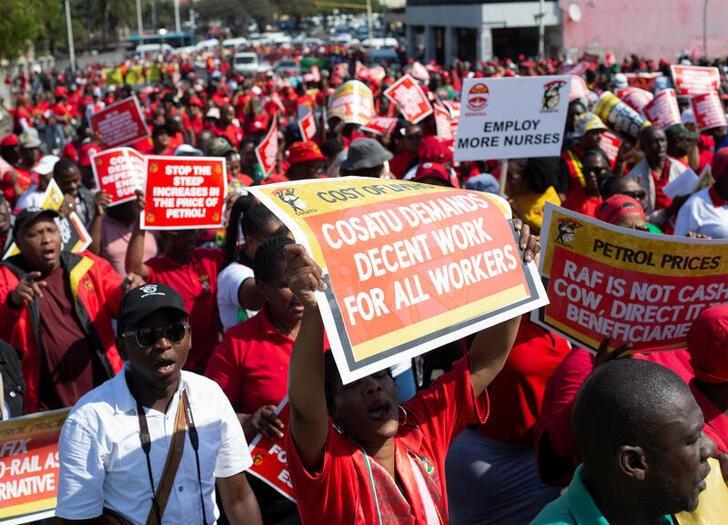
“Civil rights organisations and trade unions in South Africa are calling on the government to intervene as rising fuel prices place additional pressure on motorists, workers and households. The Concerned Citizens of South Africa organised shutdowns and pickets in Cape Town, Durban and Pretoria on 19 October, demanding a 50% reduction in fuel prices, while the Congress of South African Trade Unions has called for R10 billion earmarked for fuel-price relief to be used to ease the burden on the public.”
South Africa’s fuel-price protests intensify as civil society demands urgent government relief
Rising fuel costs bring citizens, activists and labour organisations into a growing campaign for economic relief
South Africa’s rising fuel prices have become a major focus of public activism, with civil society organisations and trade unions demanding urgent government intervention to protect households from escalating living costs. On Monday, 19 October 2026, Concerned Citizens of South Africa organised shutdown action and pickets in Cape Town, Durban and Pretoria, calling for a substantial reduction in fuel prices and changes to the taxes and levies included in the cost of petrol. The campaign reflects mounting frustration among motorists, workers, businesses and families struggling to manage increasingly expensive daily necessities.
Activists take the cost-of-living crisis to the streets
The protests have placed fuel affordability firmly on the national political agenda. Concerned Citizens of South Africa has demanded a 50% reduction in fuel prices, arguing that the government must respond to the financial pressures affecting ordinary citizens. According to SABC News, the organisation has given the government 14 days to respond to its demands or face a proposed three-day national shutdown.
The campaign is centred on the argument that fuel is not simply a concern for vehicle owners. Its price influences transport services, food distribution, agricultural production and numerous other activities that determine the cost of living. Activists argue that reducing fuel costs could therefore provide relief to households far beyond those who purchase petrol directly.
The demonstrations in several major cities also show how economic grievances can mobilise people across different communities. For campaigners, public protest is a means of communicating dissatisfaction when they believe ordinary representations have failed to deliver meaningful change.
Why fuel prices have become a national concern
Fuel prices affect the South African economy through several interconnected channels. When petrol and diesel become more expensive, private motorists face higher commuting costs, while taxi operators, transport companies and delivery businesses must manage increased operating expenses.
These costs can subsequently be passed on to consumers through higher prices for goods and services. Food transported over long distances, building materials, agricultural supplies and everyday retail products may all become more expensive when distribution costs rise.
Lower-income households are particularly vulnerable because a larger proportion of their income is generally committed to essential expenditure. Workers who depend on taxis or other paid transport may have limited opportunities to reduce their travel costs. Small businesses operating with narrow profit margins can also struggle to absorb higher fuel expenses without increasing prices or reducing other spending.
The protests consequently raise a broader question about economic security: how can government protect vulnerable households from international price shocks without creating additional fiscal pressures?
Concerned Citizens of South Africa argues that the authorities should reduce fuel-related taxes and levies and reconsider the pricing formula. The organisation has also called for petrol prices to fall towards R15 per litre, presenting that figure as a more affordable level for consumers. This is the campaign’s demand, rather than an established government commitment or confirmed future price.
Trade unions call for R10 billion in relief
Alongside street demonstrations, organised labour has proposed a specific intervention. The Congress of South African Trade Unions (COSATU) has called on the government to use R10 billion allocated for fuel-price relief to cushion motorists and struggling households.
COSATU parliamentary coordinator Matthew Parks has urged Finance Minister Enoch Godongwana to address the issue through the government’s budget process. The federation argues that the money should serve its intended purpose of helping consumers manage fuel-price volatility.
According to reporting by Eyewitness News, COSATU wants the funding to provide temporary relief during November and December. The organisation maintains that rising transport and food costs are eroding workers’ earnings and placing additional pressure on families already facing financial difficulties.
Parliament’s Standing Committee on Appropriations adopted a report on the Second Special Appropriation Bill on 8 October. The bill proposes withdrawing R10 billion from the National Revenue Fund for transfer to the Department of Mineral and Petroleum Resources to stabilise fuel costs and protect consumers from volatility linked to the conflict in the Middle East.
The committee also emphasised the importance of accountability and reporting on how the money would be spent. Therefore, the key issue is not only whether funding exists, but also how quickly it can be deployed and whether the intervention will deliver measurable savings to consumers.
The challenge of reducing fuel taxes
One of the central demands of the protest campaign is a reduction in the taxes and levies incorporated into fuel prices. These charges contribute to the final amount motorists pay at filling stations, making them an obvious target for campaigners seeking immediate relief.
However, reducing taxes creates difficult decisions for the government. Fuel levies generate public revenue that supports government expenditure, while other charges contribute to specific funding responsibilities. Cutting them can leave gaps that must be addressed through alternative revenue sources, borrowing or reduced spending elsewhere.
The government has previously used temporary fuel-levy reductions to cushion consumers. Nevertheless, repeating such measures on a sustained basis could have significant consequences for the public finances.
COSATU argues that the R10 billion allocation offers a way to provide targeted relief without necessarily requiring additional funding. Government departments must still determine the practical arrangements, implementation timetable and duration of any intervention.
The debate demonstrates the tension between immediate household needs and longer-term fiscal stability. Activists want relief that is visible at the pump, while policymakers must consider how any reduction will affect government revenue and other public priorities.
Government faces growing pressure to respond
The fuel campaign comes at a time when economic concerns are becoming increasingly prominent in public debate. Citizens expect elected representatives to respond to the consequences of higher living costs, particularly when those costs affect transport, food and access to employment.
The protests have increased pressure on the government to explain what measures are available, when decisions might be made and how the benefits would reach consumers. The approaching budget process has become an important point of attention because it offers an opportunity to clarify the use of the proposed relief allocation.
Nevertheless, the protest organisers’ demands should not be confused with adopted government policy. As of the reports examined for this article, the 50% price reduction remains a campaign demand, while the R10 billion proposal follows a separate parliamentary process.
Clear communication will be essential. Authorities need to explain which interventions are financially possible, what conditions would apply and how their effects would be assessed. Without that clarity, public frustration could persist regardless of announcements made by individual politicians or departments.
For civil society groups, the immediate objective is to turn demonstrations into a response that can be measured in household budgets. For government, the challenge is to demonstrate that public concerns are being considered through a credible and workable policy process.
The importance of peaceful and inclusive activism
Economic protest is an established feature of democratic participation in South Africa. Demonstrations, petitions, pickets and organised campaigns allow people to express concerns collectively and demand accountability from public institutions.
The fuel-price campaign illustrates how a practical household issue can develop into a broader political movement. Motorists may be concerned about commuting costs, workers about wages, businesses about operating expenses and families about food prices. Although these groups experience the problem differently, they can share a demand for more affordable living conditions.
Maintaining peaceful and inclusive participation is important to the credibility of such campaigns. Organisers need to communicate their demands clearly, protect participants’ safety and consider the consequences of disruption for people who rely on public transport, essential services and daily wages.
Government institutions also have responsibilities. Authorities should facilitate lawful protest, communicate with organisers and respond to the substance of public grievances. A constructive approach can help prevent disagreements from becoming prolonged confrontations.
Ultimately, the effectiveness of activism depends not only on the number of people who participate, but also on whether the campaign establishes clear objectives and creates opportunities for meaningful engagement with decision-makers.
Possible consequences for workers and businesses
If fuel prices remain elevated, the effects could extend beyond motorists. Transport-intensive businesses may face higher expenses, potentially affecting employment, investment and consumer prices. Small enterprises could be particularly exposed because they may lack the financial reserves needed to absorb prolonged cost increases.
Workers face a different but related problem. Even where salaries remain unchanged, higher commuting and household expenses reduce the purchasing power of their earnings. Employees may have to make difficult decisions about food, education, healthcare and other essential spending.
For farmers and food distributors, increased fuel expenses can add pressure at different stages of the supply chain. Whether these costs ultimately reach consumers depends on many factors, including competition, production costs and the ability of businesses to absorb losses.
Temporary relief could ease some immediate pressure, but its effectiveness would depend on its design. Policymakers would need to consider who benefits, how savings are passed on and whether support reaches vulnerable households rather than being absorbed elsewhere in the supply chain.
These considerations reinforce why the current dispute is more than a disagreement over petrol prices. It is also a debate about how South Africa distributes the costs of economic shocks and protects people with limited financial flexibility.
What happens next?
The next stage will depend on the government’s response to the campaign’s demands and the progress of the proposed fuel-relief legislation. Concerned Citizens of South Africa has warned of a further three-day shutdown if its demands are not met within 14 days. Its stated intention to seek support from unions, taxi associations and trucking organisations does not mean those groups have formally committed to participating.
COSATU’s separate proposal places emphasis on implementing the R10 billion allocation, while parliamentary scrutiny will be important in establishing how the money is used. These approaches share a concern about affordability, although they differ in their methods and organisational positions.
For South Africans, the central question is whether the developing political debate will produce practical relief. Any decision will need to balance affordability, fiscal responsibility and the wider consequences of fuel costs for the economy.
The protests of 19 October have made that question more visible. Their longer-term significance will depend on whether public pressure leads to transparent decisions, credible implementation and demonstrable improvements in the cost of living.



