




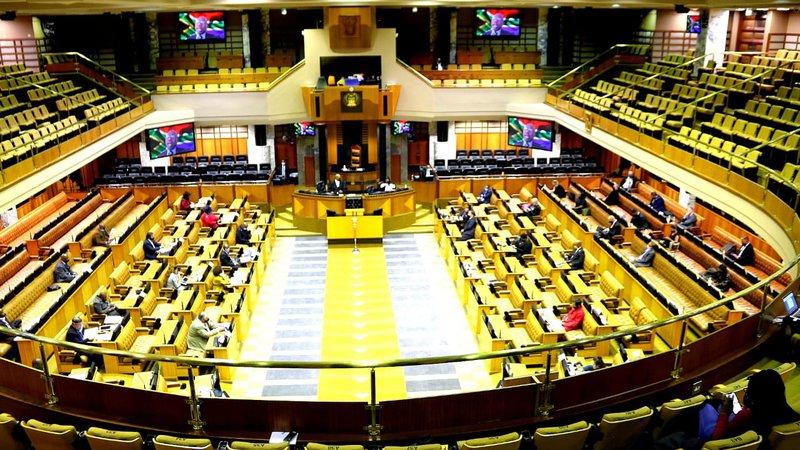
“South Africa’s Parliament is continuing its consideration of proposed amendments intended to strengthen the country’s anti-money-laundering and counter-terrorism-financing framework, including measures affecting financial oversight, company ownership information and nonprofit organisations. The public hearings scheduled for 20 October 2026 provide an opportunity to scrutinise the proposals, consider their practical consequences and assess how effectively they could protect the financial system while safeguarding lawful activity and procedural fairness.”
South Africa’s proposed anti-money-laundering legislation faces parliamentary scrutiny as lawmakers weigh stronger financial controls
South Africa’s efforts to strengthen financial transparency and combat money laundering are back in the parliamentary spotlight, with public hearings on the General Laws (Anti-Money Laundering and Combating Terrorism Financing) Amendment Bill scheduled for Tuesday, 20 October 2026. The proposed legislation addresses several important areas of the country’s regulatory framework, including company ownership disclosures, financial intelligence, nonprofit organisations and the powers available to regulators investigating potential financial wrongdoing.
The parliamentary process represents an important stage in determining whether the proposed amendments can improve the country’s ability to identify suspicious financial activity, hold institutions accountable and strengthen confidence in South Africa’s financial system. Nevertheless, the bill remains a legislative proposal, and its precise effects will depend on the parliamentary process, the final wording of any enacted provisions and the arrangements established for implementation.
Why the legislation matters
Money laundering involves disguising the origins of money obtained through unlawful activities so that it appears to come from legitimate sources. Terrorism financing, meanwhile, involves providing or collecting funds to support terrorist activities. Both present challenges for governments, financial institutions, law enforcement agencies and international regulators.
South Africa’s financial system serves a large domestic economy and connects businesses, investors and consumers with international markets. Maintaining effective safeguards against illicit financial flows is therefore important for economic stability, investor confidence and the credibility of financial institutions.
The General Laws Amendment Bill seeks to strengthen several existing laws rather than create an entirely separate regulatory system. According to Parliament’s published description, the proposed changes cover legislation dealing with companies, close corporations, nonprofit organisations, financial intelligence and financial-sector regulation.
This broad approach reflects the interconnected nature of financial crime. Investigations may involve company structures, complex ownership arrangements, financial transactions and organisations operating across multiple jurisdictions. Authorities can face difficulties establishing who ultimately controls an entity when ownership is hidden behind layers of corporate arrangements.
Consequently, effective legislation must do more than establish reporting obligations. It must also provide appropriate investigative powers, clear procedures, proportionate sanctions and safeguards against the misuse of regulatory authority.
Greater scrutiny of company ownership
One important aspect of the proposed amendments concerns corporate transparency.
The bill proposes changes to the Companies Act that would require relevant entities to report material discrepancies in beneficial-ownership information to the Companies and Intellectual Property Commission. It also proposes powers relating to the deregistration of companies that fail to submit securities registers within a specified period, together with administrative penalties and a review mechanism through the Companies Tribunal.
Beneficial ownership refers to the natural person or persons who ultimately own or control a company, even when the immediate registered owner is another company or intermediary.
This information can help regulators identify individuals who exercise actual control over businesses. It can also assist investigations into suspected corruption, fraud, sanctions evasion and the movement of proceeds from unlawful activities.
However, stronger disclosure requirements also create responsibilities for legitimate businesses. Companies must understand which records they are required to maintain, how quickly information must be updated and what procedures apply when ownership information is incomplete or disputed.
For small businesses, compliance costs can be particularly important. Clear guidance, accessible reporting systems and reasonable administrative procedures would help ensure that the legislation strengthens transparency without imposing unnecessary burdens on companies that operate lawfully.
The proposed review mechanism is also significant. If regulators impose administrative penalties, affected entities need to understand the reasons for those decisions and have access to the applicable review procedures. Effective enforcement depends not only on the authority to penalise noncompliance but also on the consistency and fairness with which that authority is exercised.
Changes affecting nonprofit organisations
Another important component of the bill concerns nonprofit organisations.
The published parliamentary description indicates proposals to extend the functions of the relevant directorate responsible for nonprofit organisations, introduce administrative sanctions, provide for appeals against certain sanctions and establish maximum penalties for offences.
Nonprofit organisations perform important functions in South Africa, including delivering community services, supporting vulnerable households, providing education and facilitating humanitarian assistance. Their activities can depend on public donations, private contributions, grants and international funding.
Regulatory safeguards are necessary to prevent legitimate charitable structures from being exploited for illicit financial activity. At the same time, the rules must distinguish between genuine wrongdoing and ordinary administrative mistakes.
An effective system should therefore combine appropriate oversight with clear obligations, proportionate enforcement and accessible appeal procedures.
Organisations need practical information about registration, reporting, recordkeeping and the circumstances in which sanctions may apply. Smaller organisations, which often operate with limited staff and financial resources, may require additional guidance to meet their obligations.
Public scrutiny of the bill provides an opportunity to examine whether the proposed measures strike an appropriate balance between preventing abuse and protecting legitimate nonprofit activity.
Expanding financial intelligence and investigative powers
The bill also proposes changes to the Financial Intelligence Centre Act, which provides an important part of South Africa’s framework for identifying and reporting suspicious financial activity.
According to Parliament’s bill summary, the proposed amendments include expanding certain information-sharing arrangements, extending record-retention requirements, broadening circumstances in which information may be requested from public entities and municipalities, and introducing provisions concerning lifestyle audits. Other proposed changes address reporting obligations, monitoring orders and protections for certain people who submit reports.
These measures could have practical consequences for financial institutions and other entities subject to reporting requirements.
Access to reliable information can help authorities investigate transactions that appear inconsistent with a person’s known financial activities or identify connections between apparently unrelated entities. Information-sharing arrangements may also reduce the difficulties created when relevant records are held by different institutions.
Nevertheless, investigative powers must operate within applicable legal safeguards. Authorities should have clear grounds for exercising their powers, appropriate authorisation procedures and accountability mechanisms.
Privacy, confidentiality and the protection of sensitive financial information remain important considerations. The existence of an investigative power does not mean that every transaction or individual should automatically be treated as suspicious.
The effectiveness of the proposed framework will depend on the quality of intelligence, the training of officials, cooperation between relevant institutions and the ability to distinguish meaningful indicators of criminal activity from ordinary financial transactions.
Responsibilities for financial institutions
The proposed changes to financial-sector regulation are also relevant to the operation of banks and other regulated financial businesses.
Parliament’s description identifies proposals intended to strengthen regulators’ ability to obtain information about significant and beneficial owners, investigate certain circumstances and address services that resemble existing financial products or produce similar outcomes.
Financial services continue to evolve as businesses adopt digital platforms, new payment arrangements and alternative ways of delivering products to customers. Regulatory frameworks must be capable of responding to these developments without creating unnecessary uncertainty for consumers or businesses.
Institutions may need to review their compliance procedures, customer verification systems, internal reporting arrangements and processes for responding to requests from regulators.
The practical burden will depend on the final statutory wording, relevant regulations and guidance issued by the responsible authorities.
For customers, stronger safeguards may help reduce exposure to fraudulent activity and improve the integrity of financial services. However, implementation should also consider the risk that poorly designed procedures could delay legitimate transactions or disproportionately affect people who have difficulty supplying conventional documentation.
A successful approach would combine effective risk assessment with accessible customer support, clear communication and proportionate checks.
Parliamentary hearings and public participation
The Select Committee on Finance’s public hearings, listed in Parliament’s programme for 20 October 2026, provide a formal opportunity to examine the bill.
Public hearings are important because legislation can affect different groups in different ways. Financial institutions may focus on reporting costs and operational responsibilities, while businesses may be concerned about ownership records, administrative penalties and compliance deadlines.
Nonprofit organisations may emphasise the need for practical guidance and proportionate requirements. Civil society groups and specialists may examine human rights, privacy, transparency and the risk of inconsistent enforcement.
Parliamentary consideration allows these perspectives to be examined alongside the government’s stated regulatory objectives.
However, participation alone does not guarantee that every concern will be adopted. Legislators must evaluate submissions, consider the public interest and determine whether amendments are necessary before the bill progresses through the remaining stages.
The official parliamentary record should be consulted for subsequent decisions, amendments and voting outcomes. The fact that hearings are scheduled does not establish that the bill has been approved, enacted or commenced.
Implications for businesses and the public
For South African businesses, the immediate priority is to understand the distinction between existing legal obligations and proposed changes.
Companies should continue complying with the laws currently in force and monitor official announcements for any new requirements that may eventually apply. They should not assume that every proposal in the bill is already legally binding.
Businesses with complex ownership structures may benefit from reviewing their existing records and identifying information that could require clarification. Nonprofit organisations can similarly assess their current recordkeeping and governance arrangements without assuming that proposed sanctions have already taken effect.
Financial institutions should monitor the parliamentary process and prepare to evaluate the final requirements once authoritative information becomes available.
Members of the public should also distinguish between the announcement of a bill, parliamentary committee deliberations, passage by the relevant legislative bodies, presidential assent where required and the commencement of the resulting law.
These are separate stages, and each has different legal consequences.
What happens next?
The bill’s future depends on parliamentary scrutiny and the applicable legislative process. Committee deliberations may result in recommendations or proposed amendments before the relevant provisions proceed through the remaining stages.
The final outcome will determine which proposed measures are adopted, how they are worded and when they become legally effective.
For that reason, the official bill record remains the most reliable source for tracking its status. Parliament’s weekly programme confirms that the Select Committee on Finance was scheduled to conduct public hearings on the bill on 20 October 2026, but further official records are needed to confirm any decisions made during or after those proceedings.
Conclusion
South Africa’s proposed General Laws (Anti-Money Laundering and Combating Terrorism Financing) Amendment Bill is an important legislative development because it addresses corporate transparency, financial intelligence, nonprofit oversight and regulatory powers within a connected legal framework.
Its potential value lies in strengthening the tools available to identify illicit financial activity while establishing clear obligations for businesses and institutions. Yet strong legislation must also be enforceable, proportionate and consistent with the rule of law.
The parliamentary hearings scheduled for 20 October 2026 offer an opportunity to examine those questions before the legislative process reaches its next stage. Whether the proposals deliver meaningful improvements will ultimately depend on the final provisions, the quality of implementation, institutional capacity and the safeguards that govern enforcement.
For South Africans, the central issue is not simply whether regulators receive additional powers, but whether those powers can be used effectively, transparently and fairly to protect the financial system and the public interest.



