




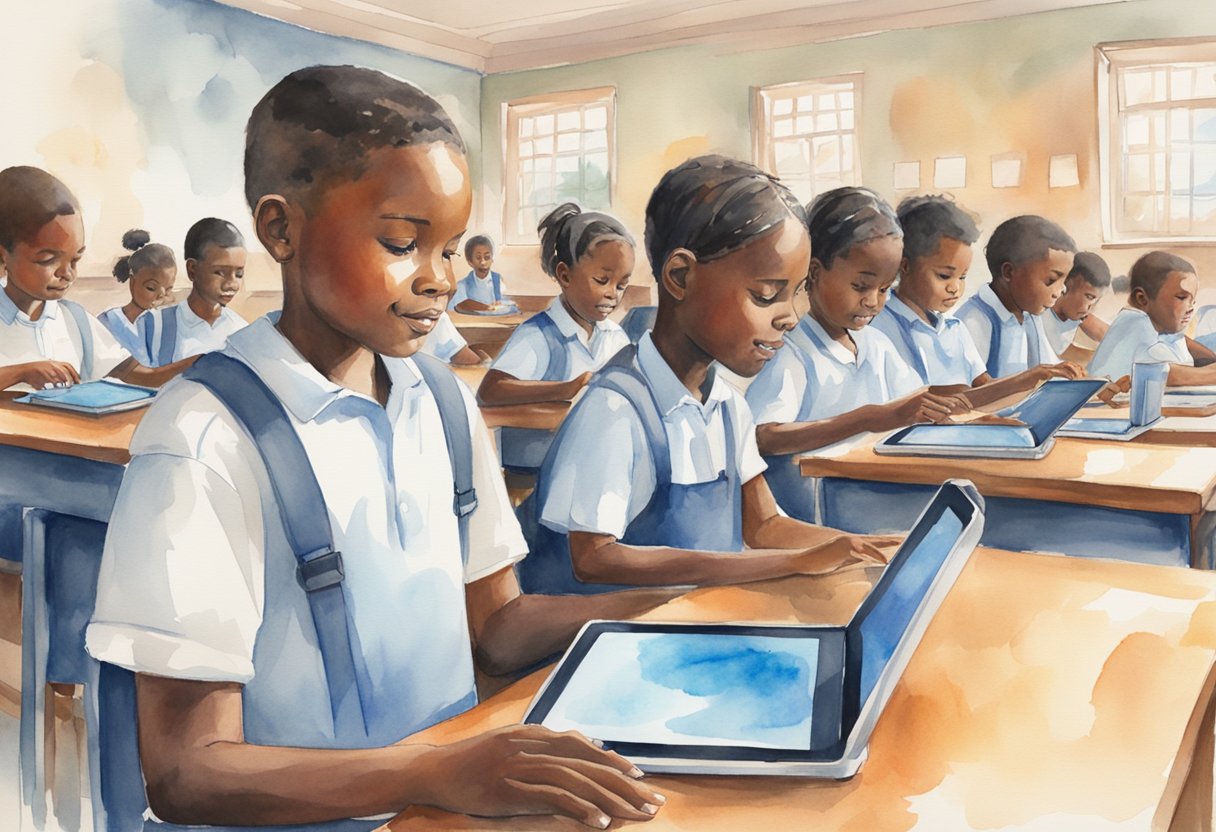
“The CSIR has introduced groundbreaking AI-powered tools designed to tackle South Africa’s language and literacy challenges, including neural text-to-speech technology and multilingual story generators. These innovations aim to provide culturally relevant, accessible, and personalized learning experiences that can significantly improve literacy rates nationwide.”
Artificial Intelligence (AI) continues to reshape societies worldwide, and South Africa is no exception. On 16 September 2026, the Council for Scientific and Industrial Research (CSIR) hosted a webinar showcasing how AI can address one of the country’s most pressing challenges: language learning and literacy. With South Africa’s diverse linguistic landscape—11 official languages and countless dialects—the CSIR’s innovations promise to revolutionize education by making learning more inclusive, accessible, and culturally relevant.
The Context: Literacy Challenges in South Africa
South Africa faces persistent literacy challenges. According to national assessments, a significant proportion of learners struggle with reading comprehension by Grade 4. This issue is compounded by linguistic diversity, where many children are taught in languages different from their mother tongue. Traditional teaching methods often fail to accommodate this complexity, leaving gaps in literacy development.
AI offers a unique solution by enabling personalized learning experiences tailored to each student’s linguistic background. The CSIR’s initiative directly addresses these systemic challenges.
The Innovations Introduced
- Neural Text-to-Speech Technology
- Capable of producing natural-sounding voices across all 11 official languages.
- Provides learners with auditory reinforcement, improving comprehension and pronunciation.
- Supports accessibility for visually impaired students.
- Multilingual Story Generator
- Creates culturally relevant stories in multiple languages.
- Designed to foster early literacy among young learners.
- Encourages engagement by reflecting local traditions, idioms, and cultural contexts.
Together, these tools represent a paradigm shift in how technology can support education in multilingual societies.
Impact on Classrooms
- Personalized Learning: Students can access materials in their preferred language, reducing barriers to comprehension.
- Teacher Support: Educators gain AI-driven resources to supplement traditional teaching methods.
- Inclusivity: Learners from marginalized communities benefit from culturally relevant content.
- Scalability: AI tools can be deployed across urban and rural schools, bridging geographic disparities.
Broader Societal Implications
The CSIR’s initiative is not just about education—it reflects a broader trend of AI addressing societal challenges in developing nations. By leveraging local expertise and innovation, South Africa demonstrates how AI can be adapted to unique cultural and linguistic contexts.
This project also aligns with global efforts to use AI for social good, echoing UNESCO’s emphasis on open education and equitable access to learning resources.
Expert Perspectives
- CSIR Researchers: Emphasize the importance of tailoring AI to South Africa’s linguistic diversity.
- Educators: Highlight how these tools can reduce workload and enhance teaching effectiveness.
- Policy Makers: See AI as a strategic tool to meet national literacy targets and improve educational outcomes.
Challenges and Risks
While promising, the initiative faces challenges:
- Infrastructure Gaps: Rural schools may lack the digital infrastructure to fully utilize AI tools.
- Training Needs: Teachers require training to integrate AI effectively into classrooms.
- Data Privacy: Ensuring student data is protected remains critical.
- Cost: Scaling AI solutions across the country requires significant investment.
Future Outlook
The CSIR’s innovations mark the beginning of a new era in South African education. If successfully implemented, they could:
- Raise literacy rates significantly.
- Serve as a model for other multilingual nations.
- Position South Africa as a leader in AI-driven education within the developing world.
Conclusion
The CSIR’s unveiling of AI-powered language and literacy tools is a landmark development in South Africa’s educational landscape. By combining neural text-to-speech and multilingual story generation, the initiative addresses deep-rooted challenges in literacy and inclusivity. As AI continues to evolve, its role in shaping equitable education systems will only grow, offering hope for a future where every child, regardless of language or background, has the opportunity to thrive.



