




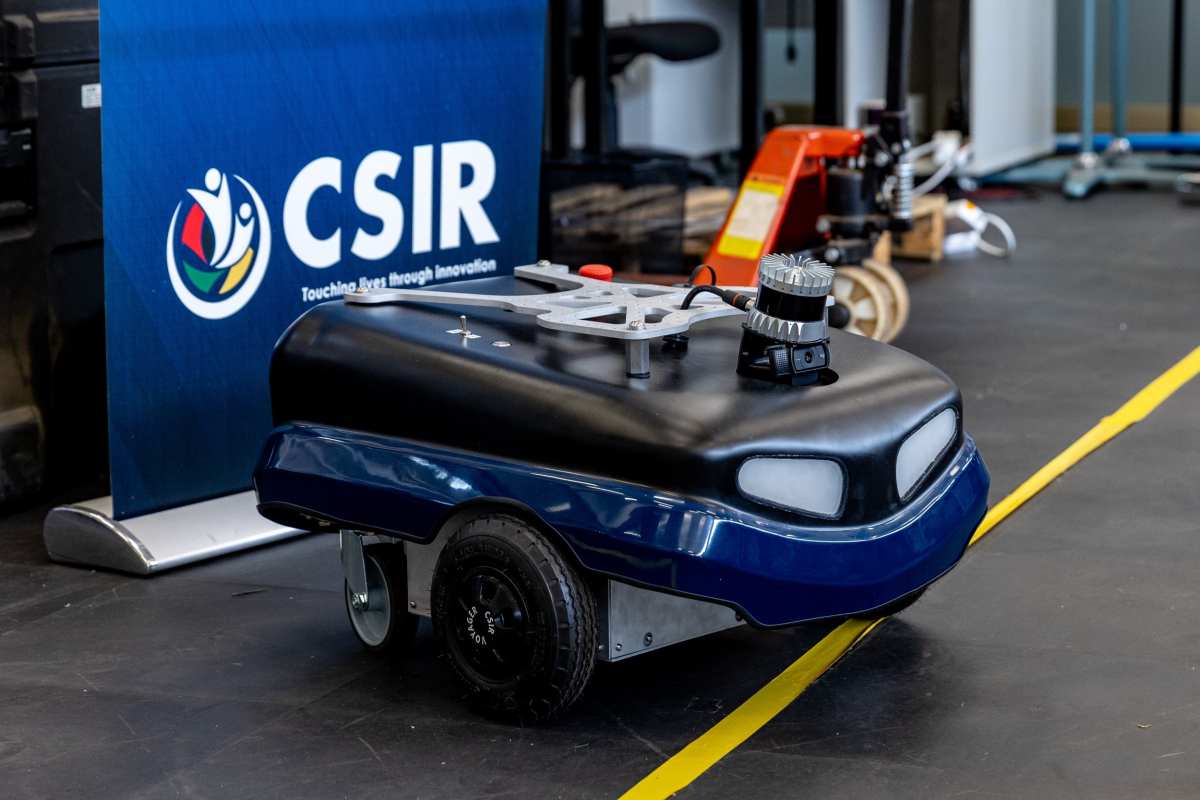
“The CSIR presented cutting-edge robotics systems at the Manufacturing Indaba 2026, demonstrating applications in precision manufacturing, automated assembly, and industrial inspection. These innovations aim to reduce reliance on imports, strengthen localization, and enhance South Africa’s global competitiveness.”
South Africa’s manufacturing sector is undergoing a transformative shift, driven by the integration of robotics and advanced technologies showcased by the Council for Scientific and Industrial Research (CSIR) at the Manufacturing Indaba 2026. Held at the Sandton Convention Centre in Johannesburg, the event carried the theme “Made in Africa: Scaling Growth, Shaping Trade”, reflecting the broader agenda of the African Continental Free Trade Area (AfCFTA). The CSIR’s robotics showcase is more than a technological exhibition—it is a strategic intervention aimed at revitalizing South Africa’s industrial base, fostering resilience, and positioning the nation as a leader in innovation-driven manufacturing.
Robotics at the Forefront
Among the technologies presented, robotics stood out as the most transformative. CSIR researchers demonstrated robotic systems capable of precision manufacturing, automated assembly, and industrial inspection. These systems are not confined to research laboratories; they are already being integrated into production lines, warehouses, and even healthcare applications. The goal is clear: reduce reliance on imported machinery, enhance localization, and strengthen South Africa’s competitiveness in global markets.
Robotics offers multiple advantages:
- Efficiency Gains: Automated assembly lines reduce production time and minimize human error.
- Cost Reduction: Localized robotics manufacturing lowers dependency on costly imports.
- Quality Assurance: Industrial inspection robots ensure consistent product standards.
- Sectoral Expansion: Applications extend beyond manufacturing into logistics, healthcare, and agriculture.
Complementary Technologies
The robotics showcase was complemented by other advanced manufacturing technologies:
- Metal 3D Printing: Enables rapid prototyping and customized production.
- Hot Isostatic Press (HIP): Improves material strength and durability.
- Laser Surface Engineering: Enhances industrial component longevity.
- Materials Engineering: Supports sustainable and eco-friendly manufacturing.
Together, these technologies form an ecosystem where robotics plays a central role in automation and efficiency.
Economic and Policy Context
The South African government has prioritized industrial localization to reduce dependency on imports and create jobs. Robotics aligns with this vision by enabling local manufacturers to produce high-quality goods at competitive costs. The Department of Science, Technology and Innovation emphasized that robotics is not just about machines—it is about building resilience in the manufacturing sector and unlocking new opportunities for trade under AfCFTA.
The AfCFTA framework provides South Africa with a unique opportunity to leverage robotics as a competitive advantage. By scaling up innovation-driven manufacturing, the country can expand its export base, strengthen intra-African trade, and attract foreign investment.
Education and Skills Development
Robotics education is gaining momentum in South Africa. Initiatives are integrating coding and robotics into school curricula, ensuring that future generations are equipped with the skills needed to thrive in industries shaped by automation. The CSIR’s showcase complements these efforts by demonstrating real-world applications that inspire learners and educators alike.
Universities and technical colleges are also expanding their robotics programs, creating a pipeline of skilled engineers and technicians. This investment in human capital is critical to sustaining the momentum of industrial innovation.
Challenges and Opportunities
Despite the promise of robotics, challenges remain:
- High Initial Costs: Robotics systems require significant upfront investment.
- Skills Gap: Training workers to operate and maintain advanced systems is essential.
- Infrastructure Limitations: Reliable electricity and connectivity are prerequisites for automation.
However, the opportunities outweigh the challenges. Robotics can catalyze job creation in design, programming, and maintenance, offsetting concerns about automation-related job losses. Moreover, localized production reduces vulnerability to global supply chain disruptions.
Global Competitiveness
South Africa’s embrace of robotics positions it as a competitive player in global manufacturing. By integrating robotics into its industrial strategy, the country can attract multinational corporations seeking efficient and resilient production bases. This aligns with President Cyril Ramaphosa’s vision of South Africa as a globally competitive manufacturing hub.
Conclusion
The CSIR’s robotics showcase at the Manufacturing Indaba 2026 marks a pivotal moment in South Africa’s industrial journey. Robotics, complemented by advanced manufacturing technologies, offers a pathway to resilience, competitiveness, and sustainable growth. As South Africa integrates these innovations into its manufacturing ecosystem, it strengthens its position within AfCFTA and the global economy. The future of South African manufacturing is not just automated—it is innovative, localized, and globally competitive.



