




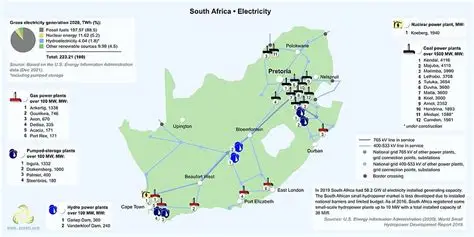
“South Africa’s Electricity and Energy Minister, Dr. Kgosientsho Ramokgopa, announced advanced plans to subsidize electricity costs for 11 energy-intensive companies, following the closure of Transalloys’ manganese smelter due to high tariffs. The initiative aims to preserve industrial jobs, expand capacity utilization, and ensure that households do not bear the financial burden of relief measures.”
South Africa’s industrial sector has long been plagued by escalating electricity tariffs, eroding competitiveness and forcing closures of critical facilities. On July 16, 2026, Minister of Electricity and Energy Dr. Kgosientsho Ramokgopa addressed the Manufacturing Indaba in Sandton, unveiling a framework to provide electricity price relief to energy-intensive industries. This policy marks a pivotal intervention in the country’s energy and economic landscape, with implications for jobs, industrial growth, and national development.
Background: The Energy Cost Crisis
Electricity tariffs in South Africa have risen sharply over the past decade, driven by Eskom’s financial struggles and infrastructure constraints. Industrial users—particularly smelters, steel manufacturers, and chemical producers—have borne the brunt of these increases. Transalloys, the country’s last manganese smelter, recently halted production at its Mpumalanga facility, citing unsustainable losses from electricity costs. This closure highlighted the urgent need for government intervention to prevent further industrial decline.
Ramokgopa’s Announcement
Ramokgopa confirmed that 11 energy-intensive companies will benefit from subsidized electricity tariffs. The framework, already approved by Cabinet, builds on earlier relief extended to Glencore and Samancor. Importantly, the minister emphasized that households will not subsidize industrial relief, ensuring consumer protection. Instead, the program is designed to balance industrial sustainability with fiscal responsibility.
Economic Impact
The Steel and Engineering Industries Federation of Southern Africa (SEIFSA) estimates that the sector has lost 220,000 jobs in the past 15 years, shrinking from 575,000 to 360,000 employees. Ramokgopa’s relief plan seeks to reverse this trend by stabilizing operations, preventing further closures, and encouraging investment in manufacturing capacity. Analysts project that the initiative could safeguard tens of thousands of jobs while boosting industrial output.
Industrial Competitiveness
High electricity costs have hollowed out South Africa’s industrial base, undermining competitiveness against global rivals. By reducing tariffs for energy-intensive firms, the government aims to restore competitiveness in sectors such as mining, metallurgy, and chemicals. This move could also attract foreign investment, particularly in value-added manufacturing, which has been declining due to energy constraints.
Policy Design
Ramokgopa stressed that the relief framework is not a blanket subsidy but a targeted intervention. Companies must meet qualification criteria, including energy intensity and strategic importance to the economy. The program will be rolled out in phases, with announcements expected in the coming weeks. Transparency and accountability mechanisms are embedded to prevent misuse and ensure equitable distribution.
Broader Energy Strategy
The announcement aligns with South Africa’s broader energy transition strategy. While relief measures address immediate industrial challenges, the government is simultaneously expanding renewable energy capacity. On July 7, 2026, NERSA approved four solar projects under REIPPPP Bid Window 7.3, adding over 1GW of capacity to the national grid.
Renewable Energy Integration
The approved projects include three developed by Red Rocket SA and one by French energy major Engie, spanning Mpumalanga and the Free State. Together, they will deliver 890MW contracted capacity to the grid, supporting industrial growth and reducing reliance on coal. This dual approach—industrial relief and renewable expansion—illustrates the government’s attempt to balance short-term economic stability with long-term sustainability.
Risks and Challenges
Critics caution that subsidizing electricity for industries could distort market dynamics and burden taxpayers indirectly. Ensuring that relief does not undermine Eskom’s financial recovery remains a key challenge. Moreover, integrating new renewable projects requires significant investment in transmission infrastructure, which has historically lagged behind generation capacity.
Conclusion
Ramokgopa’s electricity price relief initiative represents a decisive step to safeguard South Africa’s industrial base, protect jobs, and stimulate growth. Coupled with renewable energy expansion, the policy reflects a pragmatic balance between immediate economic needs and long-term sustainability. As implementation unfolds, the success of this initiative will hinge on transparent governance, effective targeting, and continued investment in energy infrastructure.



