




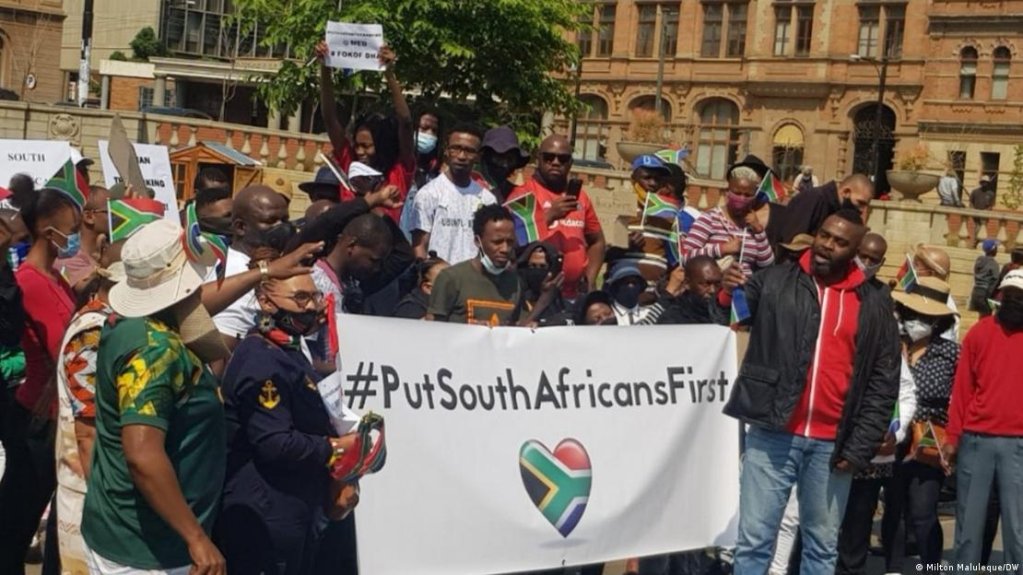
“South Africa’s June 30 protests against illegal immigration have become a flashpoint for microeconomic debates, particularly around jobs, wages, and public services. While undocumented migrants are accused of straining resources and depressing wages, economists argue they also contribute to demand, entrepreneurship, and GDP growth.”
On June 30, 2026, South Africa witnessed nationwide protests centered on illegal immigration, but beneath the political slogans lay deep microeconomic concerns. The demonstrations, organized by civic movements and amplified by public frustration, revealed how immigration intersects with labor markets, wages, public services, and fiscal policy. This article explores the economic dimensions of the protests, analyzing both the costs and contributions of undocumented migrants to South Africa’s economy.
The Scale of Immigration and Economic Uncertainty
Estimates of undocumented migrants in South Africa vary widely, ranging from 2.5 million to 12 million. This uncertainty complicates economic analysis, leaving policymakers and citizens grappling with incomplete data. The lack of clarity fuels public anxiety, as perceptions of migrants’ impact on jobs and services often outweigh measurable evidence.
Labor Market Pressures
One of the most contentious issues is the labor market. Migrants are heavily concentrated in the informal economy, with some estimates suggesting they make up 18.3% of workers—around 700,000 people. Many accept wages below market rates, creating tension with local workers who feel undercut. This wage competition is most pronounced in low-skilled sectors such as construction, hospitality, and agriculture.
Yet, the narrative is not one-sided. Migrants also fill labor gaps, particularly in industries where South Africans are less represented. Their participation in agriculture and mining, for example, supports sectors vital to GDP growth. Moreover, by accepting lower wages, migrants can reduce production costs, potentially making South African goods more competitive internationally.
Entrepreneurship and Demand Creation
Beyond wage competition, migrants contribute to demand creation. Many start small businesses in informal trade, hospitality, and services. These enterprises not only provide livelihoods but also stimulate local economies by creating supply chains and consumer demand. Economists argue that migrant entrepreneurship fosters innovation and resilience in communities, particularly in urban centers where informal trade thrives.
This dual role—competing for jobs while creating new opportunities—illustrates the complexity of immigration’s microeconomic impact. It challenges simplistic narratives that portray migrants solely as burdens or solely as assets.
Public Services and Fiscal Strain
Public services are another flashpoint. Migrants, both documented and undocumented, rely on healthcare, education, and housing. Critics argue that this places unsustainable pressure on already strained systems. Enforcement of immigration laws adds further fiscal costs, with detention, deportation, and policing consuming significant taxpayer resources. Repeated deportations, where individuals return shortly after being repatriated, are often criticized as wasteful.
However, migrants also contribute indirectly to public finances. By participating in the economy, they pay value-added tax (VAT) on goods and services, and some contribute to income tax through formal employment. Their role in sustaining demand for public transport, housing, and consumer goods indirectly supports government revenue streams.
Informal Economy Dynamics
The informal economy is central to understanding immigration’s microeconomic impact. Migrants often dominate informal trade, selling goods in markets, streets, and townships. This sector, while outside formal regulation, is a lifeline for millions of South Africans who rely on affordable goods and services.
Yet, the lack of regulation creates challenges. Informal traders often operate without permits, leading to clashes with municipalities. South African entrepreneurs argue that weak enforcement of regulations disadvantages them, as illegal traders bypass costs associated with compliance.
The National Informal Traders Alliance of South Africa (NITASA) has emphasized that the real issue lies in poor governance. Ineffective permit processing, inadequate infrastructure, and weak border management exacerbate tensions. According to NITASA, if regulations were properly implemented, the informal economy could thrive without fueling resentment toward migrants.
Government Response and Policy Implications
The South African government has rejected claims of a nationwide shutdown, insisting that June 30 would be a normal working day. Officials stressed that vigilantism, xenophobia, and misinformation would not be tolerated. Law enforcement agencies intensified operations, recording over 5,000 immigration-related arrests in mid-June.
This response reflects the state’s attempt to balance constitutional rights with economic stability. By reaffirming the right to peaceful protest while condemning violence, the government sought to protect both citizens and migrants. Yet, the protests highlight the urgent need for coherent immigration and labor policies that address microeconomic realities.
Broader Economic Implications
The protests underscore how immigration debates intertwine with broader economic challenges: unemployment, inequality, and fiscal strain. South Africa’s unemployment rate remains high, particularly among youth, intensifying resentment toward migrants perceived as competitors. At the same time, inequality persists, with wealth concentrated among a small elite.
Migrants, by participating in low-wage sectors, expose structural weaknesses in the economy. Their presence highlights the need for inclusive growth strategies that expand opportunities for both citizens and migrants. Without such strategies, tensions are likely to persist, manifesting in protests and political polarization.
Conclusion
South Africa’s June 30 protests reveal the microeconomic dimensions of immigration debates. Migrants both strain and sustain the economy, competing for jobs while creating demand, burdening public services while contributing to GDP. The challenge lies in crafting policies that recognize these dual realities, balancing enforcement with inclusion.
Ultimately, the protests are not just about immigration—they are about the economy itself. They reflect citizens’ frustrations with unemployment, inequality, and governance, and they demand solutions that go beyond scapegoating migrants. Addressing these issues requires a nuanced understanding of microeconomics, one that sees migrants not as threats but as participants in a complex, interconnected system.



