




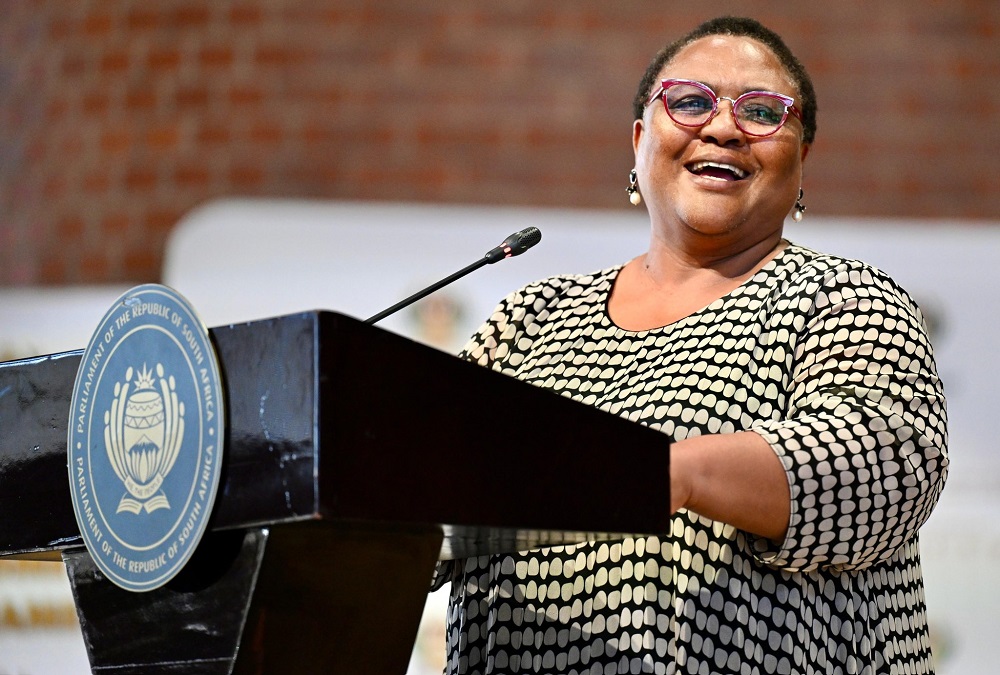
“The Economic Freedom Fighters (EFF), supported by the uMkhonto weSizwe (MK) Party, have tabled a motion of no confidence against Speaker Thoko Didiza, accusing her of failing to defend Parliament’s independence during the Phala Phala impeachment inquiry. This activism-driven move highlights growing tensions in South Africa’s political landscape, with opposition parties framing the motion as a fight for accountability, while the ANC and allies dismiss it as political theatre.”
South Africa’s political stage is once again dominated by activism within Parliament, as the Economic Freedom Fighters (EFF) intensify their campaign to remove National Assembly Speaker Thoko Didiza. The motion of no confidence, scheduled for debate and vote on 27 August 2026, has become a focal point for discussions about parliamentary independence, accountability, and the role of activism in shaping governance.
Background to the Motion
The EFF first tabled the motion in June 2026, citing Didiza’s refusal to oppose President Cyril Ramaphosa’s court interdict against the Phala Phala impeachment inquiry. Opposition parties argue that her decision undermined Parliament’s independence, prioritizing political loyalty over institutional accountability. Didiza, however, insists that her actions were guided by legal advice and Constitutional Court precedent, saving Parliament from costly litigation.
Activism and Political Mobilization
The motion reflects a broader wave of activism within South Africa’s political environment. The EFF and MK Party have positioned themselves as defenders of parliamentary sovereignty, framing their campaign as a grassroots struggle against executive overreach. Activists argue that Parliament must serve as a check on presidential power, and Didiza’s stance represents a dangerous precedent of subservience.
Social media has amplified this activism, with hashtags and online campaigns calling for accountability. Citizens have expressed mixed views: some praise Didiza for protecting taxpayer money, while others accuse her of shielding Ramaphosa from scrutiny. This digital activism underscores how political debates increasingly spill into public discourse, shaping narratives beyond the parliamentary chamber.
Parliamentary Dynamics
The motion is unlikely to succeed given the ANC’s numerical strength in Parliament and its coalition partners. However, the debate itself is significant. It exposes fractures within the Government of National Unity (GNU) arrangement, where opposition parties continue to challenge ANC dominance. The activism-driven motion also forces MPs to publicly declare their stance on parliamentary independence, potentially influencing future coalition negotiations.
Broader Political Context
This activism comes at a time when South Africa faces multiple governance challenges. President Ramaphosa has been under pressure to address anti-immigration protests, economic stagnation, and declining public trust in institutions. Activism within Parliament mirrors broader societal demands for accountability, transparency, and reform. The EFF’s motion, though symbolic, resonates with citizens frustrated by perceived government failures.
Public Reactions
Public opinion remains divided. Supporters of Didiza argue that she acted responsibly, avoiding unnecessary legal battles. Critics, however, see her decision as a betrayal of Parliament’s duty to hold the executive accountable. Activists outside Parliament have organized demonstrations, framing the vote as a test of whether South Africa’s democracy prioritizes accountability or political expediency.
Implications for Activism in Politics
The motion illustrates how activism is increasingly embedded within formal political processes. Opposition parties are not only mobilizing protests but also leveraging parliamentary mechanisms to advance activist agendas. This blending of activism and politics challenges traditional boundaries, creating new avenues for accountability while also raising questions about political stability.
Conclusion
While the motion of no confidence against Thoko Didiza may not succeed numerically, its significance lies in the activism it represents. The EFF and MK Party have transformed parliamentary procedure into a platform for activism, forcing national debate on independence, accountability, and governance. For South Africa, the episode underscores the growing role of activism in shaping political outcomes, ensuring that even symbolic motions can have lasting impact on public discourse and institutional credibility.



