




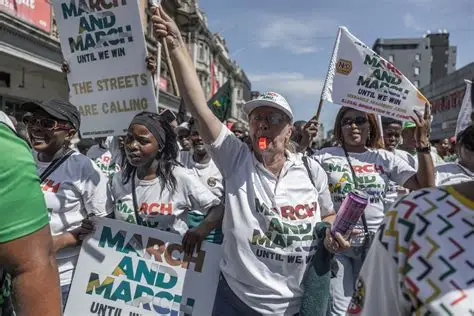
“President Cyril Ramaphosa addressed Parliament on 26 August 2026, pledging arrests and prosecutions of those responsible for xenophobic attacks against foreign nationals. His remarks followed intense activism from civil society groups and opposition leaders, who accused the government of failing to act decisively against rising anti-migrant violence.”
South Africa is once again at the center of continental debate as xenophobic violence resurfaces, prompting widespread condemnation from activists, opposition parties, and international observers. On 26 August 2026, President Cyril Ramaphosa delivered a firm commitment in Parliament, promising that perpetrators of anti-migrant attacks would face arrest and prosecution. This announcement comes amid growing activism demanding accountability and justice for victims of xenophobic violence.
Background: Rising Xenophobic Violence
South Africa has long struggled with sporadic outbreaks of xenophobic violence, often targeting migrants from Zimbabwe, Mozambique, Nigeria, and other African states. These attacks are frequently linked to economic hardship, unemployment, and perceptions of resource competition. Recent incidents have escalated in brutality, with businesses owned by migrants destroyed and communities destabilized. Activists argue that the government’s slow response has emboldened perpetrators, creating an environment of impunity.
Activism and Political Pressure
Civil society organizations, including human rights groups and migrant advocacy networks, have staged protests across major cities, demanding stronger protections for foreign nationals. Opposition leader Julius Malema of the Economic Freedom Fighters (EFF) accused the government of tacitly allowing violence, claiming that perpetrators acted openly in the presence of police. Activists have framed xenophobia as not only a social crisis but also a political failure, urging Ramaphosa to demonstrate leadership through concrete policy action.
Ramaphosa’s Parliamentary Commitment
In his address, Ramaphosa rejected claims of state-sanctioned violence, stressing that arrests had already been made and further prosecutions were imminent. He declared: “Those who are perpetrating and have perpetrated acts of violence against foreign nationals are going to be dealt with.” This statement was designed to reassure both domestic and international audiences that South Africa remains committed to rule of law and continental unity.
Policy Dimensions
- Law Enforcement: Police investigations are ongoing, with leaders of violent groups under scrutiny. This signals a shift toward targeted enforcement rather than reactive policing.
- Diplomatic Engagement: Ramaphosa emphasized dialogue with African leaders, reaffirming South Africa’s commitment to Pan-African cooperation.
- Public Messaging: By addressing Parliament directly, Ramaphosa sought to counter narratives of government complicity and restore public confidence.
Civil Society Response
Activists remain skeptical, arguing that promises must translate into visible prosecutions and systemic reforms. Migrant advocacy groups have called for:
- Community policing initiatives to protect vulnerable populations.
- Legal reforms to classify xenophobic attacks as hate crimes.
- Public awareness campaigns to combat anti-migrant sentiment.
International Implications
South Africa’s reputation as a Pan-African leader has come under strain. The African Union (AU) and Southern African Development Community (SADC) have expressed concern that xenophobic unrest undermines continental unity. Ramaphosa’s pledge is therefore not only a domestic policy stance but also a diplomatic necessity to safeguard South Africa’s standing in Africa.
Activism as a Driving Force
Grassroots activism has played a pivotal role in shaping the government’s response. From street protests to legal advocacy, activists have kept xenophobia at the forefront of political discourse. Their efforts highlight the power of civil society in holding leaders accountable and pushing for reforms that align with constitutional values.
Conclusion
Ramaphosa’s vow to prosecute perpetrators of xenophobic violence represents a turning point in South Africa’s political activism landscape. While activists welcome the commitment, they insist that actions must follow words. The coming months will test whether South Africa can balance domestic challenges with its continental obligations, ensuring that migrant rights are protected and Pan-African solidarity preserved.



