




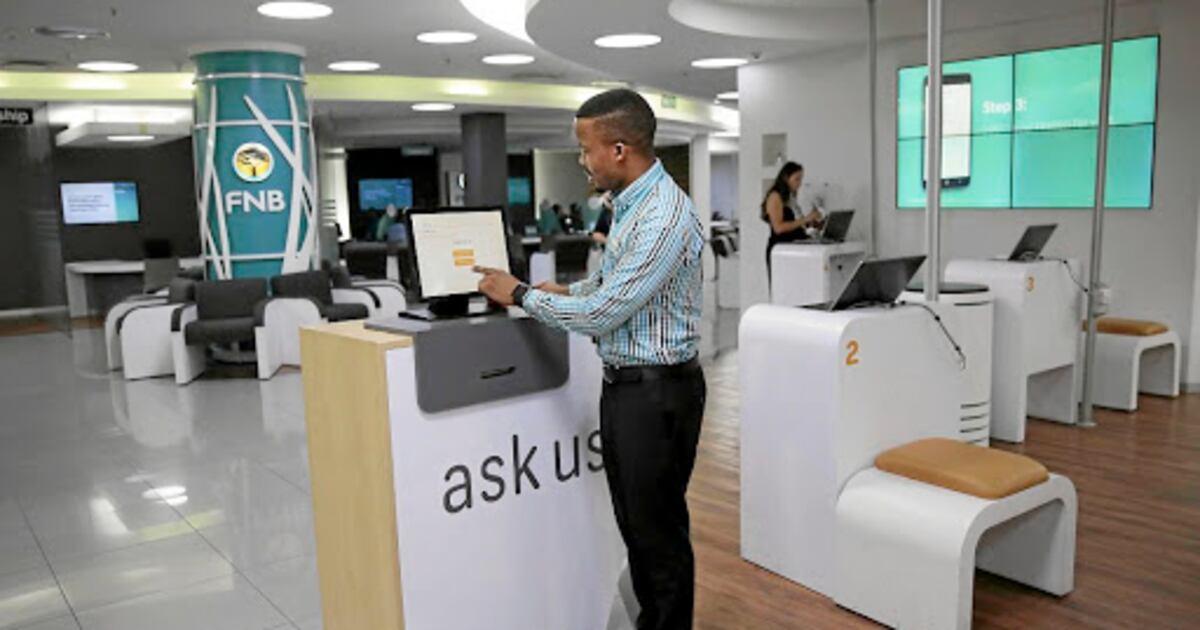
“First National Bank (FNB) is moving its artificial intelligence strategy beyond experimentation, measuring AI through revenue generation, operational efficiency, fraud prevention, and its effect on employees. According to FNB AI executive Dané Liebenberg, the bank is already using AI and AI agents such as NAVi to reduce repetitive work, accelerate processes, and create more contextualized banking experiences while maintaining human oversight.”
Artificial intelligence is moving into a new phase in South Africa’s financial-services industry, with First National Bank increasingly focused on a question that is becoming central to corporate AI strategies: What measurable value is the technology actually producing?
Rather than treating artificial intelligence as an experimental technology or simply counting the number of AI systems deployed, FNB says it is assessing its investments according to four practical measures: revenue generation, operational efficiency, fraud prevention and the impact of AI on employees.
The approach was outlined by Dané Liebenberg, AI executive for FNB Retail and Business Banking, in an ITWeb TV interview published on 25 September. The discussion comes as South Africa’s major banks move from relatively isolated AI experiments towards broader deployment across customer services, fraud detection, compliance, employee workflows and other core operations.
The development is significant because banking is one of the sectors where artificial intelligence can affect large numbers of customers and employees at the same time. Banks handle huge amounts of data, conduct millions of transactions and operate systems where speed, accuracy, security and regulatory compliance are essential.
For FNB, the next stage of AI adoption is therefore less about demonstrating that the technology can perform a task and more about determining whether it improves the overall banking operation.
From AI experimentation to business value
The first major change is the shift from experimentation to measurement.
Like many financial institutions around the world, South African banks have spent several years exploring machine learning, automation, generative AI and other technologies. The industry is now increasingly looking at how these systems can be incorporated into everyday operations.
FNB’s four-part approach provides a practical framework for that transition.
The first measure is revenue generation. AI can potentially help financial institutions identify customer needs, improve sales conversations and provide employees with information that makes customer interactions more relevant.
The second is operational efficiency. Here, FNB is examining whether AI can reduce the time employees spend on repetitive administrative processes.
The third is fraud prevention, an increasingly important area as financial criminals also adopt sophisticated digital technologies, including AI-generated messages and impersonation techniques.
The fourth concerns employees themselves. FNB says it wants AI to reduce repetitive administrative work and allow employees to spend more time on tasks involving human judgement, customer advice and relationship management.
This approach represents an important change in the way businesses can evaluate AI. Instead of asking simply whether an AI system works, organisations can ask whether it makes a measurable difference to cost, revenue, security, productivity or customer experience.
AI is already being used inside FNB
FNB’s AI strategy is not limited to future plans.
According to Liebenberg, the bank already uses AI across customer-facing services and employee workflows. One example is NAVi, an AI-powered system designed to support advisers by making relevant information available and helping with routine tasks.
The objective is to give employees access to information without requiring them to spend excessive amounts of time searching through different systems.
That matters in financial services because employees can spend substantial amounts of time performing administrative tasks, locating information and completing routine processes.
If AI can handle some of this work, employees may have more time for activities that require communication, judgement and specialised expertise.
FNB says some processes that previously took several days can now be completed considerably faster through automation and AI-supported systems. Liebenberg cited an example where a back-office process that previously took five days could be reduced to approximately two days.
The significance is not necessarily the specific number of days saved in one process. Instead, it illustrates how AI can create value by removing repetitive steps from business processes.
When similar improvements are applied across thousands of processes, the cumulative effect can become substantial.
The rise of the “intelligence interface”
FNB also sees banking technology moving beyond conventional mobile applications towards what Liebenberg describes as an increasingly intelligent interface.
Traditional digital banking generally requires customers to navigate menus, select products and search for particular services.
AI creates the possibility of a more contextual experience in which systems can understand what a customer is trying to accomplish and provide relevant assistance.
For example, instead of requiring customers to navigate several menus to find an appropriate banking service, an AI-powered interface could potentially guide them through the process conversationally.
The underlying objective is not simply to add a chatbot to a banking application. Rather, the technology can potentially connect customer data, banking processes and digital services to create a more proactive interaction.
FNB says future banking interactions are expected to become increasingly conversational and proactive as generative AI develops.
However, the bank’s approach also emphasises that the technology needs to solve genuine customer problems. AI deployment for its own sake does not necessarily create business value.
Human oversight remains part of the strategy
As AI becomes more involved in financial services, governance becomes increasingly important.
Banking decisions can have direct financial consequences for customers. Consequently, errors, biased outputs, inappropriate recommendations or security failures can create serious risks.
FNB says AI use cases go through governance processes, risk assessments and human oversight before deployment. Liebenberg emphasised that risk sign-off is an important part of introducing AI into customer-facing services.
This is particularly relevant where AI could influence decisions or recommendations.
The bank’s stated approach therefore combines automation with human involvement rather than treating AI as a completely independent replacement for employees.
That distinction is important as businesses experiment with increasingly capable AI agents.
AI and fraud prevention
Fraud is another major reason why financial institutions are investing in artificial intelligence.
South African banks are facing an environment in which criminals increasingly use digital tools to impersonate organisations, create convincing communications and manipulate customers.
A 25 September Engineering News report citing the South African Banking Risk Information Centre said the banking industry recorded 110,074 digital banking fraud incidents in 2025, compared with 97,547 in 2024. Reported losses increased from R1.86 billion to R2.4 billion. The report also highlighted increasing use of AI-generated phishing messages and impersonation techniques.
This creates a technological contest in which financial institutions can use AI defensively while criminals can use similar technologies offensively.
For banks, AI can help analyse transaction patterns, identify unusual behaviour and detect potential fraud at a speed that would be difficult to achieve through manual monitoring alone.
However, AI is not a complete solution. Fraud prevention also requires customer education, secure authentication, effective regulatory controls and conventional cybersecurity systems.
South Africa’s wider banking AI transition
FNB’s announcement is part of a broader shift across South Africa’s banking sector.
ITWeb reported that major banks are moving in 2026 from pilot projects and isolated experiments towards larger-scale AI deployment. Standard Bank has described AI as becoming a core organisational capability, while other institutions are also exploring AI-supported customer service, credit processes, fraud prevention and operational automation.
This means competition between financial institutions may increasingly involve how effectively each bank integrates AI into its existing technology, data and customer infrastructure.
Established banks have a particular advantage in this area because they possess extensive historical customer and transaction data.
At the same time, they also have large legacy technology environments, complex regulatory requirements and established risk-management processes.
Newer digital financial institutions may have fewer legacy systems, while traditional banks have deeper datasets and longer-developed fraud and compliance models.
The next phase of AI adoption will therefore involve not only developing powerful models but also integrating them safely into existing infrastructure.
What AI means for employees
The impact on employment remains one of the most closely watched questions surrounding artificial intelligence.
FNB’s position is that AI can remove repetitive administrative work and allow employees to focus more heavily on human judgement and customer advice.
This does not mean that AI adoption has no implications for jobs. As organisations automate particular processes, the nature of some roles may change.
The ITWeb report published alongside the FNB discussion notes that AI has become an important factor in workforce restructuring among major global technology companies. However, South Africa has not experienced comparable mass corporate layoffs directly attributed to AI, according to the report.
For financial institutions, the emerging model appears more focused on augmenting employees in areas where automation can reduce administrative workloads.
That could increase the importance of skills such as AI literacy, data interpretation, customer relationship management, cybersecurity and responsible technology governance.
Data becomes increasingly important
FNB’s strategy also highlights another fundamental issue: AI is only as useful as the data and infrastructure supporting it.
The bank has accumulated extensive customer and transaction information over many years. That data can help develop systems that understand customer behaviour, detect unusual activity and provide more contextual recommendations.
However, using data also creates responsibilities around privacy, security, accuracy and governance.
Financial institutions therefore have to balance the potential benefits of AI with requirements to protect customer information and maintain trust.
This is particularly important as banking becomes increasingly digital and AI systems gain access to more operational information.
The broader South African AI landscape
The FNB development comes as South Africa continues to debate how artificial intelligence should be governed and developed nationally.
The country has been working on its AI policy framework after the withdrawal of an earlier draft policy. The government subsequently established an independent expert review panel to contribute to the development of a revised AI policy.
South Africa has also called for international cooperation on AI governance. At the United Nations General Assembly, South African officials argued for international guardrails to manage the risks associated with rapidly developing AI technologies.
This policy discussion is occurring alongside rapid commercial adoption.
Banks, retailers, technology companies, universities and government institutions are increasingly experimenting with AI, creating a need for governance frameworks that can develop alongside the technology.
What comes next for FNB and South African banking
The FNB announcement illustrates a broader transition from asking whether businesses should use AI to asking where AI produces measurable value and under what conditions it should be deployed.
For FNB, that means monitoring revenue, efficiency, fraud prevention and employee outcomes.
The approach also suggests that future AI investment decisions may become more closely tied to measurable business performance.
Customer-facing AI systems will need to be useful rather than simply novel. Employee-focused systems will need to reduce genuine administrative burdens. Fraud systems will need to improve security without creating unnecessary friction for legitimate customers.
At the same time, governance will remain central as AI becomes increasingly capable.
For South Africa’s financial sector, the next phase of artificial intelligence is therefore likely to involve deeper integration into everyday banking rather than isolated demonstrations of what the technology can do.
FNB’s latest AI strategy provides a clear example of this transition. The bank is positioning artificial intelligence as part of its broader operating model, with success measured through business outcomes rather than the technology’s novelty.
As AI continues to develop, the central question for South African companies may increasingly be not how much AI they use, but whether they can demonstrate that the technology makes their organisations more efficient, secure, responsive and useful to customers while maintaining appropriate human oversight.



