




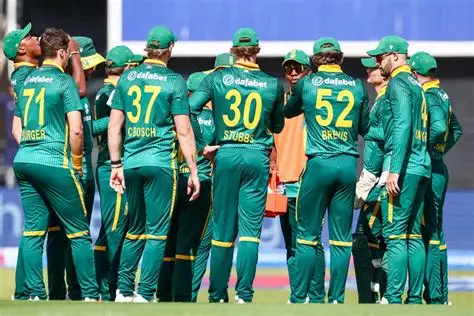
“Former South Africa captain Graeme Smith has lauded the ICC’s decision to bring the 2027 Men’s Cricket World Cup back to Africa, co-hosted by South Africa, Zimbabwe, and Namibia. He believes the continent’s cricketing culture, talent, and fans deserve the global spotlight once again.”
The announcement that the 2027 ICC Men’s Cricket World Cup will be jointly hosted by South Africa, Zimbabwe, and Namibia has sparked excitement across the cricketing world. For Africa, this marks a historic moment: the first time in 24 years that the continent will host cricket’s most prestigious tournament. Former South African captain and ICC Hall of Famer Graeme Smith has hailed the decision, calling it a long-overdue recognition of Africa’s contribution to the sport.
Historical Context
The last time Africa hosted the World Cup was in 2003, when South Africa, Zimbabwe, and Kenya shared hosting duties. That edition was memorable for its controversies and thrilling matches, but it also showcased Africa’s ability to stage a world-class event. Since then, cricket’s global showpiece has rotated among Asia, Australasia, and Europe, leaving Africa waiting for another opportunity.
Smith’s remarks underscore the importance of this return. He noted that Africa has continued to produce world-class players—such as AB de Villiers, Dale Steyn, Kagiso Rabada, and Quinton de Kock—and has maintained a passionate fan base that deserves to witness the spectacle firsthand.
Significance for South Africa
South Africa will host the majority of matches, with 41 out of 54 games expected to be played across eight venues. This will not only boost the country’s cricketing profile but also provide significant economic benefits through tourism, broadcasting rights, and sponsorships. Stadiums like Newlands in Cape Town, Wanderers in Johannesburg, and Kingsmead in Durban are expected to be central venues.
For South African cricket, the World Cup represents a chance to rewrite history. The Proteas have long carried the “chokers” tag, often faltering in knockout stages despite strong squads. Hosting the tournament could provide the psychological edge needed to finally secure their first-ever World Cup title.
Zimbabwe and Namibia’s Role
Zimbabwe’s inclusion as a co-host is symbolic of its cricketing resilience. Despite political and economic challenges, Zimbabwe has remained a competitive cricketing nation. Hosting matches will reinvigorate local cricket and inspire the next generation of players.
Namibia, meanwhile, will make its debut as a World Cup host. This is a landmark achievement for a country that has steadily risen in associate cricket rankings. Namibia’s participation as a host nation will expand cricket’s footprint in southern Africa, bringing new fans into the fold.
Graeme Smith’s Perspective
Smith’s endorsement carries weight. As one of South Africa’s most successful captains, he understands the impact of hosting major tournaments. He emphasized that Africa’s vibrancy, diversity, and cricketing culture make it an ideal stage for the World Cup. His comments reflect a broader sentiment among cricket stakeholders that Africa has been overlooked for too long.
Global Reactions
The announcement has been met with enthusiasm worldwide. Cricket boards in Asia and Europe have welcomed the decision, noting that Africa’s inclusion strengthens the sport’s global reach. Fans on social media have expressed excitement about traveling to Africa for the tournament, with many highlighting the continent’s unique blend of culture, wildlife, and sporting passion.
Challenges Ahead
Despite the optimism, challenges remain. Infrastructure upgrades will be necessary to ensure stadiums meet ICC standards. Security and logistics will also be critical, given the scale of the event. Zimbabwe’s political climate and Namibia’s limited hosting experience could pose hurdles, but the ICC has expressed confidence in the organizing committee.
Economic and Cultural Impact
Hosting the World Cup will have far-reaching effects beyond cricket. Tourism is expected to surge, with fans flocking to iconic destinations like Table Mountain, Kruger National Park, and Victoria Falls. Local businesses will benefit from increased demand, while governments will showcase their countries on a global stage.
Culturally, the tournament will unite diverse communities across southern Africa. Cricket has long been a bridge between cultures, and the World Cup will amplify that role, fostering unity and pride.
Conclusion
The return of the World Cup to Africa is more than just a sporting event—it is a celebration of the continent’s resilience, talent, and passion for cricket. As Graeme Smith aptly put it, Africa “deserves” this moment. For South Africa, Zimbabwe, and Namibia, the 2027 World Cup is an opportunity to showcase their cricketing heritage and inspire future generations.



