




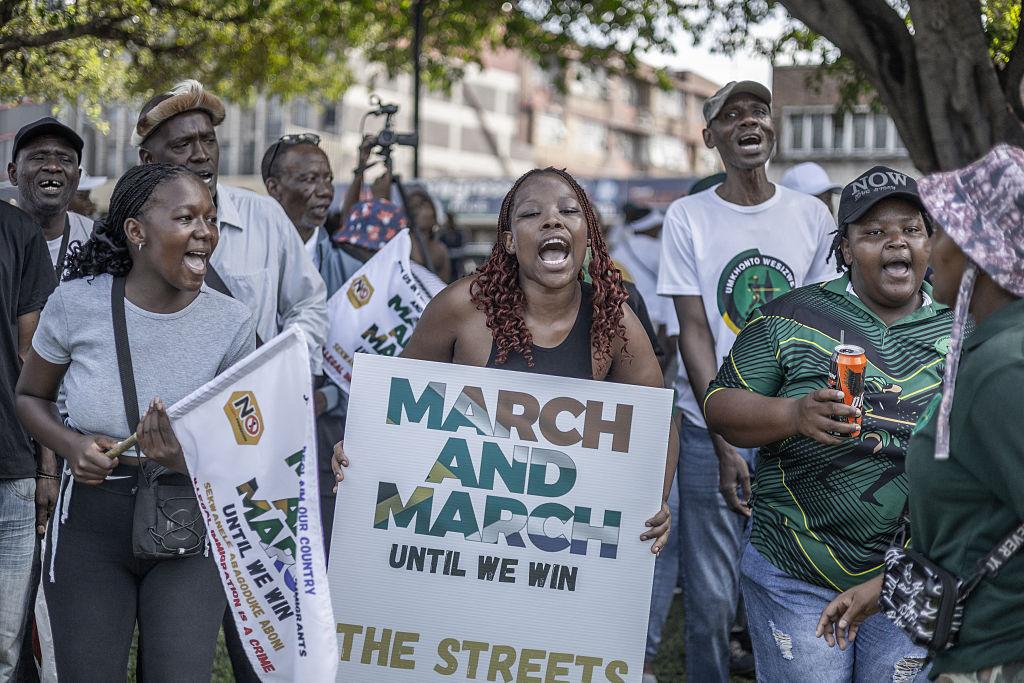
“The March and March movement has been permitted to resume demonstrations in Durban following restrictions imposed around South Africa’s November 2026 local government elections, with the court requiring peaceful gatherings and prohibiting violence, intimidation, weapons and property damage. The developments have renewed national debate about constitutional protest rights, immigration enforcement, xenophobia, public safety and the responsibility of government and civic organisations to protect everyone living in South Africa.”
March and March demonstrations place South Africa’s activism movement, constitutional rights and public safety under renewed scrutiny
Introduction: Activism and the changing political environment
South Africa’s activism landscape continues to reflect the country’s complicated relationship with constitutional democracy, public participation, migration, economic inequality and government accountability. Demonstrations have historically provided communities, labour organisations, civil society movements and political formations with opportunities to express dissatisfaction, demand government action and bring attention to issues affecting ordinary citizens.
However, the latest developments surrounding the March and March movement in KwaZulu-Natal have brought renewed attention to the boundaries between peaceful activism and conduct that threatens public safety.
The movement’s demonstrations against undocumented immigration have generated considerable public discussion, particularly in Durban, where police and government authorities sought judicial intervention to regulate demonstrations during the local government election period.
The Durban High Court subsequently permitted demonstrations to resume under restrictions. These conditions included requirements for peaceful gatherings, designated routes and restrictions on weapons, face coverings, intimidation and violence.
The developments illustrate an important question for South African democracy: how can authorities protect the constitutional right to protest while preventing demonstrations from becoming occasions for violence, discrimination or intimidation?
The return of demonstrations following election restrictions
The March and March movement became a prominent subject of national attention during the period leading up to the November 2026 local government elections.
Authorities raised concerns about the security implications of demonstrations, particularly in KwaZulu-Natal. The police sought court intervention after tensions surrounding immigration-related protests and concerns about possible violence.
The legal restrictions were intended to manage demonstrations during a sensitive electoral period.
The Durban High Court allowed demonstrations to resume on 7 November, subject to conditions governing when and how the movement could organise its activities. The court’s approach sought to distinguish lawful public participation from conduct that could threaten people, businesses and public infrastructure.
The conditions reported included restrictions on carrying weapons, covering faces, intimidation, violence, looting and property damage.
The decision is significant because it demonstrates that protest activity is not automatically prohibited simply because it involves controversial political or social demands.
Instead, demonstrations must operate within the constitutional and legal framework governing public assembly.
For activists, this means organising responsibly, communicating their objectives clearly and respecting restrictions imposed by the courts.
For government, it means ensuring that lawful protest is not unnecessarily prevented while responding appropriately to credible threats to public safety.
Immigration has become a central issue in public mobilisation
Immigration has increasingly featured in South Africa’s political and civic discussions.
The country attracts people from across the African continent because of its economic opportunities, established commercial networks, educational institutions and relatively developed infrastructure.
At the same time, unemployment, pressure on public services, poverty and concerns about crime have contributed to public dissatisfaction in many communities.
These issues have provided an environment in which movements demanding stronger immigration enforcement can attract public attention.
March and March has mobilised supporters around concerns about undocumented immigration and the government’s management of migration.
Its supporters have presented immigration enforcement as an important issue affecting employment, public resources and community security.
However, these arguments have also generated criticism from civil society organisations and human rights advocates, particularly where demonstrations involve hostility towards foreign nationals.
A distinction must be maintained between lawful criticism of government immigration policy and targeting people because of their nationality.
South African citizens have the right to demand effective border management, transparent immigration procedures and accountability from public institutions.
Equally, foreign nationals are entitled to protection against violence, unlawful discrimination and intimidation.
The challenge is to address immigration-related concerns through evidence-based public policy rather than collective blame.
Activism and the constitutional right to peaceful assembly
The right to protest is an important part of South Africa’s constitutional democracy.
Public demonstrations allow citizens to communicate grievances beyond traditional political institutions. They can bring attention to government failures, labour disputes, corruption allegations, environmental concerns and human rights violations.
The Constitution protects freedom of expression, association and peaceful assembly.
These rights provide the foundation for civic movements to organise campaigns, hold demonstrations and engage public authorities.
Nevertheless, peaceful assembly does not provide legal protection for violence, assault, intimidation or destruction of property.
This distinction is especially important when protests involve groups with competing political, social or economic interests.
The government’s responsibility is not simply to prevent demonstrations. It must also protect participants, bystanders, businesses and communities from unlawful conduct.
Similarly, organisers have responsibilities to communicate protest conditions to participants, maintain order and cooperate with lawful security arrangements.
The March and March court dispute therefore raises questions that extend beyond one organisation.
It concerns the relationship between the state and citizens who use demonstrations to influence public debate.
The impact of demonstrations on migrant communities
One of the most sensitive dimensions of the controversy is the impact of anti-immigration mobilisation on foreign nationals living and working in South Africa.
Migrant communities participate in the country’s economy through retail businesses, professional services, construction, transport, agriculture and other industries.
Many have established families, built businesses and developed long-standing relationships with South African communities.
However, periods of heightened anti-immigration mobilisation can create insecurity for these residents.
GroundUp previously reported threats against immigrant shopkeepers, including women and children, during anti-immigration demonstrations in Pretoria in October 2026.
The publication also reported criticism from activists who questioned the use of gender-based violence campaigns alongside anti-immigration messaging during demonstrations.
These reports highlight why the protection of vulnerable communities must remain central to discussions about public activism.
People should not be threatened, attacked or prevented from accessing essential services because of their nationality.
The government also has a responsibility to investigate allegations of violence and ensure that perpetrators are held accountable through lawful procedures.
At the same time, it is important to distinguish between the statements and conduct of individual demonstrators and the positions of every person associated with a broader movement.
Responsible reporting should avoid treating entire communities as though they share the same intentions.
Civil society organisations call for peaceful participation
The controversy has also highlighted the importance of engagement between government and civic organisations.
Ahead of the elections, the Technical Inter-Ministerial Committee on Migration engaged civic formations, including Bhinca Nation, led by former radio presenter Ngizwe Mchunu.
According to IOL’s reporting, participants committed themselves to protecting citizens’ voting rights and preventing criminal elements from hijacking legitimate community protests for unlawful purposes.
The discussions included migration-related concerns, crime, law enforcement and the importance of peaceful civic participation.
Such engagement is important because public demonstrations often emerge when communities believe their concerns are not being addressed through established government channels.
Consultation can provide opportunities to clarify misunderstandings, identify practical problems and establish mechanisms for continued dialogue.
It can also help authorities distinguish between legitimate community mobilisation and conduct involving threats or criminal activity.
For civil society organisations, participation in these discussions offers an opportunity to advocate for accountability while defending constitutional principles.
However, consultation must produce meaningful results.
Communities need to see measurable improvements in immigration administration, law enforcement, public safety and access to government services.
Without practical responses, public frustration may continue to generate demonstrations.
The role of law enforcement in managing public demonstrations
The police occupy an important position in maintaining the balance between public safety and democratic participation.
When demonstrations take place, officers must protect peaceful participants while responding to criminal conduct.
This responsibility can become particularly difficult when protests attract large crowds, involve competing groups or take place near sensitive public institutions.
In the March and March dispute, authorities argued that demonstrations during the election period created additional security challenges.
The government also raised concerns about the need to protect voting stations and maintain public order.
The restrictions imposed through the court process reflected these security concerns.
However, effective public-order policing requires proportionality, transparency and accountability.
Law enforcement officers should distinguish peaceful demonstrators from individuals committing offences.
Similarly, allegations of excessive force must be investigated independently and fairly.
Public confidence depends on the consistent application of the law, regardless of whether demonstrators support or oppose government policy.
The relationship between activism and the 2026 elections
The timing of the demonstrations made the controversy particularly significant.
South Africa’s November 2026 local government elections took place against a background of economic pressures, political competition and public dissatisfaction with municipal services.
Municipal elections are important because local authorities are responsible for services that directly affect households and businesses.
These include water provision, sanitation, electricity distribution, refuse collection, roads and aspects of local economic development.
When these services fail, communities often organise protests to demand intervention.
The election period also creates an environment in which public movements can attract greater political attention.
Issues such as immigration, unemployment, crime and municipal accountability can become part of wider political discussions.
Nevertheless, civic activism should not be confused with electoral campaigning.
Citizens must be able to express their concerns independently of political parties.
The protection of voting rights and the protection of peaceful assembly are both important elements of democratic participation.
The challenge for authorities is to ensure that restrictions imposed for election security do not unnecessarily weaken citizens’ ability to raise legitimate concerns.
Digital platforms are changing the reach of activism
Another important dimension of South African activism is the growing influence of digital platforms.
Social media allows organisations to circulate demonstration announcements, publish statements, share photographs and communicate with supporters.
It also gives smaller civic movements opportunities to attract national attention without relying entirely on established political institutions.
Research discussed by Magna Bureau, drawing on Daily Maverick and Murmur Intelligence reporting, indicated that two anti-foreigner communities generated a substantial share of political discussion on X during the week of 23–29 October.
The analysis reported that these communities accounted for 43% of political posts tracked, although the researchers cautioned that the available information could not establish whether the activity reflected ordinary enthusiasm, organised activism or inauthentic coordination.
High online engagement does not necessarily demonstrate broad public support.
Likewise, repeated circulation of particular messages does not independently establish that their claims are accurate.
Activists, journalists and citizens should therefore assess information carefully before sharing it.
Digital platforms can strengthen civic participation, but they can also spread misinformation and intensify hostility.
Economic inequality and the underlying causes of protest
The immigration debate cannot be separated from South Africa’s wider economic circumstances.
Unemployment, inequality and inadequate public services remain important issues in community life.
In areas where employment opportunities are limited, competition for income-generating activities can become a source of tension.
Similarly, communities experiencing pressure on healthcare, housing, education and municipal infrastructure may demand stronger government intervention.
These grievances deserve serious attention.
However, attributing complex economic problems exclusively to foreign nationals risks overlooking other factors, including economic policy, investment levels, corruption, administrative weaknesses and the performance of public institutions.
A sustainable response requires reliable economic information and practical government action.
Employment programmes, skills development, support for small businesses, improved municipal administration and effective immigration systems can contribute to addressing the concerns that motivate public mobilisation.
Activism can play a constructive role by demanding that these programmes are implemented transparently and fairly.
What the court decision means for future demonstrations
The court’s decision to permit demonstrations under conditions provides an important framework for the next phase of the dispute.
Organisers must consider the requirements governing public gatherings and ensure that participants understand the applicable restrictions.
Authorities must communicate clearly about permitted routes, timings and public safety arrangements.
Communities affected by demonstrations should also have accessible channels for reporting threats, intimidation and unlawful conduct.
The legal dispute is not necessarily resolved permanently.
Reporting on the court decision indicates that the parties are expected to return to court on 18 January 2027 for further consideration of a final order.
That future proceeding may provide additional clarity about the conditions governing the movement’s demonstrations.
Until then, the implementation of the existing requirements will remain important.
Conclusion: Protecting activism while defending human dignity
The March and March controversy demonstrates the difficult choices facing South Africa as it manages public activism, immigration concerns and community security.
Peaceful demonstrations remain an important democratic instrument.
They allow people to communicate grievances, demand accountability and participate in national discussions.
However, activism must operate within the law and respect the dignity and safety of other people.
The government must enforce immigration legislation fairly, improve public services and respond to community concerns.
It must also protect foreign nationals and South African citizens against intimidation, violence and discrimination.
Civil society organisations have an equally important responsibility to encourage peaceful participation, challenge misinformation and promote constructive engagement.
The Durban High Court’s decision provides a framework under which demonstrations can resume while restrictions remain in place to protect public safety.
Ultimately, the significance of this dispute extends beyond one movement or one city.
It concerns the ability of South Africa’s democratic institutions to accommodate disagreement without allowing public participation to become a source of harm.
The country’s continued democratic development will depend on protecting constitutional rights, strengthening public institutions and ensuring that political and civic disagreements are addressed through peaceful and lawful processes.



