




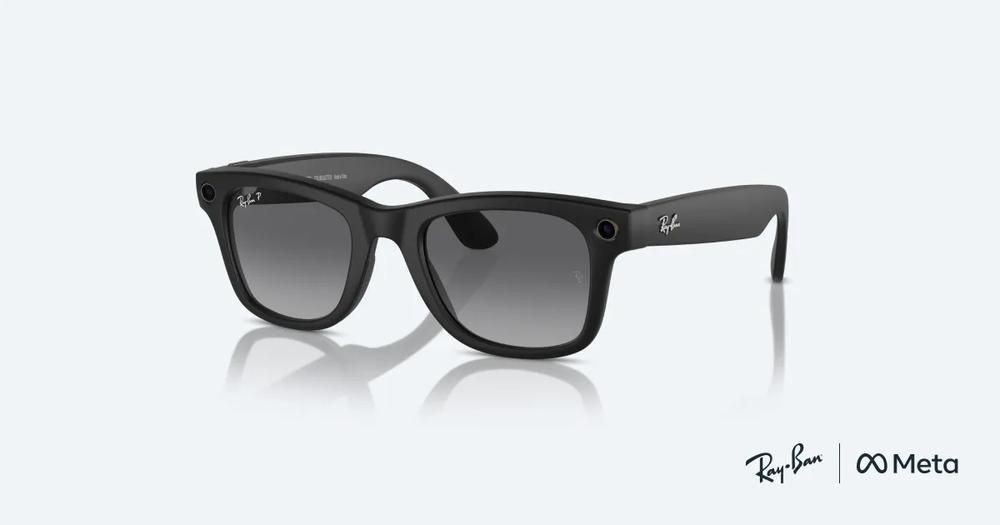
“Meta is preparing to officially bring its Ray-Ban Meta and Oakley Meta smart glasses to South Africa later in 2026, expanding access to wearable computing that combines cameras, audio, artificial intelligence and hands-free interaction. The South African launch forms part of a broader international expansion announced by Meta and EssilorLuxottica, although the precise local launch date, pricing and availability of individual features have not yet been fully detailed.”
Meta’s AI Smart Glasses Officially Coming to South Africa Later This Year
South African consumers are set to gain official access to a new category of wearable computing after Meta confirmed that its Ray-Ban Meta and Oakley Meta smart glasses will expand into South Africa later in 2026. The development places the country among a group of international markets targeted for expansion of Meta’s growing artificial-intelligence-powered eyewear ecosystem.
The announcement is significant because smart glasses are increasingly moving beyond the traditional concept of wearable electronics. Instead of functioning simply as accessories, newer generations combine cameras, microphones, speakers, wireless connectivity and AI-powered services in a device designed to be worn throughout the day.
According to TechCentral’s report published on 2 October 2026, EssilorLuxottica, Meta’s eyewear partner, announced on 24 September that its retail expansion would include South Africa. Meta’s own announcement the previous day also listed South Africa among markets where Oakley Meta, Ray-Ban Meta and Ray-Ban Meta Optics are expected to become available later this year.
The development comes as Meta continues to broaden its ambitions for AI glasses. At its September 2026 Connect event, the company announced new products and capabilities designed to make smart glasses a more significant computing platform. Among the developments were Ray-Ban Meta Audio, a new generation of Ray-Ban Meta glasses, additional Meta Glasses styles and an AI assistant called Muse.
A New Form of Personal Computing
Traditional personal computing has largely revolved around smartphones, laptops, desktop computers and tablets. Smart glasses introduce another possibility: computing that is worn rather than carried.
Meta’s latest glasses incorporate several technologies into conventional-looking eyewear. The Ray-Ban Meta Gen 3, for example, includes a 12-megapixel camera, 3K Ultra HD video recording, microphones, speakers and Meta AI functionality. Meta says the latest generation can provide up to nine hours of battery life, while a redesigned microphone system is intended to improve voice calls and voice commands in noisy environments.
The idea is to reduce the need to reach for a smartphone for certain everyday activities. Users can interact with AI through voice commands, capture photographs and video from their point of view, listen to audio, make calls and access other connected services.
This represents an important change in the way computing devices can interact with people. Instead of requiring users to look down at a screen, smart glasses can deliver information through audio while allowing the wearer to continue looking at the environment around them.
AI Becomes Central to the Glasses
Artificial intelligence is at the centre of Meta’s strategy for its latest generation of smart glasses.
Meta announced that its Muse personal AI agent would be brought to AI glasses to help users manage tasks and interact with information without having to use a conventional computer or smartphone. The company describes the system as a way to provide hands-free assistance, including support for everyday activities and longer-term tasks.
The glasses can also support functions such as live translation and contextual assistance. Meta says AI glasses can provide information such as sports scores and local recommendations, while also supporting translation of conversations.
For South African users, the local arrival could therefore represent more than another consumer electronics launch. It could provide a new way of interacting with AI services while travelling, working, communicating and accessing information.
However, the availability of particular AI capabilities can vary by country, language and regulatory environment. Meta’s global product announcements do not necessarily mean every feature will be available immediately in South Africa.
South Africa Joins a Wider International Expansion
South Africa’s inclusion is part of a broader international expansion of Meta’s smart-glasses ecosystem.
Meta said that its Oakley Meta, Ray-Ban Meta and Ray-Ban Meta Optics products would be introduced into additional markets later in 2026. The list includes South Africa as well as countries such as Turkey, Poland, Portugal, Israel, Indonesia, Thailand, Hong Kong, New Zealand, Malaysia and the Philippines.
TechCentral reports that the South African launch is expected later this year but notes that the exact local launch details are still developing.
The expansion also needs to be distinguished from Meta’s cheaper Meta Glasses collection. Meta’s September announcement indicated that this separate product line would initially expand into markets including Singapore, South Korea, Mexico and the United Arab Emirates, with Brazil planned to follow. The South African announcement specifically concerns the Ray-Ban and Oakley product families.
What the Technology Could Mean for South African Consumers
The arrival of official smart glasses could broaden the local wearable-technology market.
For consumers, one attraction is convenience. A person can potentially take a photograph without removing a phone from a pocket, answer a call while continuing another activity, listen to music without wearing conventional headphones and ask an AI assistant a question using voice commands.
For professionals, the technology could have applications in fields where hands-free access to information is useful. Field workers, technicians, journalists, logistics workers, tourism operators and other professionals could potentially use wearable cameras and voice-based computing as part of their workflows.
The actual usefulness, however, will depend on local pricing, network connectivity, software support, battery performance, privacy requirements and the availability of AI services.
Privacy Remains an Important Consideration
Smart glasses also introduce questions that do not arise to the same extent with conventional computers.
Because the glasses contain cameras and microphones, people wearing them can potentially capture images and audio while moving through public or private environments. This creates important questions about consent, privacy and responsible use.
Meta has incorporated a built-in LED indicator into its newer glasses to make people around the wearer aware when photographs or video are being captured. Meta says this is intended to provide a visible signal when the camera is operating.
Nevertheless, the broader privacy discussion is likely to become increasingly important as AI glasses become more common. Consumers, businesses and policymakers will need to consider how wearable cameras are used, what information is collected, where it is processed and how individuals can protect themselves from unwanted recording.
South Africa already has a substantial regulatory framework concerning personal information, meaning companies introducing connected devices into the country must operate within applicable legal and privacy requirements.
Competition in Wearable Computing
Meta is also entering a market in which several technology companies are attempting to develop new forms of wearable computing.
The difference between conventional smart glasses and Meta’s approach is the emphasis on combining familiar eyewear designs with AI and social-media services. Instead of requiring users to wear a visibly futuristic headset, Meta has partnered with established eyewear brands to produce devices that resemble conventional glasses.
The company’s September announcement showed the scale of its ambitions. Meta said it expected to offer more than 100 AI-glasses options across Ray-Ban, Oakley and Meta Glasses by the end of 2026.
That strategy could make wearable AI more accessible to consumers who might not otherwise consider purchasing a dedicated computing headset.
What South Africans Still Need to Know
Although the local launch has been confirmed, several practical details remain important.
The precise South African retail launch date has not been fully specified in the reports available on 2 October. Local pricing also remains a key unanswered question because international prices do not automatically translate directly into South African retail prices after taxes, distribution costs, exchange-rate movements and local retail considerations.
Meta announced that Ray-Ban Meta Gen 3 prices start at US$449 internationally, while Ray-Ban Meta Audio starts at US$349. Those figures provide an international reference point but should not be treated as confirmed South African prices.
Consumers will also need to establish which AI functions, languages, applications, prescription-lens options and after-sales services will be available locally.
A Developing South African Computing Story
The arrival of Meta’s smart glasses represents another step in the evolution of personal computing. Smartphones remain the dominant mobile computing platform, but companies including Meta are experimenting with devices that can place cameras, AI assistants, audio and connectivity directly into everyday objects.
For South Africa, the significance of the announcement will ultimately depend on how the products are introduced into the market. Pricing, availability, supported features and local privacy considerations will influence how widely the technology is adopted.
For now, the confirmed development is that Ray-Ban Meta and Oakley Meta smart glasses are coming officially to South Africa later in 2026. Their arrival will give South African consumers access to a growing category of AI-enabled wearable computing and provide another opportunity to observe how artificial intelligence is moving from smartphones and computers into everyday physical devices.



