




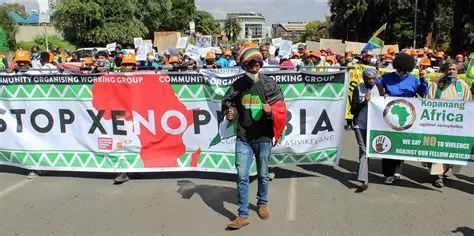
“Operation Ubuntu, a coalition of over 60 social justice organizations, led mass protests in Johannesburg, Cape Town, and Durban, opposing xenophobia and proposed amendments to the PIE Act. Activists argue the changes would criminalize poverty and strip vulnerable communities of housing protections guaranteed under the Constitution.”
South Africa witnessed one of its most significant activist mobilizations of the year as Operation Ubuntu, a coalition of more than 60 social justice organizations, marched to the Premier’s Office in Johannesburg. The protest was part of a coordinated national action spanning Cape Town and Durban, aimed at confronting two pressing issues: rising xenophobia and housing insecurity. At the heart of the demonstration was opposition to proposed amendments to the Prevention of Illegal Eviction (PIE) Act, which activists claim would erode constitutional protections for the poor.
Background of the PIE Act
The PIE Act, rooted in Section 26 of the South African Constitution, guarantees that “everyone has the right to access adequate housing.” Currently, evictions cannot be carried out without a court order, and municipalities are required to provide alternative accommodation. The proposed amendment, however, would allow courts to authorize evictions without mandating municipalities to engage meaningfully with affected communities or provide housing alternatives. Activists argue this change would disproportionately harm informal settlers, many of whom already live under precarious conditions.
Voices from the Protest
General Moyo, coordinator of Operation Ubuntu, emphasized: “The municipality cannot have that power of evicting us without meaningfully engaging with us and without even understanding our background.” His words resonated with thousands who carried placards condemning xenophobia and demanding housing justice.
Marie Huchzermeyer of Siyafana Sonke, a civic movement aligned with Operation Ubuntu, criticized the government’s piecemeal approach: “Critics have long referred to this approach as pounding the tip of the iceberg or swatting at the flies when a corpse is rotting.”
For residents like Fagmedah Edeies of Eldorado Park, the stakes are deeply personal: “In 33 years, not one RDP house was built in our community. As a mother, I must remember that I have children and grandchildren. Where will they go if this amendment is passed?”
Xenophobia and Housing Rights Intertwined
The protest was not solely about housing. Activists linked the PIE amendment to broader patterns of xenophobic hostility. Rising anti-migrant sentiment has led to violent attacks, displacement, and community-level expulsions. Operation Ubuntu’s memorandum demanded greater state accountability in addressing xenophobia, warning that unchecked hostility undermines social cohesion and constitutional protections.
National Context
South Africa’s housing crisis is longstanding. Despite government promises, millions remain in informal settlements without access to adequate housing. The backlog of RDP housing projects has left communities frustrated, while unemployment and poverty exacerbate tensions. Against this backdrop, xenophobia has become a scapegoat, with migrants often blamed for economic hardship. Activists argue that weakening housing protections would only deepen inequality and fuel further division.
Broader Implications
The protest highlights a critical intersection of human rights, governance, and activism. By challenging the PIE amendment, Operation Ubuntu is not only defending housing rights but also confronting systemic failures in governance. Their activism underscores the need for structural reforms that address poverty and inequality rather than criminalizing the poor.
International Reactions
Civil society organizations and international observers have expressed concern over South Africa’s trajectory. The linkage between housing insecurity and xenophobia has drawn condemnation from human rights groups, who warn that the government’s failure to act decisively risks eroding democratic values. The protests have also sparked diplomatic unease, as neighboring countries monitor the treatment of their nationals in South Africa.
Conclusion
Operation Ubuntu’s march represents a pivotal moment in South Africa’s activist landscape. By uniting housing rights and anti-xenophobia struggles, the coalition has amplified the voices of marginalized communities demanding justice. Whether the government heeds these calls remains uncertain, but the protest has undeniably reshaped the national conversation on rights, governance, and social cohesion.



