




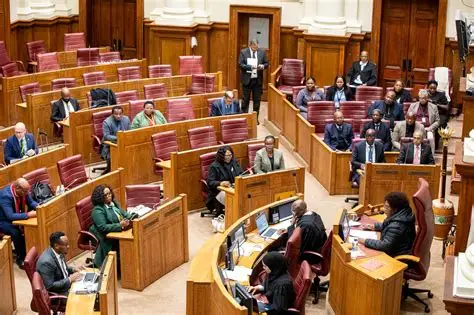
“South Africa’s Cabinet has unveiled a landmark set of legislative reforms targeting coalition governance, illicit mining, financial oversight, and procurement modernization. Justice Minister Mmamoloko Kubayi emphasized that these reforms are critical to restoring accountability, fairness, and adaptability in governance.”
On 13 August 2026, South Africa’s Cabinet announced the approval of four major amendment bills that collectively represent one of the most ambitious legislative reform packages in recent years. These reforms span coalition governance, criminal justice, illicit mining, financial oversight of trusts, and public procurement modernization. The announcement underscores the government’s determination to address systemic weaknesses that have long undermined governance and public trust.
Coalition Governance Reform
The Municipal Structures Amendment Bill, approved on 29 July 2026, seeks to stabilize fragile coalition governments at the municipal level.
- Key provisions include mandatory qualifications for councillors appointed as municipal office bearers, prescribed timelines for electing mayors and deputy mayors, and clear procedures for removing office bearers.
- Voting mechanisms will now allow either a show of hands or secret ballot, reducing disputes over legitimacy.
This reform is expected to reduce political instability, ensuring uninterrupted service delivery to communities. For years, coalition collapses have stalled projects and weakened accountability, leaving residents frustrated by inconsistent governance.
Criminal Justice System Reform
The Madlanga Inquiry into corruption and political interference in the criminal justice system has been extended until 31 October 2026.
- This extension underscores the government’s commitment to a thorough investigation into systemic failures undermining accountability.
- By allowing more time, the inquiry aims to restore credibility in law enforcement and judicial institutions.
The reform signals a renewed push to strengthen judicial independence and rebuild public confidence in the justice system.
Tackling Illicit Mining
Illicit mining, known locally as Zama Zama operations, has plagued South Africa’s economy and communities.
- The new amendment bills introduce tougher penalties for illegal mining operations, signaling a crackdown on criminal syndicates that exploit vulnerable workers and damage the environment.
- Penalties will now include longer prison terms and higher fines, aligning with international standards on combating organized crime.
This move is expected to protect communities, safeguard the environment, and reduce the economic losses associated with illegal mining.
Financial Oversight of Trusts
Trusts have often been used as vehicles for money laundering and financial abuse.
- The reforms tighten oversight mechanisms, requiring greater transparency and accountability in trust management.
- Trustees will face stricter compliance requirements, with enhanced reporting obligations to the Master of the High Court.
This measure strengthens South Africa’s compliance with international anti-money laundering standards, particularly those set by the Financial Action Task Force (FATF).
Public Procurement Modernization
Public procurement has historically been vulnerable to corruption and inefficiency.
- The reforms introduce modernized procurement systems, emphasizing transparency, competitive bidding, and digital oversight.
- By reducing loopholes, the government aims to curb corruption and ensure fair competition in public contracts.
This modernization is expected to improve efficiency in service delivery and enhance public trust in government spending.
Broader Implications
Collectively, these reforms represent a turning point in South Africa’s legislative landscape.
- They address long-standing governance challenges, from unstable coalitions to illicit financial flows.
- They also align South Africa’s legal framework with international best practices, strengthening the country’s global credibility.
Justice Minister Mmamoloko Kubayi emphasized that these reforms are not merely technical adjustments but structural changes designed to ensure accountability, fairness, and adaptability in the face of shifting social and economic challenges.
Conclusion
South Africa’s sweeping legislative reforms mark a bold step toward strengthening governance, combating corruption, and modernizing public administration. While challenges remain in implementation, the approval of these bills signals a renewed commitment to building a more transparent, accountable, and resilient democracy.



