




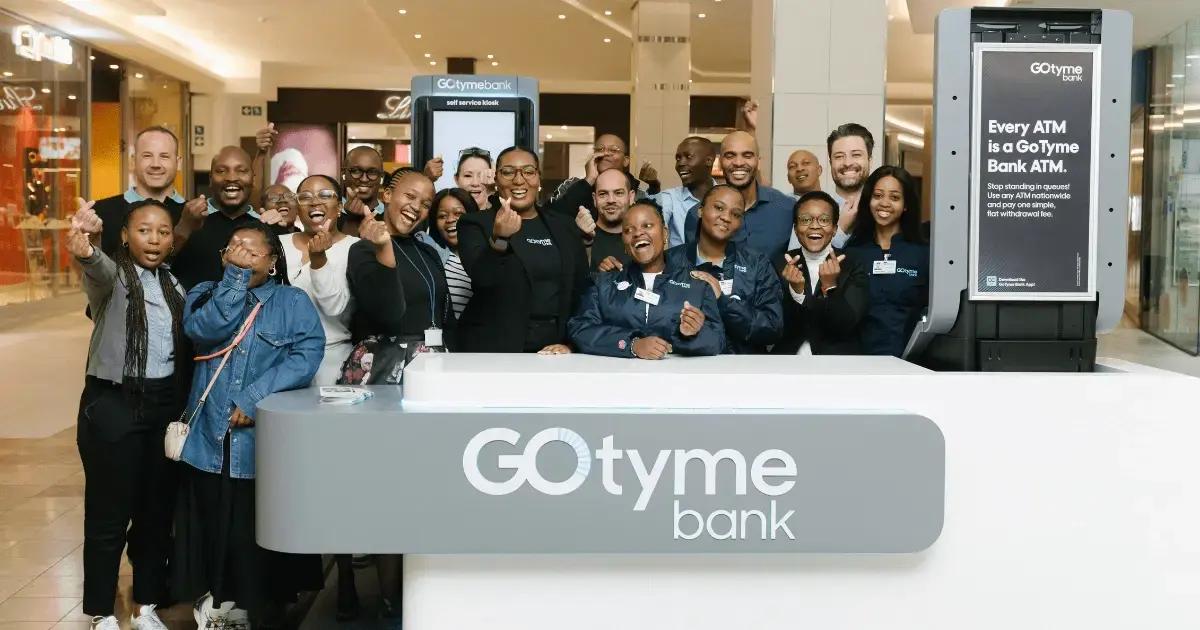
“GoTyme Bank is accelerating its ambition to become South Africa’s largest lender by customer numbers, targeting 30 million customers by 2036 after reaching 13 million clients and achieving profitability as a standalone digital bank. The bank plans to leverage its partnership with Sanlam to expand transactional banking, personal lending and insurance offerings, intensifying competition with market leader Capitec.”
GoTyme Bank Targets 30 Million Customers as It Challenges Capitec’s Dominance in South Africa
South Africa’s banking industry is entering a new phase of competition as GoTyme Bank intensifies its ambition to become the country’s largest retail banking institution by customer numbers. Backed by billionaire Patrice Motsepe’s African Rainbow Capital Investments, the digital lender is targeting 30 million customers by 2036, positioning itself for a direct challenge against established market leader Capitec.
The ambitious expansion strategy follows a significant milestone for GoTyme, which has reached approximately 13 million customers in South Africa and established itself as one of the country’s fastest-growing financial institutions. Its growth also coincides with an increasingly competitive banking environment, where traditional banks face pressure from digital financial services, lower transaction costs and changing consumer expectations.
According to Bloomberg reporting published on 3 November 2026, GoTyme is seeking to expand its customer base substantially over the coming decade. Chief executive officer Cheslyn Jacobs said the bank wanted to reach approximately half of South Africa’s population as customers, reflecting the scale of its ambitions.
The announcement highlights the growing importance of digital banking, partnerships and financial inclusion in South Africa’s financial services industry.
GoTyme’s Rapid Growth Reshapes Banking Competition
GoTyme Bank’s customer growth represents one of the most significant developments in South African retail banking.
The institution, previously known as TymeBank, launched publicly in 2019 and established a business model focused on accessible digital banking services. Instead of relying exclusively on traditional banking branches, it developed partnerships with retailers and introduced convenient banking access points.
Its customer base has subsequently expanded substantially, allowing the institution to become South Africa’s second-largest bank by customer numbers according to the latest figures reported.
Capitec, however, continues to lead the market.
The established retail bank reported more than 26.6 million personal and business customers as of 31 August 2026, placing it ahead of GoTyme in overall customer numbers.
Consequently, GoTyme’s target of 30 million customers represents a direct challenge to Capitec’s position.
The competition is not simply about opening more accounts. Banks increasingly depend on customer activity, transaction volumes, deposits, lending relationships and digital engagement to establish sustainable profitability.
For GoTyme, converting its expanding customer base into stronger financial relationships will remain central to its long-term strategy.
Profitability Strengthens the Digital Banking Business Model
Another important development supporting GoTyme’s expansion is its reported achievement of standalone profitability.
The bank has described itself as Africa’s first profitable standalone digital bank, highlighting the potential commercial viability of technology-driven financial services.
Digital banking institutions traditionally face substantial initial investment requirements. Technology infrastructure, regulatory compliance, customer acquisition, cybersecurity and product development require significant expenditure before businesses achieve financial sustainability.
Profitability therefore represents an important milestone.
It suggests that GoTyme’s growing customer base and increasing use of financial products are contributing towards a business model capable of generating earnings.
The bank’s financial performance has also demonstrated substantial growth in lending and deposits.
According to figures reported by The Citizen on 2 November 2026, customer advances increased by 126% to R5.08 billion, while customer deposits rose 27% to R9.69 billion.
Total income increased 25% to R2.72 billion, supported by expanding lending activities and greater customer engagement.
Net interest income reached approximately R1.4 billion, while fee income increased 41%.
These developments suggest that GoTyme is gradually building a more comprehensive banking business rather than relying exclusively on customer acquisition.
Sanlam Partnership Could Accelerate Customer Acquisition
A central component of GoTyme’s expansion strategy involves its partnership with Sanlam, one of Africa’s largest insurance groups.
The partnership is expected to provide access to a substantial existing customer network while allowing both institutions to expand their financial services offerings.
Sanlam has approximately nine million customers, creating opportunities for GoTyme to introduce banking products to consumers who already maintain insurance relationships.
The companies intend to offer transactional banking services, deposits, unsecured personal loans and life insurance products through their partnership.
This arrangement could significantly strengthen customer acquisition.
Rather than depending exclusively on advertising campaigns and individual account registrations, GoTyme can potentially leverage Sanlam’s distribution channels and established customer relationships.
Sanlam expects its banking initiative to attract between two million and four million banking customers by 2030.
It also anticipates increasing its loan book to approximately R10 billion, compared with R6 billion in 2025.
The partnership illustrates how financial institutions increasingly combine banking, insurance and investment products to create integrated customer experiences.
For consumers, this could mean greater convenience and access to financial services through fewer platforms.
For participating businesses, it creates opportunities to cross-sell products, improve customer retention and increase revenue.
Digital Payments Become a Competitive Advantage
GoTyme’s growth strategy also places considerable emphasis on affordable digital transactions.
The bank has introduced free qualifying instant payments, seeking to reduce the cost of transferring money between individuals and businesses.
The strategy is particularly relevant in South Africa, where banking fees remain an important consideration for consumers.
According to reporting by the Sunday Times published on 1 November 2026, GoTyme processed approximately 26% of South Africa’s PayShap transactions monthly after introducing its free instant-payment offering.
The bank reportedly sacrificed approximately R150 million in revenue during 2026 to support the initiative.
Although the decision reduces immediate fee income, the strategy could strengthen customer loyalty and encourage customers to conduct more transactions through GoTyme accounts.
Affordable payments can also improve financial inclusion by reducing barriers to participation in digital financial services.
Consumers who previously relied on cash or expensive transfers may find electronic transactions more accessible when charges are reduced.
Consequently, digital payment pricing has become an increasingly important competitive factor in the banking industry.
Pepkor’s Banking Plans Introduce Another Competitor
GoTyme’s expansion is taking place while additional competitors prepare to enter South Africa’s banking market.
Pepkor Holdings, Africa’s largest clothing and mobile-phone retailer, is preparing to introduce an independent lender, potentially as early as 2027.
The company operates thousands of retail outlets across South Africa, providing an extensive distribution network that could support financial services.
Pepkor’s retail operations create opportunities to connect consumer purchases, mobile devices and banking products within an integrated business model.
GoTyme chief executive Cheslyn Jacobs has acknowledged the potential competitive threat.
The retailer’s extensive customer relationships and ability to distribute smartphones could provide an advantage when introducing digital banking products.
This development demonstrates how companies outside the traditional banking industry are increasingly exploring financial services.
Retailers, telecommunications businesses and insurance companies are recognising opportunities to expand into banking through digital platforms and partnerships.
The result could be a more diverse financial services market in which established banks compete against businesses with different distribution capabilities.
Traditional Banks Face Increasing Pressure
South Africa’s established banking institutions remain significant competitors.
Capitec, First National Bank, Standard Bank, Absa and Nedbank continue to operate extensive financial services businesses with substantial customer relationships.
However, the growth of digital institutions is increasing pressure on traditional banks to improve their services.
Customers increasingly expect convenient mobile applications, affordable transactions, faster payments and personalised financial products.
Banks that fail to respond to these expectations could experience difficulties retaining customers.
At the same time, established institutions possess advantages that digital newcomers must develop over time.
These include extensive experience in lending, regulatory compliance, risk management, corporate banking and sophisticated financial infrastructure.
The competition is therefore likely to involve both technological innovation and the ability to maintain financial stability.
Financial Inclusion Remains an Important Opportunity
GoTyme’s expansion also highlights the potential for financial inclusion in South Africa.
Digital banking can improve access to financial services for consumers who face difficulties accessing traditional banking infrastructure.
Mobile applications and retailer-based banking services can reduce the need for physical branches, making financial services more convenient in different communities.
However, access to banking accounts alone does not guarantee meaningful financial inclusion.
Consumers also require affordable transactions, responsible lending, savings opportunities and protection against financial fraud.
As digital banking expands, institutions will need to ensure that customers understand their financial products and can access support when necessary.
Cybersecurity and customer protection will also become increasingly important.
The growing use of digital platforms creates opportunities for financial innovation, but it also exposes customers to online scams, identity theft and fraudulent transactions.
Banks must therefore invest continuously in security systems and consumer education.
Future Outlook: Can GoTyme Overtake Capitec?
GoTyme’s target of 30 million customers by 2036 represents a significant long-term ambition.
Achieving this objective would require sustained customer acquisition, continued product innovation and effective partnerships.
The Sanlam relationship could provide an important growth channel, while the expansion of lending and payment services could encourage customers to use GoTyme as their primary banking institution.
Nevertheless, Capitec remains a formidable competitor.
Its established customer base, extensive operational experience and strong position in retail banking provide considerable advantages.
GoTyme will also need to maintain profitability while investing in technology, customer support and regulatory compliance.
Competition from Pepkor, Old Mutual’s OM Bank and other potential entrants could further complicate its expansion strategy.
A future stock market listing is another consideration.
Bloomberg reporting indicates that GoTyme is evaluating a potential listing over the coming years, with market conditions determining the timing and valuation.
The company’s leadership has discussed a valuation benchmark exceeding $15 billion, although its current valuation has not been disclosed.
Conclusion
GoTyme Bank’s ambition to reach 30 million customers by 2036 represents an important development in South Africa’s banking industry.
Its expansion reflects the growing influence of digital financial services, affordable payments and strategic partnerships.
The Sanlam partnership, rising customer deposits and increasing lending activity provide important foundations for further growth.
However, the challenge of overtaking Capitec will require sustained execution, customer trust and continued financial performance.
For South African consumers, the intensifying competition could ultimately deliver more affordable banking services, greater convenience and broader access to financial products.
The coming decade will therefore be important in determining whether digital banking institutions can fundamentally reshape the country’s financial services landscape.



