




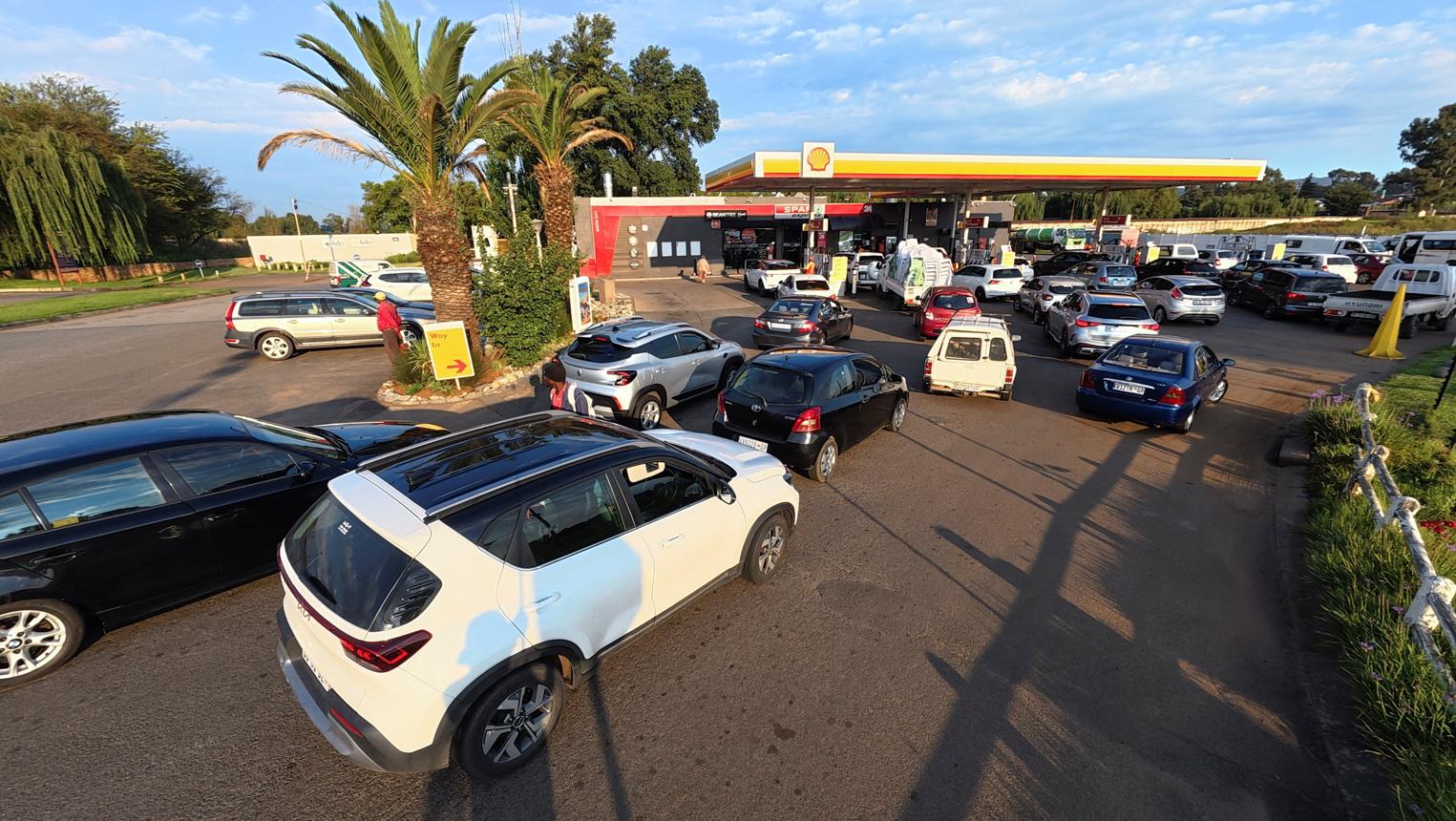
“South African households and small businesses face renewed cost pressures from elevated fuel prices, which can increase transport and delivery expenses while leaving consumers with less money to spend on other goods and services. Markets are also awaiting September inflation and retail-sales figures, which should provide further evidence of how prices and consumer demand are evolving.”
How Rising Fuel Prices Are Reshaping Consumer Spending and Business Decisions in South Africa
1. Fuel costs emerge as a major pressure on household budgets
South Africa’s sharp October fuel-price increases have intensified concerns about the affordability of everyday goods and services. The adjustment that took effect on 7 October raised the price of 95-grade petrol by R3.33 per litre, taking it to R30.25 inland and R29.38 in coastal areas. Diesel prices also increased, adding to the operating expenses of transport companies, delivery businesses and other fuel-dependent enterprises.
From a microeconomics perspective, these developments matter because households and businesses must make choices when resources become more expensive. Consumers have limited incomes, while companies operate within budgets and must decide how to allocate their money between wages, stock, transport, rent and other expenses.
When fuel prices rise sharply, consumers cannot necessarily increase their earnings to compensate. Instead, they may reduce non-essential purchases, switch to cheaper products, travel less frequently or postpone major purchases. These individual decisions can influence sales across supermarkets, restaurants, clothing stores, entertainment businesses and other consumer-facing industries.
The effect is particularly important for households that depend on private vehicles or public transport to reach workplaces, schools, healthcare facilities and shopping centres. Transport is often a necessary expense rather than a discretionary purchase, meaning consumers may have limited opportunities to avoid the additional cost.
2. The effect on disposable income and purchasing power
Disposable income is the money households have available to spend or save after taxes and other compulsory deductions. Rising transport expenses can reduce this amount even when wages remain unchanged.
Consider a motorist who purchases 50 litres of petrol. An increase of R3.33 per litre raises the cost of that fill by R166.50 compared with the previous price. For someone who refuels several times a month, the additional expense can become substantial.
That money must come from somewhere in the household budget. A family may spend less on clothing, restaurant meals, personal-care products or recreational activities to cover its transport costs.
Lower-income households can be particularly vulnerable because essential expenses often account for a large proportion of their earnings. Their ability to absorb unexpected increases is limited, and they may have little savings available to protect themselves against price shocks.
These choices illustrate the economic concept of opportunity cost. Every additional rand spent on fuel is a rand that cannot be used for another purpose. Even if the household maintains its normal travel patterns, the opportunity to purchase other goods and services becomes smaller.
However, the impact will vary between households. Someone who works remotely, lives close to work or uses public transport may experience a different financial effect from a commuter who drives long distances daily.
3. Why fuel-price increases affect more than motorists
Fuel is both a consumer product and an input into the production and distribution of other goods. This makes its price particularly important to the South African economy.
Road transport connects farms, factories, ports, warehouses, wholesalers and retailers. When diesel becomes more expensive, trucking companies face higher operating costs. Businesses may respond by negotiating new transport contracts, introducing fuel surcharges, improving vehicle efficiency or adjusting delivery schedules.
An October report on South African road freight highlighted the pressure that higher diesel costs place on transport operators and the potential for increased logistics costs to feed into the prices consumers pay.
For example, a grocery distributor transporting vegetables from a farming region to an urban distribution centre must account for fuel, vehicle maintenance, driver wages and other expenses. If fuel becomes more expensive, the distributor may have to charge the retailer more to maintain profitability.
The retailer then faces a choice. It can absorb the increase and accept a smaller profit margin, negotiate with suppliers, reduce other costs or raise shelf prices.
The eventual outcome depends on market conditions. A business facing strong competition may find it difficult to increase prices without losing customers. A company with limited competition or a product that consumers cannot easily avoid may have more room to pass on additional costs.
Consequently, fuel-price increases do not translate into identical price changes for every product. Their effects depend on transport requirements, supplier contracts, inventories, profit margins and consumer demand.
4. Small businesses face difficult pricing decisions
Small businesses are particularly exposed to rising operating expenses because they may have limited cash reserves and less bargaining power than large companies.
Township shops, informal traders, independent retailers, restaurants, mobile vendors and delivery businesses often operate on relatively narrow margins. They may also depend on frequent stock purchases and transport arrangements that are difficult to change quickly.
Reporting published in October has highlighted the double pressure that fuel increases place on township enterprises: their costs can rise while customers have less disposable income available for purchases.
A small retailer that spends more to collect stock may have to choose between raising prices and accepting lower profits. Yet raising prices can discourage customers who are already struggling with their household budgets.
This creates a microeconomic problem involving price elasticity of demand. Price elasticity measures how strongly the quantity demanded changes when a product’s price changes.
For basic necessities, consumers may continue buying even when prices rise, although they could switch brands or purchase smaller quantities. For non-essential products, customers may respond more strongly by postponing purchases or buying nothing at all.
A small business selling discretionary goods therefore faces a different challenge from a retailer selling essential food items. Both experience cost pressures, but their customers may react differently to price increases.
Businesses can respond by reviewing delivery routes, consolidating stock orders, negotiating with suppliers, reducing waste and identifying products with stronger demand. These adjustments cannot eliminate every cost increase, but they may reduce the need for immediate price rises.
5. Competition and consumer choices become more important
When household budgets tighten, consumers often compare prices more carefully. They may visit several retailers, use promotional offers, buy generic products or choose smaller package sizes.
These behaviours can intensify competition between businesses.
Retailers that manage their costs efficiently may attract customers seeking lower prices. Conversely, businesses that fail to adapt could lose sales even if their products remain popular.
However, the ability to compare prices is not equal for everyone. Consumers with reliable internet access, transport and time may find it easier to shop around. People living far from competing stores may have fewer alternatives.
Local market conditions therefore influence how effectively competition protects consumers from rising prices.
Competition also affects whether businesses can pass on higher costs. If several retailers sell similar products, a company that increases prices substantially may lose customers to its competitors. Where alternatives are scarce, consumers may have less bargaining power.
For policymakers, this highlights the importance of competitive markets, transparent pricing and practical opportunities for small businesses to enter and operate in local markets.
6. Inflation expectations and the next economic data releases
The fuel-price shock is occurring as South Africa awaits important economic indicators.
Reuters reported on 20 October that the rand was relatively steady as investors anticipated the government’s medium-term budget presentation and September inflation data.
BusinessTech also reported expectations that Statistics South Africa would publish consumer inflation and retail-sales data on 21 October. These figures were forthcoming at the time of reporting and should not be treated as confirmed outcomes.
For microeconomics, inflation data can help explain how the prices of individual goods and services are changing and how purchasing power is evolving. Retail-sales data, meanwhile, provide evidence about consumer spending across parts of the formal retail sector.
If inflation accelerates, households may become more cautious about spending, especially if wage increases do not keep pace with the cost of living. Businesses may also face uncertainty when deciding how much stock to order, whether to expand and how to price their products.
Nevertheless, higher inflation does not automatically mean that every business will experience lower sales. Some sectors may benefit from stronger demand, while others may struggle with weaker purchasing power. The outcome depends on consumer preferences, income levels, product availability and competitive conditions.
7. Interest rates add another layer of pressure
The South African Reserve Bank’s monetary policy decisions also influence households and businesses.
Reuters reported on 15 October that Governor Lesetja Kganyago identified risks to inflation from global energy and food prices. The report said the central bank had raised its benchmark interest rate by 25 basis points to 7.25% in September.
Higher borrowing costs can increase repayments for households with variable-rate debt and raise financing expenses for businesses. Families may consequently have less money available for discretionary purchases, while smaller companies may find it more expensive to finance inventory, equipment or expansion.
Monetary policy cannot directly reduce global oil prices. Its purpose includes managing inflation expectations and preventing temporary price increases from spreading persistently throughout the economy.
The challenge for policymakers is to respond to inflation risks without unnecessarily weakening household demand and business investment.
For consumers, the combined effects of expensive transport and borrowing can make budgeting more difficult. For businesses, the same conditions may discourage investment and encourage a more cautious approach to hiring.
8. Practical responses for households and businesses
Households can begin by reviewing their monthly spending and identifying expenses that can realistically be reduced. Combining errands, planning journeys, comparing transport options and avoiding unnecessary trips may help reduce fuel consumption.
However, these options are not equally available to everyone. People who must drive long distances for work may have limited flexibility, while public transport availability varies by location.
Businesses can similarly examine their operating costs. Delivery companies may improve route planning, retailers may consolidate orders, and small enterprises may negotiate more favourable delivery arrangements with suppliers.
Clear financial planning is especially important when cost increases are unpredictable. Businesses should avoid assuming that every increase can be passed on to customers without affecting sales.
They should also monitor customer purchasing patterns. If customers begin choosing cheaper alternatives or buying smaller quantities, businesses may need to adjust their product mix and promotional strategies.
These decisions demonstrate the importance of microeconomic analysis: firms need to understand both their own costs and how customers respond to changing prices.
9. What the development means for South Africa’s economy
The immediate impact of higher fuel prices is felt at the household and business level, but the combined effect of individual decisions can influence broader economic activity.
If many households reduce discretionary spending, businesses serving those markets may experience weaker demand. Lower sales can affect profit margins, staffing decisions and investment plans.
At the same time, businesses that adapt successfully may retain customers by improving efficiency, offering affordable alternatives and managing their inventory carefully.
The effects will not be evenly distributed. Transport-intensive industries, commuters who rely on private vehicles and small firms with limited financial reserves may face greater pressure than households or companies with more flexibility.
The situation also reinforces the importance of reliable economic data. The upcoming inflation and retail-sales releases should help analysts assess whether higher prices are being accompanied by changes in consumer demand. Their implications will depend on the figures actually published, rather than forecasts alone.
10. Conclusion
South Africa’s October fuel-price increases provide a clear example of how changes in one market can affect decisions across the economy. Higher petrol and diesel costs can reduce household purchasing power, increase business expenses and influence the prices consumers pay for goods and services.
For households, the main challenge is balancing essential transport expenses against other needs. For small businesses, it is maintaining profitability without setting prices so high that customers turn elsewhere.
The final impact depends on how consumers, suppliers, retailers and policymakers respond. Competitive markets, careful cost management and reliable information can help households and businesses make better decisions, although these measures cannot fully eliminate the effects of a major fuel-price shock.
As South Africa awaits the latest inflation and retail-sales data, the central microeconomic question remains whether households and businesses can adjust to higher costs without a significant decline in essential consumption, commercial viability and future investment.



