




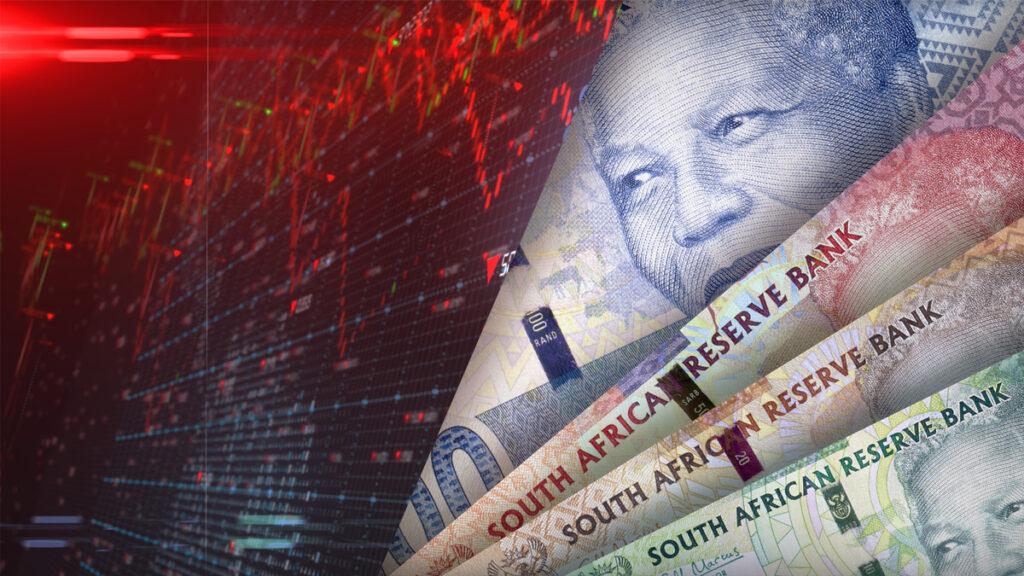
“The South African rand remained relatively steady in early trading on Tuesday, 20 October 2026, as financial markets awaited Finance Minister Enoch Godongwana’s medium-term budget presentation and the release of September inflation figures. Investors are assessing whether stronger government tax revenues can improve the country’s fiscal position while rising fuel costs, weak economic growth and inflationary pressures continue to threaten households, businesses and the broader economy.”
Markets await important economic signals
South Africa’s currency market entered Tuesday cautiously as investors prepared for a series of economic announcements expected to shape the country’s financial outlook. The rand’s relatively stable performance reflects a market waiting for clearer information about government finances, inflation and the direction of economic policy.
According to Reuters, the currency held steady in early trading on 20 October as attention shifted towards the medium-term budget policy statement, scheduled for Wednesday, 21 October, and the September consumer inflation report.
These developments are important because the rand influences the cost of imported goods, international trade, investment flows and the domestic inflation outlook. Meanwhile, the government’s budget decisions help determine borrowing requirements, public spending priorities and investor confidence in South Africa’s ability to manage its debt.
Although currency stability can provide some reassurance, it does not necessarily indicate that the economy has overcome its underlying challenges. Investors still need evidence that the government can improve its finances while supporting economic growth and protecting households from rising living costs.
Why the rand’s performance matters
The rand is one of the key indicators investors use to assess South Africa’s economic prospects. Its value is influenced by domestic policy decisions, international commodity prices, global interest rates, geopolitical developments and demand for emerging-market assets.
When international investors become more confident about South Africa’s economic management, demand for rand-denominated assets can improve. Conversely, concerns about government debt, inflation or political and economic uncertainty may encourage investors to move their capital into currencies and assets they perceive as safer.
A stronger rand can help reduce the domestic cost of imported products, including fuel, machinery, medicines and certain food products. However, a weaker currency can make these imports more expensive, increasing pressure on companies and consumers.
South Africa is particularly exposed to changes in international energy prices because it imports crude oil and refined petroleum products. When global oil prices rise while the rand weakens, the combined effect can increase the cost of fuel, transportation and production.
The current market environment therefore presents a complicated picture. The rand’s relative stability offers a degree of reassurance, but the forthcoming budget and inflation announcements will provide investors with additional information needed to judge whether that stability can continue.
The medium-term budget takes centre stage
The main focus for financial markets is the medium-term budget policy statement, which Finance Minister Enoch Godongwana is expected to present to Parliament on 21 October.
The statement updates the government’s financial projections and provides information about expected revenue, expenditure, borrowing and economic growth. It also indicates how the Treasury intends to manage the public finances over the coming years.
According to Reuters reporting published on 19 October, stronger tax collections have created the possibility of a better fiscal outlook than previously anticipated. Corporate income tax receipts increased by 22.8% during the first five months of the financial year, while value-added tax receipts rose by 9.1% and personal income tax collections increased by 8.4%.
The improved collections are encouraging because additional revenue can reduce the amount the government needs to borrow. Nevertheless, stronger tax receipts do not automatically translate into a sustainable improvement in the national budget.
The government must also consider whether higher collections will continue, how much additional expenditure is required and whether economic conditions will support revenue growth over the longer term.
Reuters reported that BNP Paribas expected revenue estimates to be revised upwards by more than R50 billion, while Goldman Sachs estimated a potential improvement of approximately R40 billion. Both institutions expected the Treasury to incorporate only part of the potential windfall into its forecasts.
For investors, the critical question is how the government intends to use any additional revenue. Saving a substantial portion could help reduce borrowing and strengthen confidence. Spending more could support essential public services and economic activity, but it might also limit the improvement in the fiscal position.
The budget will therefore be closely scrutinised for evidence of a credible balance between immediate needs and long-term financial sustainability.
Government debt and credit ratings remain important
South Africa has faced persistent pressure from rising public debt and the cost of servicing that debt. Interest payments absorb money that could otherwise be directed towards infrastructure, healthcare, education, policing and other public services.
A more favourable fiscal outlook could help reverse some of these pressures. Reuters reported that banking analysts anticipated the main budget deficit could narrow to between 3.3% and 3.6% of gross domestic product, compared with the earlier target of 3.7%. These were forecasts ahead of the budget, not confirmed final outcomes.
Investors will also examine whether the government provides a credible framework for controlling borrowing. A clearly defined fiscal anchor could help establish expectations about how the Treasury will respond if debt or deficits move away from its intended path.
Credit-rating agencies consider a range of factors, including the government’s ability to service its obligations, economic growth, fiscal discipline and the reliability of policy implementation.
A rating improvement could reduce borrowing costs over time and encourage some investors to reconsider South African government bonds and other domestic assets. However, a more favourable rating is not guaranteed, and it would not resolve every structural weakness in the economy.
The country also needs stronger growth to expand its tax base, generate employment and improve the government’s ability to finance public services without continually increasing debt.
Inflation data could influence interest-rate expectations
The second major development attracting attention is the release of September consumer inflation data.
Inflation measures the rate at which prices rise over time. For households, persistent inflation reduces purchasing power because the same income buys fewer goods and services. For businesses, it can increase the cost of raw materials, transport, wages and other operating expenses.
South Africa’s headline inflation rate stood at 4.4% in August, according to reporting ahead of Wednesday’s data release. Analysts expected further upward pressure, partly because of higher fuel prices. Business Day reported that Absa economists anticipated inflation could increase to 4.6% in September. This was an estimate, not the published September result.
Fuel costs are especially significant because their effects extend beyond motorists. Higher diesel and petrol prices can raise the cost of moving agricultural produce, delivering consumer products and transporting workers.
Businesses may absorb some of these increases, but others may pass them on to customers. As a result, energy-price shocks can affect a wide range of prices throughout the economy.
The inflation figures will also help investors assess the South African Reserve Bank’s monetary policy outlook.
The Reserve Bank uses interest rates to help control inflation and maintain price stability. Higher interest rates can restrain demand and inflation, but they also increase the cost of borrowing for households and businesses.
The September inflation report could therefore influence expectations about future monetary policy, although the Reserve Bank will consider a wider range of economic indicators before making any decision.
Higher fuel prices create pressure across the economy
International energy markets present an additional challenge for South Africa’s financial outlook.
Reuters reported that inland petrol prices had exceeded R30 per litre during October as geopolitical tensions in the Middle East pushed international oil prices above $100 per barrel.
Higher fuel prices can affect household budgets directly and indirectly. Motorists may have less money available for groceries, education, housing and other expenses after paying for transport.
Public transport operators and logistics companies also face higher operating costs. Depending on competition and demand, these businesses may raise fares and delivery charges, placing additional pressure on consumers and companies.
Small businesses can be particularly vulnerable because they often have less capacity to absorb unexpected increases in costs. A retailer that relies on deliveries, for example, may experience higher transport expenses at the same time that customers reduce spending.
Manufacturers can face similar difficulties when transporting inputs and finished goods becomes more expensive. If businesses cannot pass all these costs to customers, their profit margins may narrow, potentially affecting investment and hiring.
These pressures help explain why a stable exchange rate is not sufficient on its own to guarantee better economic conditions. The cost of imported energy and the strength of domestic demand also matter.
Weak economic growth complicates the financial outlook
South Africa’s underlying growth challenge remains one of the most important considerations for policymakers and investors.
Reuters reported on 19 October that the International Monetary Fund expected South African economic growth of approximately 1% in 2026.
Slow growth can limit employment creation, restrict household income growth and constrain the expansion of businesses. It can also make it more difficult for the government to improve its finances because tax revenue depends partly on wages, profits, consumption and overall economic activity.
When growth is weak, government faces difficult choices. Cutting expenditure too aggressively could undermine essential services or delay infrastructure projects. Increasing expenditure without a sustainable financing plan, however, could raise borrowing needs and weaken confidence.
A durable improvement in South Africa’s financial outlook will require more than better-than-expected tax receipts. It will also depend on stronger investment, reliable electricity and transport infrastructure, improved logistics, competitive businesses and an environment in which companies can expand and employ more people.
Reforms that improve port and rail performance, reduce administrative barriers and encourage private-sector investment could help raise productive capacity over time. Their impact, however, depends on effective implementation rather than announcements alone.
What the developments mean for households and businesses
For ordinary South Africans, the immediate consequences of the rand, inflation and budget developments will be felt through borrowing costs, fuel prices, food prices, employment opportunities and public services.
Households with variable-rate loans should remain aware that changes in interest rates can affect monthly repayments. Those planning major purchases may also need to account for the possibility that inflation will keep everyday expenses elevated.
Businesses should monitor the budget for changes to spending priorities, taxes and economic forecasts. Import-dependent companies may also need to consider how currency movements affect their costs, particularly when purchasing machinery, fuel or materials from abroad.
Investors, meanwhile, will be looking for consistency between the government’s stated fiscal objectives and its actual decisions. Financial markets can react not only to the numbers announced but also to whether the policy framework appears credible and achievable.
For savers and long-term investors, short-term movements in the rand should be considered within a broader assessment of investment objectives, risk tolerance and diversification rather than treated as a reliable signal to buy or sell assets.
What investors will watch next
The next important signals will come from the medium-term budget presentation and the September inflation release on Wednesday, 21 October.
Investors will assess the updated economic growth forecasts, the government’s revenue projections, expenditure plans and borrowing requirements. They will also examine any details about a proposed fiscal anchor and how the Treasury intends to maintain control over public debt.
The inflation report will help clarify whether higher energy costs are translating into broader price pressures. Market participants will then consider what the results imply for the Reserve Bank’s future decisions.
International developments will remain relevant as well. Changes in oil prices, global financial conditions and geopolitical tensions could affect the rand regardless of whether South Africa’s domestic announcements are favourable.
Consequently, the currency’s current stability should be viewed as a pause while markets wait for more information, rather than a definitive indication that risks have disappeared.
Conclusion: A critical week for South African finance
The rand’s relatively steady performance on 20 October reflects investors’ cautious approach ahead of two important economic announcements. The government’s medium-term budget statement and September inflation figures could provide new evidence about the direction of public finances, price pressures and interest-rate expectations.
Stronger tax collections offer the Treasury an opportunity to improve its fiscal position, but that opportunity comes with significant constraints. High fuel prices, weak economic growth, household financial pressure and persistent public spending needs continue to complicate the outlook.
South Africa’s long-term financial stability will depend on turning any short-term revenue gains into lasting improvements in debt management, public investment and economic performance. It will also require policies that encourage business expansion and job creation while maintaining confidence in the country’s monetary and fiscal institutions.
For now, investors, businesses and households will be watching Wednesday’s announcements for practical evidence that South Africa can strengthen its finances without placing additional pressure on an already challenged economy.



