




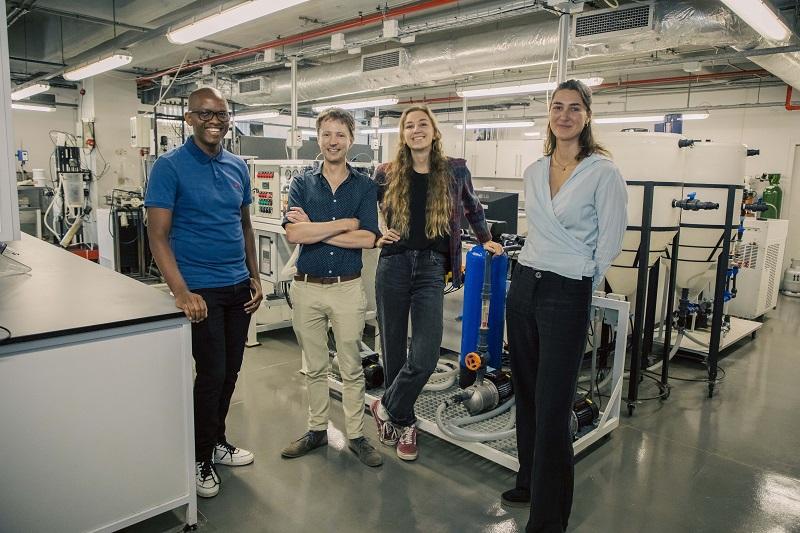
“South African chemical engineer Professor Dyllon Randall is among the finalists competing for the 2026 Africa Prize for Engineering Innovation in Johannesburg on 28 October, with his Pee-Cycling technology designed to convert human urine into concentrated liquid fertiliser and recover reusable water. The innovation could help reduce the use of potable water in sanitation, recover valuable agricultural nutrients and strengthen water and resource efficiency, while its commercial expansion will depend on reliable operations, public acceptance and appropriate safety controls.”
South Africa’s Pee-Cycling innovation highlights a new future for water conservation and sustainable agriculture
A practical engineering solution reaches a major innovation milestone
South Africa’s innovation sector is receiving fresh attention on Wednesday, 28 October 2026, as chemical engineer Professor Dyllon Randall takes his Pee-Cycling technology to the final of the Africa Prize for Engineering Innovation in Johannesburg. The project demonstrates how research developed to address water and sanitation challenges can become a practical technology with potential environmental and commercial applications.
The innovation transforms human urine, which is normally discarded through conventional sanitation systems, into two potentially valuable resources: concentrated liquid fertiliser and reusable water. Its approach challenges the assumption that sanitation must always be based on collecting waste, diluting it with drinking water and transporting it away for treatment.
According to the Royal Academy of Engineering, Randall and his co-founder, Caitlin Courtney, developed a modular system that collects urine separately, stabilises it and concentrates its nutrients using reverse osmosis. The technology is intended to recover resources that would otherwise be lost in wastewater, while helping reduce demand for potable water and reliance on imported fertilisers.
The Africa Prize offers a platform for demonstrating the importance of locally relevant engineering. Rather than concentrating solely on new digital products or advanced electronics, the competition also recognises innovations that address essential needs such as clean water, sanitation, healthcare and agricultural productivity.
Randall’s selection is significant because it connects scientific research with the practical challenges facing cities, businesses and farmers. Its future impact will depend not only on whether the underlying process works, but also on whether it can be operated safely, maintained affordably and adopted at a commercially sustainable scale.
The water challenge behind the technology
Water scarcity has repeatedly highlighted weaknesses in conventional urban infrastructure. South Africa’s experience includes severe droughts, pressure on municipal supplies and the need to improve how water is used across homes, public facilities, industry and agriculture.
Cape Town’s 2017–2018 drought brought these challenges into sharp focus. At the height of the crisis, residents faced strict water restrictions as the city prepared for the possibility that municipal supplies could reach critically low levels.
For Randall, the contradiction between water scarcity and sanitation practices became a research question. Drinking-quality water was being used to flush urine away, even though urine contains nutrients that could potentially be recovered and used productively.
The resulting engineering challenge was to separate the waste stream, preserve its useful components and process it into outputs that could serve a purpose beyond disposal.
This approach reflects a broader shift towards resource recovery. In a circular economy, materials are not treated simply as waste once their original function has ended. Instead, engineers look for safe and practical ways to recover water, nutrients and other useful substances for further use.
Pee-Cycling applies that principle to sanitation. Rather than relying entirely on the conventional flush-and-discard model, it seeks to recover resources at the point where they are collected.
The distinction matters because water scarcity is not solved by a single technology. Reducing unnecessary consumption, repairing leaking infrastructure, protecting water sources and improving treatment systems remain important. Resource-recovery technologies can complement those measures by reducing the amount of potable water used for particular activities and recovering materials that would otherwise enter wastewater.
How Pee-Cycling works
The system uses a series of engineering stages designed to separate urine from other waste streams and retain its useful nutrients.
First, urine is collected through specially designed waterless urinals or toilets that separate it from other wastewater. This separation is important because it creates a more manageable stream for treatment and reduces the dilution associated with conventional flushing.
Second, the collected urine is stabilised. Without appropriate treatment, chemical changes can lead to the loss of nitrogen, one of the nutrients important for plant growth. Stabilisation is therefore a central step in retaining the value of the material before it reaches the concentration stage.
Third, the system uses pretreatment and reverse osmosis to concentrate the nutrient-rich liquid. Reverse osmosis is a membrane-based process also used in water purification and desalination. In Pee-Cycling, it helps separate water from the more concentrated solution.
The process produces concentrated liquid fertiliser and recovered water. According to the Royal Academy of Engineering, the technology was designed to avoid the energy-intensive evaporation approach used in some other concentration methods.
However, recovered water should not automatically be assumed to be suitable for drinking. Its appropriate uses depend on the treatment process, testing, regulatory requirements and the quality standards established for the intended application. Similarly, fertiliser recovered from a waste stream must meet relevant quality and safety requirements before it is marketed or applied to crops.
The importance of this engineering model lies in combining several functions within one system: waste-stream separation, nutrient recovery, water recovery and the possibility of reducing the burden placed on conventional sanitation infrastructure.
From university research to practical deployment
Pee-Cycling emerged from research associated with the University of Cape Town and has progressed towards real-world operation. That transition is particularly important because promising laboratory results do not automatically translate into reliable commercial products.
A laboratory process may work under controlled conditions but face different challenges when installed in a public venue. Actual operation involves changing volumes of collected urine, equipment maintenance, logistics, cleaning, staff training and the need to deliver consistent outputs.
The Royal Academy of Engineering reports that the system has moved beyond its pilot stage and that a full-scale installation has been developed to process urine at a substantial daily volume. Its project information describes a system occupying approximately 12 to 15 square metres, with processing capacity of up to about 3,000 litres per day.
The technology has also been deployed at Cape Town’s DHL Stadium, providing an example of how a high-use public facility could become a collection point for resource recovery. Reporting on the project has described urine collected during rugby matches and a commercial partnership involving Bidvest Prestige and the City of Cape Town.
A stadium is a useful demonstration environment because it can concentrate large numbers of visitors into a defined space. That creates opportunities to collect material at a predictable location and integrate the process with facilities management.
Yet a successful stadium installation does not prove that every building would be equally suitable. Commercial offices, shopping centres, residential developments, universities and industrial sites have different plumbing layouts, usage patterns and maintenance requirements. Each would need an assessment of collection volumes, installation costs, operating arrangements and potential demand for the outputs.
The next stage of growth therefore involves adapting the technology to different environments while maintaining dependable performance.
Potential benefits for agriculture
Fertiliser is essential to modern agriculture because crops require nutrients to grow and produce food. Nitrogen and phosphorus are among the important nutrients that plants need, and both are present in human urine.
Recovering these nutrients creates the possibility of turning a material that normally enters the sanitation system into an agricultural input.
This opportunity is relevant to South Africa, where agricultural producers must manage input costs, climate risks and changing market conditions. Greater domestic capacity to recover nutrients could provide another option within the wider fertiliser supply chain.
It is important, however, to distinguish potential from proven national impact. Pee-Cycling is not a replacement for the full fertiliser industry, and its eventual contribution will depend on the quantity of material collected, the consistency of product quality, production costs and farmers’ willingness to purchase the recovered fertiliser.
Commercial buyers will need reliable information about nutrient composition, product handling, storage, application rates and compliance with applicable standards. They will also compare recovered fertiliser with established alternatives based on price, performance and ease of use.
If the technology can deliver consistent products at competitive costs, it could contribute to a more diversified fertiliser market. It could also demonstrate how urban sanitation systems and agricultural production can be connected through resource recovery.
Such a connection requires coordination between facilities managers, collection services, treatment operators, agricultural suppliers and end users. Innovation, in this context, means developing not just a machine, but a functioning system around it.
Saving potable water and reducing waste
One of the technology’s principal attractions is its potential to recover water that would otherwise remain in a waste stream.
The Royal Academy of Engineering states that processing 1,000 litres of urine can save approximately 2,000 litres of potable water, depending on the system and its operating conditions. The figure illustrates the potential water savings associated with avoiding the use of flush water and recovering water through treatment.
These figures should be interpreted as reported system estimates rather than a guarantee that every installation will achieve identical results. Actual savings depend on the collection method, water use avoided, treatment performance and how the recovered water is subsequently used.
Even with that qualification, the concept has practical relevance. Large public facilities use water every day for toilets, cleaning and maintenance. A system that reduces flush-water demand and recovers usable water could help facilities improve resource efficiency.
Recovered water might be considered for non-potable applications such as cleaning, irrigation or toilet flushing where it meets the required standards and is handled through appropriate systems. Reuse would need to be planned carefully to avoid cross-connections with drinking-water supplies and to protect public health.
There is also a wastewater-management dimension. Recovering nutrients before they enter conventional wastewater streams could reduce the amount of those nutrients requiring removal during downstream treatment. The actual benefits would depend on how the system is integrated with the existing sewerage and treatment infrastructure.
Consequently, the strongest case for Pee-Cycling is not that it will independently resolve South Africa’s water crisis. Rather, it offers a targeted approach that may complement water conservation, wastewater treatment improvements and more efficient use of agricultural resources.
The importance of safety and public confidence
Any technology that recovers resources from human waste must demonstrate that the resulting products are safe for their intended purposes.
For Pee-Cycling, this means ensuring that the treatment process is properly controlled, equipment is maintained, and recovered water and fertiliser are tested against appropriate quality requirements. The system’s commercial success will depend partly on its ability to establish confidence among customers, regulators, facility operators and the public.
Clear communication is essential. Consumers need to understand the difference between recovered water intended for specified non-drinking uses and water certified for human consumption. Agricultural users need dependable information about fertiliser quality and safe application.
Public acceptance may also depend on how the technology is presented. Although the source material may initially attract surprise, explaining the scientific process in straightforward terms can help people understand that resource recovery is an established engineering objective.
The sanitation system itself must also remain hygienic and practical. Waterless urinals, collection equipment and treatment installations require cleaning schedules, suitable handling procedures and trained operators. Poor maintenance could undermine the environmental benefits and create operational problems.
These requirements are not unique to Pee-Cycling. They apply broadly to innovations that seek to transform waste into useful products. Effective engineering combines technical performance with safety, maintenance, regulation and public trust.
Commercialisation is the next major test
Reaching the Africa Prize final brings visibility, but long-term success will depend on turning that visibility into a sustainable business.
Commercialisation requires a clear understanding of who will pay for the technology, who will operate it and who will purchase its outputs. In the case of Pee-Cycling, potential customers could include stadiums, commercial buildings, universities, hotels and other facilities that generate suitable collection volumes.
Each installation would need a financial assessment covering equipment, plumbing modifications, transport, treatment, labour, energy, maintenance and compliance. Potential revenue from fertiliser sales and the value of water savings could contribute to the business case, but these benefits must be measured against the actual costs of operation.
Partnerships will also matter. Facilities managers can support collection and maintenance, while municipalities can help integrate installations into broader water and sanitation strategies. Agricultural businesses can help assess demand for recovered fertiliser and identify appropriate distribution channels.
The technology may be particularly attractive where water conservation has a measurable economic value or where a large facility can collect enough urine to make treatment practical.
Nevertheless, scaling will require evidence from repeated operations. Customers are likely to want information about uptime, output quality, maintenance requirements and total cost before making long-term commitments.
The Africa Prize’s emphasis on entrepreneurship and commercial development is relevant here. Engineering innovations often need mentoring, investment, market access and operational partnerships to move beyond an initial demonstration.
South African innovation with wider African relevance
Pee-Cycling also reflects a broader opportunity for African innovators to develop solutions based on local conditions.
Water scarcity, sanitation infrastructure and agricultural input costs vary widely across the continent, but they are interconnected challenges in many urban and rural settings. A technology developed in South Africa could offer lessons for other markets if it can be adapted to local infrastructure, regulations and operating conditions.
That does not mean that a single model can be copied everywhere without modification. Different cities have different water supplies, sanitation arrangements, customer requirements and institutional capacities. Successful expansion would require local partnerships and careful evaluation.
Still, the underlying principle is widely relevant: valuable resources can be lost when systems are designed only to dispose of waste rather than recover useful materials.
Universities and research institutions can play an important role in addressing this problem by connecting scientific work with public facilities, commercial partners and potential customers. Pee-Cycling’s progress illustrates how research can develop into an applied engineering venture with practical environmental objectives.
The Africa Prize final provides an opportunity to present that journey alongside other innovations addressing healthcare and essential services. Its significance extends beyond the competition itself, because the technology raises questions about how research funding, entrepreneurship and public-sector partnerships can support useful products.
What the Africa Prize final means
The 2026 Africa Prize for Engineering Innovation brings together entrepreneurs whose projects address distinct challenges. The Royal Academy of Engineering has identified Randall’s Pee-Cycling system alongside innovations involving portable cardiac screening, mobile dialysis and medical monitoring. The four finalists are competing for the principal £50,000 award, while the other finalists are set to receive £10,000 each.
As of the research available for this report, I could verify that the final is scheduled for 28 October 2026, but I could not verify the winner’s announcement. Randall’s participation should therefore be reported as a finalist achievement, not as a confirmed prize win.
The distinction matters for accurate reporting. Being selected as a finalist recognises the innovation and its potential, while the eventual result of the competition is a separate event.
Whatever the final outcome, Pee-Cycling has already brought attention to an alternative approach to sanitation: one that treats urine not only as waste but as a possible source of water and agricultural nutrients. Its commercial prospects will depend on further deployment, reliable performance and the ability to demonstrate clear value to customers.
Conclusion: Turning waste into a resource
Dyllon Randall’s Pee-Cycling project represents a practical example of South African engineering directed at water conservation and resource recovery. By separating urine, stabilising its nutrients and concentrating the resulting liquid, the system seeks to produce fertiliser and reusable water from a material traditionally discarded through sanitation infrastructure.
Its progress from university research to deployment at Cape Town’s DHL Stadium demonstrates the importance of testing innovations in real operating environments. It also highlights the work still required to expand a technology: safety validation, consistent output quality, cost-effective operation, commercial partnerships and customer confidence.
South Africa faces interconnected challenges involving water security, agriculture and infrastructure. Pee-Cycling will not solve those challenges alone, but it offers one possible contribution to a more resource-efficient system.
The central lesson is that innovation does not always require inventing an entirely new material. Sometimes it means rethinking familiar systems, recovering value that has been overlooked and building a workable business around a practical environmental need.
The Africa Prize final puts that approach in the spotlight. The long-term measure of success, however, will be whether Pee-Cycling can continue to operate reliably, win customers and deliver measurable benefits well beyond its initial installations.



