




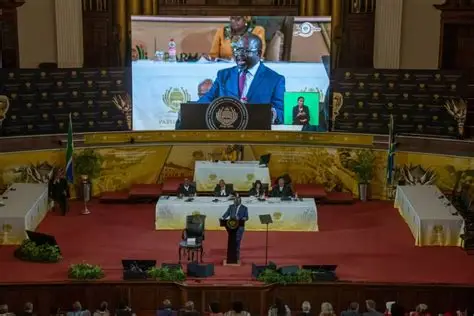
“Finance Minister Enoch Godongwana’s 2026 Budget Speech confirmed that South Africa’s gross national debt has stabilized at 78.9% of GDP, with projections to decline below 75% within five years. The budget combines fiscal discipline, tax relief, and infrastructure-led reforms to restore investor confidence and stimulate sustainable growth.”
South Africa’s 2026 Budget Speech, delivered by Finance Minister Enoch Godongwana, represents a pivotal moment in the country’s economic trajectory. After years of fiscal deterioration, rising debt levels, and investor skepticism, the announcement that gross national debt has stabilized at 78.9% of GDP signals a structural inflection point. This development is not merely a statistical milestone but a broader policy shift aimed at restoring confidence, stimulating growth, and ensuring social protection in a challenging global environment.
Debt Stabilization: A Turning Point
For nearly two decades, South Africa’s debt trajectory has been a source of concern for rating agencies and investors. Debt-servicing costs absorbed nearly 5% of GDP, crowding out growth-oriented spending. The 2026 Budget Speech projects debt-to-GDP peaking at 78.9% in 2025/26 before declining below 75% within five years. This stabilization reduces sovereign risk premiums, enhances credibility in capital markets, and creates a more predictable environment for investment and long-term planning.
Growth Outlook and Structural Constraints
The budget forecasts GDP growth of 1.6% in 2026, rising to 2% by 2028. While modest, these projections are significant given the structural challenges facing the economy. Infrastructure bottlenecks, energy shortages, and logistics inefficiencies remain key obstacles. Reforms in energy, transport, and municipal governance are expected to unlock productivity gains, laying the foundation for sustainable growth. The government’s emphasis on infrastructure-led reform highlights its recognition that growth cannot be achieved without addressing systemic weaknesses.
Tax Relief and Revenue Gains
One of the most notable aspects of the 2026 Budget is the withdrawal of a proposed R20 billion tax increase, made possible by stronger-than-expected revenue collection. Instead, the government introduced inflation-linked personal income tax relief, higher savings limits, and VAT threshold relief for small businesses. For small enterprises, the increase in the VAT registration threshold from R1 million to R2.3 million is particularly significant, reducing compliance burdens and fostering entrepreneurship.
Social Protection and Equity
The budget also emphasizes social protection, with expanded allocations for healthcare, education, and social grants. This reflects the government’s commitment to balancing fiscal discipline with equity. By easing household financial pressure while encouraging investment, the budget seeks to ensure that economic recovery is inclusive.
Business Policy Implications
For businesses, the stabilization of debt and withdrawal of tax hikes create a more predictable environment. Infrastructure reforms promise to reduce operational bottlenecks, while VAT threshold relief directly benefits small enterprises. The combination of fiscal credibility and pro-growth measures is expected to improve investor sentiment, potentially attracting foreign direct investment.
Risks and Challenges
Despite these positive developments, risks remain. Global economic uncertainty, energy shortages, and governance challenges could undermine growth projections. Moreover, while debt stabilization is a milestone, maintaining discipline will require consistent policy execution. Any slippage could reignite investor skepticism.
Conclusion
South Africa’s 2026 Budget Speech marks a critical juncture in business policy. By stabilizing debt, introducing tax relief, and prioritizing infrastructure reform, the government has laid the groundwork for sustainable growth. The challenge now lies in implementation—ensuring that reforms translate into tangible improvements in productivity, equity, and investor confidence.



