




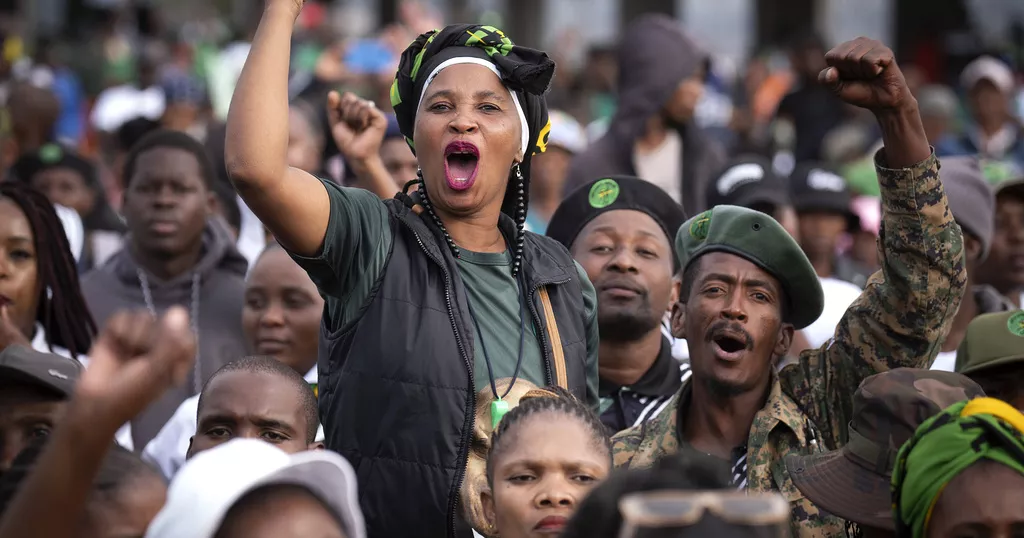
“The South African government has intensified its migration policy by implementing a five‑point strategy that prioritizes deportations, verification, and curbing vigilante actions. This move has sparked heated debate, balancing national security concerns with human rights obligations.”
South Africa’s political landscape is once again dominated by the issue of migration. On June 28, 2026, the government announced significant progress in its five‑point migration strategy, a policy framework designed to address rising tensions over immigration, xenophobia, and community security. This development marks one of the most consequential policy shifts in recent years, with implications for governance, social cohesion, and international relations.
Background to the Policy
Migration has long been a contentious issue in South Africa. The country’s economic challenges, coupled with porous borders, have fueled public frustration over undocumented immigrants. Anti‑immigrant protests have escalated, often degenerating into violence. In response, the government crafted a five‑point migration strategy earlier this year, focusing on:
- Mass deportations of undocumented migrants
- Enhanced verification systems for residency and work permits
- Crackdown on vigilante groups targeting foreign nationals
- Strengthening border security infrastructure
- Regional cooperation with neighboring states to manage migration flows
Current Developments
The latest announcement confirms that deportations have accelerated, with thousands of undocumented migrants already processed. Verification systems are being digitized, aiming to reduce corruption and inefficiency in immigration offices. Meanwhile, law enforcement has been instructed to dismantle vigilante groups that have taken immigration enforcement into their own hands, often violently.
This policy rollout coincides with heightened political pressure. Opposition parties such as the EFF and ActionSA have criticized the government’s approach, arguing that it either goes too far or not far enough. Civil society organizations, including human rights groups, warn that mass deportations risk violating international conventions and South Africa’s constitutional protections.
Political Implications
The migration strategy is not just about border control—it is a political maneuver. President Cyril Ramaphosa’s administration faces mounting challenges, including impeachment proceedings and internal ANC divisions. By pushing a strong migration policy, the government seeks to project authority and responsiveness to public concerns.
However, this approach risks alienating key constituencies. The ANC’s alliance partners, including trade unions and community organizations, have expressed unease about the humanitarian consequences of mass deportations. The Democratic Alliance (DA), meanwhile, has framed the policy as evidence of ANC mismanagement, arguing that better governance and economic reform would reduce migration pressures naturally.
Social and Economic Dimensions
Migration policy is deeply intertwined with South Africa’s economic realities. Many undocumented migrants work in informal sectors, providing cheap labor that sustains industries such as agriculture, construction, and domestic services. Deportations could disrupt these sectors, potentially leading to higher costs and labor shortages.
At the same time, public resentment toward migrants is fueled by perceptions that they compete for scarce jobs and strain public services. The government’s crackdown is therefore both a political response to voter sentiment and an attempt to stabilize communities ahead of upcoming elections.
Regional and International Context
South Africa’s migration policy cannot be viewed in isolation. The country is part of the Southern African Development Community (SADC), where free movement of people is a contentious issue. Neighboring states such as Zimbabwe and Malawi have expressed concern about the deportations, warning of humanitarian crises if large numbers of citizens are suddenly repatriated.
Internationally, human rights organizations are monitoring the situation closely. Amnesty International and Human Rights Watch have already issued statements urging South Africa to uphold international obligations and avoid collective punishment of migrants.
Risks and Challenges
The government’s strategy faces several risks:
- Human rights violations: Mass deportations could lead to abuses, especially if due process is not followed.
- Community backlash: Crackdowns on vigilante groups may provoke further unrest.
- Economic disruption: Removing migrant labor could destabilize key industries.
- Diplomatic tensions: Neighboring states may retaliate or reduce cooperation.
Conclusion
South Africa’s intensified migration policy represents a defining moment in its political trajectory. By accelerating deportations and tightening verification systems, the government is signaling a hardline stance on immigration. Yet this approach carries significant risks, from humanitarian fallout to economic instability.
As the country heads toward crucial political milestones, including potential impeachment proceedings and local elections, migration policy will remain at the center of national debate. Whether this strategy strengthens governance or deepens divisions will depend on how effectively the government balances security, rights, and regional cooperation.



