




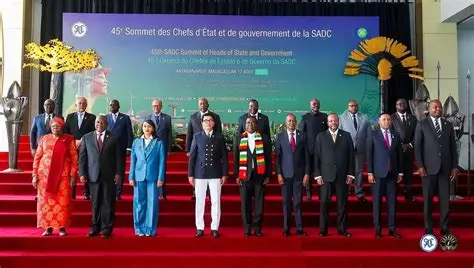
“South Africa has officially taken over the Chairship of the Southern African Development Community (SADC), reaffirming its role as a regional leader in advancing peace, economic integration, and sustainable development. The Durban-hosted summit highlights Pretoria’s diplomatic priorities, including industrialisation, infrastructure, and collective responses to geopolitical and climate challenges.”
South Africa’s assumption of the Chairship of the Southern African Development Community (SADC) represents a significant milestone in its international relations under politics. The move comes at a time when the region faces pressing challenges ranging from economic volatility and climate shocks to evolving security threats. By hosting the 46th Ordinary SADC Summit in Durban, South Africa has positioned itself at the forefront of regional diplomacy, reaffirming its commitment to multilateralism, solidarity, and sustainable development.
Historical Context
SADC, established in 1980, has long been a cornerstone of regional cooperation in Southern Africa. Its mandate includes promoting economic integration, peace, and collective self-reliance. South Africa’s leadership role within SADC has historically been shaped by its post-apartheid foreign policy, which emphasizes human rights, democracy, and regional solidarity. The current Chairship builds on this legacy, aligning with Pretoria’s broader international relations agenda.
Key Themes of the 46th Summit
The Durban summit is being held under the theme: “Resilient, Sustainable and Inclusive Industrialisation through Infrastructure Development, Agricultural and Critical Minerals Transformation in Pursuit of a Just World.” This theme reflects the region’s urgent need to diversify economies, strengthen food security, and harness critical minerals for industrial growth. South Africa’s leadership is expected to drive initiatives that balance economic transformation with environmental sustainability.
South Africa’s Diplomatic Priorities
- Regional Integration: Pretoria has reaffirmed its commitment to deepening economic ties within SADC, focusing on industrialisation and intra-regional trade.
- Peace and Security: With conflicts and instability affecting parts of the continent, South Africa is expected to champion collective security mechanisms.
- Climate Resilience: Addressing climate-related shocks is a priority, with emphasis on renewable energy and sustainable agriculture.
- Youth and Gender Empowerment: South Africa has pledged to advance gender equality and youth participation in regional development.
International Relations Dimension
South Africa’s leadership within SADC also has global implications. Minister Ronald Lamola has emphasized that Pretoria’s foreign policy is guided by constitutional values of human dignity, equality, and justice. These principles inform South Africa’s engagement not only within Africa but also at international platforms such as the United Nations General Assembly, where it continues to advocate for UN reform and inclusive multilateralism.
Challenges Ahead
Despite the optimism surrounding South Africa’s Chairship, several challenges loom:
- Geopolitical Uncertainty: Global conflicts and shifting alliances threaten regional stability.
- Economic Volatility: Inflation, debt burdens, and uneven growth remain pressing concerns.
- Public Health: The region continues to grapple with health crises, requiring coordinated responses.
- Institutional Effectiveness: Strengthening SADC’s decision-making and implementation capacity is critical.
Conclusion
South Africa’s assumption of the SADC Chairship is more than a ceremonial role; it is a strategic opportunity to shape the future of regional cooperation and international relations. By championing industrialisation, peace, and inclusive development, Pretoria seeks to reinforce its position as a regional leader and global advocate for multilateralism. The Durban summit will serve as a litmus test for South Africa’s ability to translate diplomatic commitments into tangible outcomes for the region.



