




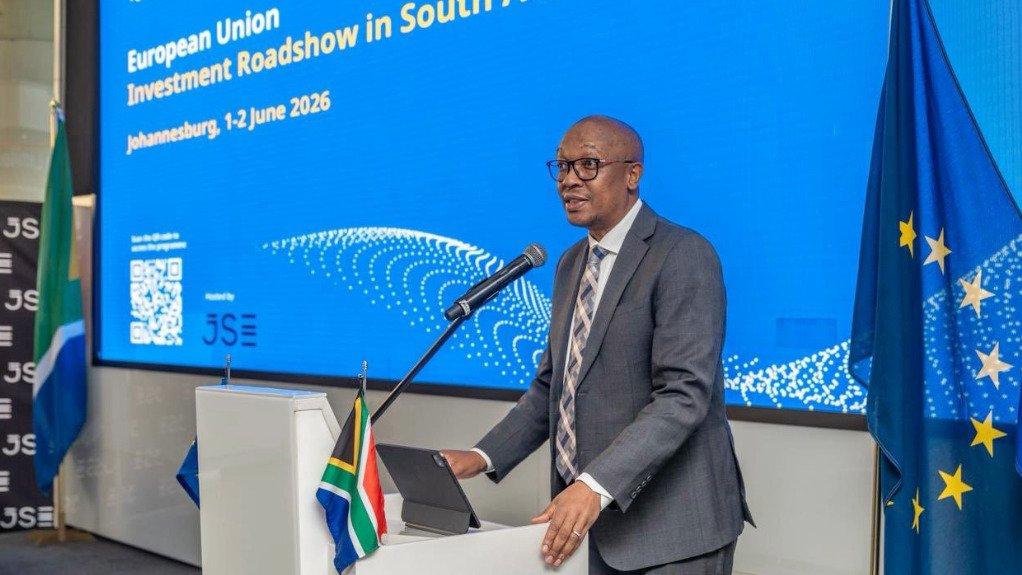
“South Africa has begun deploying a new network of foreign economic representatives to expand international trade, attract foreign investment and strengthen commercial relationships with key global markets. The initiative forms part of the government’s wider effort to diversify export destinations, respond to uncertainty surrounding South Africa’s preferential access to the United States market, and create new opportunities for domestic industries and businesses.”
South Africa Deploys Foreign Economic Envoys to Strengthen Global Trade Relations and Attract Foreign Investment
Introduction
South Africa is intensifying its international economic diplomacy through the deployment of foreign economic representatives tasked with attracting investment, expanding export opportunities and strengthening the country’s commercial relationships with international markets. The initiative, announced by Trade, Industry and Competition Minister Parks Tau on 24 November 2026 and reported by Business Day on 25 November, represents an important development in South Africa’s approach to international relations.
The programme comes at a time when the country is navigating changing international trade conditions, diplomatic disagreements with important trading partners and growing competition for foreign investment. By strengthening its commercial representation abroad, the government aims to establish new economic partnerships, support South African exporters and position domestic industries to compete more effectively in international markets.
The deployment also reflects a wider recognition that international relations are not limited to political meetings and diplomatic statements. Economic cooperation, investment negotiations, market access and commercial partnerships increasingly influence how countries establish and maintain their relationships with one another.
A renewed approach to international economic diplomacy
The Department of Trade, Industry and Competition has introduced a revamped foreign economic representatives programme designed to strengthen South Africa’s commercial presence internationally.
According to Business Day’s report, the first group of representatives has been dispatched under a programme involving ten offices serving approximately 30 countries and territories.
The initiative follows a review of South Africa’s overseas commercial representation. Previously, several important foreign economic representative positions remained vacant, limiting the government’s ability to identify investment opportunities, assist exporters and develop relationships with international businesses.
The new programme seeks to address these gaps through a coordinated approach involving government departments and relevant economic institutions.
Minister Parks Tau explained that South Africa intends to engage international markets more actively to secure investment and increase opportunities for locally produced goods.
This approach is significant because countries increasingly compete not only through the quality of their products but also through their ability to maintain effective international networks.
Commercial representatives can help establish relationships with foreign companies, identify potential investors, explain local investment regulations and connect South African businesses with international customers.
Consequently, the programme could strengthen the relationship between foreign policy and domestic economic development.
Diversifying South Africa’s international trading relationships
A central objective of the initiative is to diversify South Africa’s international economic partnerships.
South Africa maintains important trading relationships across Africa, Europe, Asia and the Americas. However, dependence on a limited number of markets can expose exporters and domestic industries to external economic changes.
The government’s approach therefore involves expanding commercial engagement with emerging markets while maintaining existing partnerships.
The programme’s Butterfly Strategy targets 27 important markets and seeks to strengthen commercial relationships across several geographical regions.
Among the areas receiving attention are Southeast Asia, South America and Eurasia.
These markets offer opportunities for South African agricultural producers, manufacturers, mining companies, technology businesses and service providers.
For example, expanding agricultural exports could create opportunities for local producers to reach additional consumers. Similarly, stronger manufacturing partnerships could support industrial development, technology exchange and access to international supply chains.
South Africa’s position as an established African economy also gives it opportunities to act as a commercial gateway for businesses interested in expanding their activities across the continent.
However, market diversification requires more than diplomatic agreements. Exporters must understand local regulations, consumer preferences, transportation requirements, customs procedures and the competitive environment.
Foreign economic representatives are expected to help businesses navigate these challenges.
International relations and the AGOA trade uncertainty
The deployment comes against the background of uncertainty surrounding South Africa’s participation in the United States’ African Growth and Opportunity Act (AGOA).
The United States announced on 2 November 2026 that it intended to suspend South Africa’s beneficiary status from 1 January 2027.
AGOA provides eligible sub-Saharan African countries with preferential access to the American market for qualifying products.
The possibility of losing these benefits presents challenges for South African exporters, particularly businesses operating in sectors that depend on access to American customers.
President Cyril Ramaphosa addressed the issue in Parliament on 24 November, explaining that the government was pursuing alternative export markets and measures to protect employment and productive industries.
He indicated that South Africa was continuing to engage Washington over bilateral trade relations while reducing its dependence on any single international trading arrangement.
The president also identified opportunities through the African Continental Free Trade Area, China’s zero-tariff treatment policy for African products and trade initiatives involving India.
These developments illustrate the connection between international diplomacy and economic security.
South Africa’s ability to maintain access to international markets influences manufacturing activity, agricultural production, employment and investment decisions.
The foreign economic representatives programme therefore has an important role to play in helping businesses identify alternative commercial opportunities.
Strengthening relationships with emerging markets
South Africa’s international economic strategy is increasingly focused on developing relationships with emerging economies.
Countries in Southeast Asia, South America and other developing regions offer opportunities for cooperation in manufacturing, agriculture, infrastructure, mining and technology.
The government’s interest in these markets reflects the importance of building a broader international economic network.
Stronger relationships with emerging economies could help South African businesses reduce their exposure to changing trade conditions in traditional markets.
For instance, agricultural producers may find opportunities to expand exports into markets with growing food demand. Manufacturers could explore partnerships involving machinery, vehicle components and industrial equipment.
Mining companies could also benefit from stronger commercial relationships involving mineral processing, infrastructure investment and technology development.
Nevertheless, establishing these partnerships requires sustained diplomatic engagement.
Foreign economic representatives can help identify prospective partners, facilitate introductions and communicate investment opportunities to international businesses.
They can also provide government with information about regulatory developments and changing economic conditions in the countries where they operate.
This information is particularly important when companies are considering long-term investments.
Supporting South African businesses and exporters
Another important objective is to improve support for South African companies seeking opportunities abroad.
Smaller businesses often face significant challenges when entering international markets.
These challenges include limited access to market information, high transportation costs, complicated customs requirements, product certification procedures and difficulties identifying reliable overseas distributors.
The new representatives are expected to assist exporters by providing market intelligence, identifying prospective customers and helping businesses understand foreign regulatory requirements.
This support could make international expansion more accessible to small and medium-sized enterprises.
The programme also involves cooperation with InvestSA and the Department of International Relations and Cooperation.
Such coordination is important because investment promotion and diplomatic engagement frequently overlap.
A foreign investor may require information about political stability, regulatory requirements, infrastructure, taxation and access to regional markets before committing capital.
Government representatives working together can help address these concerns and explain available investment opportunities.
The Export Credit Insurance Corporation is also expected to contribute by providing information and financial risk support for exporters and companies undertaking international transactions.
This cooperation could help reduce some of the risks associated with entering unfamiliar markets.
The importance of foreign direct investment
South Africa’s renewed international economic engagement is also connected to concerns about foreign direct investment.
Business Day reported that the country recorded negative net inward foreign direct investment of approximately US$2.3 billion in 2025, compared with positive inflows in 2024 and 2023.
These figures highlight the importance of improving investor confidence and attracting new productive investment.
Foreign direct investment can support economic development when it contributes to new productive facilities, employment, skills development and technology transfer.
For South Africa, attracting investment into manufacturing, renewable energy, infrastructure, mining and agricultural processing could support long-term industrial development.
However, investment promotion must focus on the quality of investment as well as its financial value.
An acquisition of an existing business does not necessarily produce the same economic benefits as an investment that establishes new production facilities, creates employment and develops local suppliers.
The government’s stated emphasis on productive investment therefore places industrial development at the centre of its international economic diplomacy.
South Africa’s position in African and global diplomacy
South Africa’s international economic strategy also has regional implications.
As a member of the African Union, Southern African Development Community and Southern African Customs Union, the country participates in regional institutions that promote economic cooperation and political engagement.
The African Continental Free Trade Area provides an important framework for expanding trade between African countries.
Its implementation could create opportunities for South African manufacturers and agricultural producers to reach consumers across a larger regional market.
However, businesses still face practical challenges, including transport infrastructure limitations, border procedures, regulatory differences and non-tariff barriers.
Foreign economic representatives can help identify these challenges and communicate them to relevant government institutions.
South Africa’s involvement in BRICS also provides another platform for developing economic relationships with major emerging economies.
These international and regional partnerships demonstrate why commercial diplomacy has become an important part of the country’s broader foreign policy.
Challenges facing the programme
Despite its potential benefits, the initiative will face several challenges.
First, the success of foreign economic representatives will depend on their ability to convert diplomatic relationships into measurable commercial opportunities.
Establishing contacts with foreign businesses is important, but successful investment projects require detailed negotiations, reliable information and effective implementation.
Second, the programme will need sufficient financial and human resources.
Serving 30 countries through ten offices requires careful prioritisation and strong coordination.
Third, South Africa must address domestic obstacles that can discourage foreign investors.
These include infrastructure constraints, electricity reliability, logistical difficulties, regulatory uncertainty and the availability of skilled workers.
International representatives can promote South Africa’s opportunities, but domestic institutions must ensure that investors encounter a business environment capable of supporting their projects.
Finally, the government will need to maintain constructive relationships with established trading partners while expanding cooperation with new markets.
Diversification should not automatically mean abandoning existing economic relationships.
Instead, South Africa must seek a balanced approach that protects established commercial interests while creating additional opportunities.
Implications for South Africa’s economic future
The programme could have important implications for South Africa’s economic development over the coming years.
A stronger international commercial network could help domestic businesses identify opportunities beyond traditional export destinations. This would be particularly relevant for agricultural producers, automotive manufacturers, mining companies and businesses involved in industrial production.
South Africa’s automotive industry, for example, depends on international supply chains and access to foreign markets. Changes in trade agreements, tariffs and international demand can influence production decisions and employment.
By establishing stronger commercial relationships abroad, the government could help manufacturers identify additional customers and explore alternative production partnerships.
Agriculture also stands to benefit. South African producers have opportunities to expand exports of fruit, wine, processed foods and other agricultural products. However, taking advantage of these opportunities requires compliance with international food safety standards, efficient transportation and reliable access to overseas distribution networks.
The success of economic diplomacy will therefore depend on how effectively international relationships translate into opportunities for domestic companies.
The importance of maintaining balanced diplomatic relationships
While pursuing new commercial partnerships, South Africa must continue managing its relationships with established international partners.
The country’s relationship with the United States remains economically important, despite disagreements over trade and foreign policy.
President Ramaphosa has emphasised continued engagement with Washington, while maintaining South Africa’s position on national sovereignty and international cooperation.
This illustrates the diplomatic balancing required of a country seeking to protect its national interests while participating in an interconnected global economy.
South Africa also needs to maintain constructive relationships with China, the European Union, India and African trading partners.
A diversified international strategy can provide additional opportunities without requiring the country to choose between competing global economic powers.
Conclusion
South Africa’s deployment of foreign economic representatives marks an important development in its international relations and economic diplomacy.
Through the programme, the government is seeking to strengthen commercial relationships, attract foreign investment, expand export markets and improve support for South African businesses operating internationally.
The initiative comes at a particularly important time as the country faces uncertainty surrounding AGOA, changing international trade conditions and the need to increase productive investment.
Its effectiveness will ultimately depend on implementation, cooperation between government institutions, investor confidence and the ability of South African businesses to compete internationally.
If the programme delivers measurable investment projects, export agreements, manufacturing partnerships and employment opportunities, it could become an important instrument of South Africa’s economic development strategy.
More broadly, the initiative demonstrates that international relations are increasingly connected to economic growth, industrial development and the protection of national economic interests.
For South Africa, building stronger international partnerships is not simply about expanding diplomatic contacts. It is also about creating practical opportunities for businesses, workers and communities while strengthening the country’s position in the global economy.



