




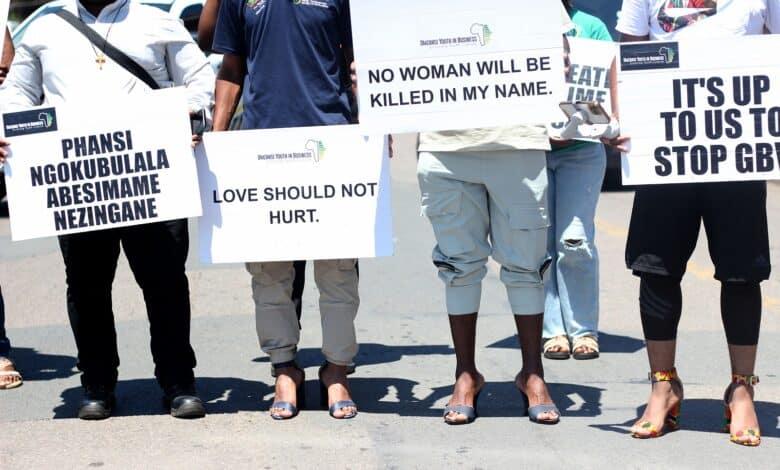
“Women and community organisations in Pietermaritzburg are demanding stronger action against gender-based violence and femicide as South Africa begins its 2026 16 Days of Activism campaign. Through public demonstrations, awareness programmes and community mobilisation, activists are calling for meaningful protection of women and children, better survivor support, greater accountability and action that continues throughout the year.”
Women demand stronger government action against gender-based violence in South Africa
South Africa’s fight against gender-based violence and femicide (GBVF) has received renewed attention following public demonstrations and community awareness activities marking the beginning of the 2026 16 Days of Activism for No Violence Against Women and Children campaign. Women, human rights advocates, community organisations and concerned residents are calling for stronger interventions to protect vulnerable people and ensure that the country’s commitments to ending violence translate into practical results.
The campaign officially runs from 25 November to 10 December 2026. It provides an opportunity for communities, government institutions, civil society organisations and individuals to reflect on the continuing effects of violence against women and children. However, activists are emphasising that the fight cannot be restricted to an annual awareness campaign. They want continuous action, effective institutions and accessible services for survivors.
In Pietermaritzburg, KwaZulu-Natal, local organisations have joined the national mobilisation through demonstrations and awareness initiatives intended to encourage residents to speak out against abuse. Their activities highlight a growing demand for a society in which women and children can live safely in their homes, workplaces, educational institutions and public spaces.
Community activists take the message to the streets
One of the activities marking the beginning of the campaign took place outside the KwaZulu-Natal Museum in Pietermaritzburg.
Linda Mtshali, founder of the Walk a Mile Foundation, led an awareness demonstration aimed at encouraging residents to recognise gender-based violence as a serious social and human rights concern.
The initiative focused on raising awareness, encouraging meaningful conversations and reminding communities that abuse should never be accepted as normal behaviour.
The involvement of local organisations is particularly important because gender-based violence affects communities in different ways. Some survivors experience physical abuse, while others face sexual violence, emotional intimidation, financial control and psychological harm.
Community-based activism provides an opportunity to discuss these experiences and connect affected individuals with organisations capable of offering assistance.
The KwaZulu-Natal Museum also hosted a staff awareness workshop facilitated by Mtshali, with participation from the South African Police Service (SAPS).
Such activities demonstrate how institutions outside traditional law enforcement structures can contribute to public education and prevention.
Dr Matabaro Ziganira, speaking on behalf of South African men, called on men to accept responsibility for addressing gender-based violence. He emphasised the importance of promoting respect and supporting women and children in building safer communities.
His message reflects the national campaign’s 2026 theme: Letsema: Men, Women, Boys and Girls Working Together to End Gender-Based Violence and Femicide.
The theme promotes collective responsibility, recognising that preventing violence requires participation from every section of society.
The 16 Days of Activism campaign and its national significance
The annual 16 Days of Activism campaign takes place between the International Day for the Elimination of Violence Against Women on 25 November and International Human Rights Day on 10 December.
In South Africa, the campaign is part of a broader effort to address violence against women and children through public education, community participation, institutional intervention and survivor support.
The 2026 theme, Letsema, highlights the importance of working together. It encourages men, women, boys and girls to challenge harmful attitudes, promote equality and contribute to safer environments.
According to the South African government’s campaign information, the 16-day initiative forms part of a wider 365 Days of Activism programme. This approach recognises that violence prevention requires sustained attention beyond the annual campaign period.
For activists, this distinction is important. Awareness campaigns can encourage conversations, but their impact depends on whether individuals and institutions change their behaviour and respond effectively to reports of abuse.
The campaign therefore provides an opportunity to evaluate existing interventions and identify areas requiring additional attention.
Activists call for practical protection rather than awareness alone
One of the central concerns raised by women participating in the campaign is that awareness activities must lead to measurable improvements in people’s safety.
Women continue to face challenges when reporting abuse, seeking protection and accessing support services.
Some survivors may be afraid of reporting perpetrators because of intimidation, financial dependence, family pressure or uncertainty about whether authorities will respond effectively.
Others may lack access to safe accommodation, counselling, legal assistance and financial resources needed to rebuild their lives.
These challenges demonstrate why anti-GBV activism increasingly focuses on the effectiveness of institutions and support systems.
Activists argue that survivors should not have to navigate complicated procedures without assistance. They need accessible services that protect their dignity, maintain confidentiality and provide practical guidance.
The concerns are also reflected in recent reporting by frontline organisations in KwaZulu-Natal. Representatives of community support organisations have called for better-funded shelters, improved counselling, faster responses to protection orders, effective investigations and stronger prosecution of perpetrators.
The message from these organisations is that prevention and survivor protection must become central priorities rather than temporary campaign activities.
The role of men and boys in preventing violence
The 2026 campaign places particular emphasis on involving men and boys in the fight against gender-based violence.
This approach recognises that preventing abuse requires changes in attitudes, relationships and social expectations. Men and boys are being encouraged to challenge harassment, intimidation, sexual violence and behaviour that undermines women’s dignity.
Dr Ziganira’s appeal for men to take responsibility reflects the importance of involving communities in prevention efforts.
Schools, universities, sporting organisations, religious institutions and workplaces can all contribute by promoting respectful relationships and challenging harmful behaviour.
Educational programmes can help young people understand consent, equality, personal boundaries and non-violent conflict resolution.
Parents and caregivers also have an important responsibility to teach children that violence, discrimination and intimidation are unacceptable.
For activists, involving men and boys should not mean shifting responsibility away from perpetrators or institutions. Rather, it should create broader participation in preventing abuse and supporting survivors.
Children’s safety becomes a major concern ahead of the festive season
Another important issue raised during the Pietermaritzburg campaign concerns the protection of children as South Africa approaches the festive season.
Lifeline Pietermaritzburg has warned parents and caregivers to remain vigilant against rape and sexual abuse, particularly when schools close and children spend more time at home or visiting extended family members.
The organisation participated in the campaign by deploying awareness teams at five major entry and exit points into Pietermaritzburg from 6:30am on Wednesday.
The initiative aimed to encourage residents to take a stand against abuse and recognise the importance of protecting children.
Lifeline director Snikiwe Biyela highlighted children’s vulnerability during the holiday period, when normal school routines change and children may spend extended periods with relatives or other caregivers.
This concern demonstrates why child protection must remain an important part of the national campaign.
Parents and guardians need to maintain open communication with children, listen to concerns, establish appropriate safeguarding arrangements and take disclosures of abuse seriously.
Schools and community organisations also have a responsibility to provide information about reporting abuse and accessing professional support.
Importantly, prevention must not place the burden on children to protect themselves from perpetrators. Adults and institutions must establish environments in which children are safe and their rights are respected.
Police statistics underline the urgency of the campaign
The demonstrations are taking place against a background of concerning crime statistics.
South Africa’s latest second-quarter crime statistics for the 2026/27 financial year cover July to September 2026.
Reporting by GroundUp on the nationwide protests highlighted police records of 581 women and 149 children murdered during that period. The same reporting recorded 5,116 rape reports involving women and 4,362 involving children.
These figures demonstrate the seriousness of the problem and the need for effective prevention, investigation and survivor protection.
However, reported crime figures do not necessarily represent the full extent of gender-based violence. Some survivors may never report abuse because of fear, intimidation, financial dependence, social pressure or a lack of confidence in available support systems.
This makes community awareness particularly important.
Organisations working with survivors have repeatedly highlighted the need for accessible reporting channels, professional counselling, legal assistance and safe accommodation.
The South African Police Service also has an important responsibility to investigate reported offences, protect survivors and ensure that criminal cases are handled effectively.
The wider justice system must ensure that evidence is properly investigated and that cases proceed through appropriate legal processes.
Parliament calls for year-round accountability
The demand for sustained action is also receiving attention within South Africa’s political institutions.
On 25 November 2026, Parliament called for stronger prevention and year-round action against violence affecting women and children.
According to Parliament’s statement, SAPS received 50,511 gender-based violence and femicide cases during the 2025/26 financial year. Of these, 30,736 were recorded as resulting in arrests, referrals to the National Prosecuting Authority or both.
Parliament has also emphasised the importance of monitoring the implementation and funding of the National Strategic Plan on GBVF.
Its oversight priorities include quarterly reporting, stronger monitoring of programme performance, identifying departments that fail to meet their obligations and improving accountability arrangements.
These developments are significant because they connect community activism with the responsibilities of government.
Activists can raise public awareness and demand change, while Parliament can use its oversight responsibilities to examine whether departments are implementing commitments.
The effectiveness of this relationship will depend on whether public concerns lead to measurable institutional improvements.
Community organisations remain essential to survivor support
The work of local organisations illustrates why civil society remains an important part of South Africa’s response to gender-based violence.
Organisations such as the Walk a Mile Foundation and Lifeline Pietermaritzburg contribute to awareness, education and community engagement.
Their work can help residents understand the seriousness of abuse, recognise warning signs and identify appropriate sources of assistance.
Community organisations can also provide links between survivors and professional services.
However, these organisations require adequate resources to maintain their programmes.
Funding shortages can affect the availability of counselling, outreach activities, accommodation referrals and legal support.
This is why activists continue to call for stronger cooperation between government departments, businesses, community organisations and other institutions.
A coordinated approach can help prevent survivors from being passed between disconnected services without receiving the assistance they need.
The importance of keeping activism alive beyond December
Although the 16 Days of Activism campaign attracts national attention, its long-term impact will depend on what happens after 10 December.
Community awareness must continue throughout the year, and organisations need sustainable support to maintain their activities.
Schools should continue teaching equality and respectful relationships. Employers should strengthen workplace protection measures. Community leaders should challenge harmful practices, while law enforcement agencies must respond appropriately to reports of abuse.
Families also have an important role in creating environments where children and adults can speak about violence without fear of blame or humiliation.
The campaign’s Letsema theme provides a framework for collective responsibility. However, collective responsibility must be accompanied by clearly defined institutional duties.
Government departments must implement their responsibilities, police must investigate crimes, courts must administer justice, and support organisations must have the resources necessary to assist survivors.
Activism can help maintain public pressure and ensure that the issue remains part of national discussions.
What happens next for South Africa’s anti-GBV movement?
The coming weeks will provide further opportunities for organisations and communities to participate in demonstrations, educational activities and public discussions.
In Pietermaritzburg, the KwaZulu-Natal Museum and Msunduzi Museum are scheduled to collaborate on an anti-GBVF sports tournament on Saturday, 28 November 2026.
The event will use sport as a way to encourage participation and promote awareness among community members.
Such initiatives demonstrate that activism can take different forms. It does not always require marches or political speeches. Community workshops, sporting events, educational programmes and public outreach can also contribute to social change.
The broader question is whether these activities can help establish lasting partnerships between communities and institutions.
For activists, the priority remains ensuring that women and children are protected, survivors receive assistance and perpetrators are held accountable through the justice system.
Conclusion: Turning public awareness into meaningful change
The latest demonstrations in Pietermaritzburg reflect the continuing determination of South African women and community organisations to confront gender-based violence and femicide.
The message emerging from the 2026 16 Days of Activism campaign is that awareness must be accompanied by practical protection, effective investigations, accessible survivor services and institutional accountability.
The participation of the Walk a Mile Foundation, Lifeline Pietermaritzburg, the KwaZulu-Natal Museum and community representatives demonstrates the importance of grassroots activism in addressing social challenges.
However, lasting progress will require cooperation beyond individual events. Government institutions, civil society, schools, families, businesses and communities must continue working together.
South Africa’s challenge is to ensure that the promises made during the campaign become measurable improvements in people’s everyday lives.
The ultimate objective is a country where women and children can live without fear, survivors can access justice and communities actively reject violence.
The 16 Days of Activism campaign may end on 10 December, but the responsibility to prevent gender-based violence must continue every day.



