




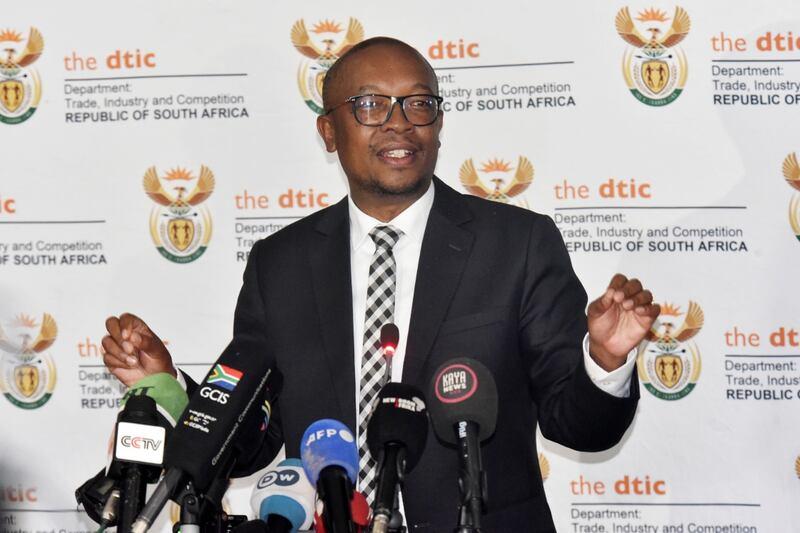
”South Africa is intensifying efforts to diversify export markets, protect jobs and maintain diplomatic engagement with the United States following Washington’s announcement that it intends to withdraw South Africa’s African Growth and Opportunity Act benefits from 1 January 2027. The government says it will support affected industries, pursue new international trade opportunities and continue negotiations with Washington while protecting national interests, constitutional responsibilities and economic development objectives.”
South Africa intensifies trade diversification and diplomatic engagement following US AGOA withdrawal decision
Introduction
South Africa is facing an important policy challenge following the United States government’s announcement of its intention to withdraw the country’s preferential trade benefits under the African Growth and Opportunity Act (AGOA), effective 1 January 2027. The decision has intensified discussions about international trade, economic diplomacy, industrial development, employment protection and the country’s long-term economic strategy.
The South African government has responded by reaffirming its commitment to constructive engagement with Washington while accelerating efforts to diversify export markets. The Department of Trade, Industry and Competition says the government will work with affected industries, protect employment and pursue practical solutions that preserve economic opportunities.
The development has emerged at a particularly important moment for South Africa, as policymakers seek stronger economic growth, improved investment conditions and greater resilience against international trade disruptions.
United States decision places South African trade policy under pressure
On 2 November 2026, the United States announced its intention to terminate South Africa’s participation in AGOA from the beginning of 2027. The American government cited concerns involving trade and investment barriers, corruption and national security and foreign policy interests.
The announcement represents a significant development in bilateral economic relations because AGOA has provided qualifying South African products with preferential access to the American market.
Under the programme, eligible African countries have benefited from preferential, generally duty-free access for qualifying goods entering the United States. The withdrawal means that South African exporters will lose those preferences, potentially increasing the costs associated with selling certain products in the American market.
However, the decision does not prohibit South African exports to the United States. Products can continue entering the American market under applicable ordinary trade arrangements and tariffs.
The distinction is important because the policy challenge involves maintaining competitiveness rather than simply finding a way to continue exporting.
The American decision also introduces uncertainty for companies planning production, investment and employment activities linked to international trade.
Government commits to protecting affected industries
South Africa’s Department of Trade, Industry and Competition has acknowledged concerns about the implications of the decision for workers, exporters, businesses and communities connected to AGOA-supported value chains.
The government says it is working closely with affected industries to assess the consequences and determine appropriate support measures.
Trade, Industry and Competition Minister Parks Tau has emphasised that the American decision does not define the entire relationship between South Africa and the United States.
Government policy therefore seeks to maintain engagement while protecting national economic interests.
Officials are also continuing consultations with social partners to strengthen productive industries, improve resilience and identify opportunities to protect employment.
These consultations are particularly important because the consequences of the withdrawal are unlikely to be identical across industries.
Some exporters may face higher costs, while others may be able to redirect products to alternative markets or continue competing through existing trade arrangements.
The government has consequently indicated that assistance will require sector-specific and company-specific assessments rather than a uniform response.
Understanding South Africa’s economic exposure
Government figures indicate that AGOA remains important but represents only part of South Africa’s broader economic relationship with the United States.
In 2025, approximately 89% of South African exports to the American market entered under ordinary World Trade Organisation most-favoured-nation terms. Around 10% entered under AGOA, compared with approximately 28% in 2024.
AGOA exports were valued at approximately US$1.7 billion in 2025, declining from US$4 billion in 2024.
These figures suggest that the country’s exposure to AGOA preferences has already declined considerably.
Nevertheless, the value of the affected exports cannot be interpreted as the precise amount of economic activity or employment that will disappear following the withdrawal.
The impact will depend on product competitiveness, applicable tariffs, market demand, alternative destinations and the capacity of businesses to adjust.
Government has also highlighted the broader bilateral economic relationship, which reached approximately US$28.8 billion in trade during 2025.
More than 600 American companies operate in South Africa, supporting approximately 134,600 jobs.
These economic connections provide an important foundation for continued engagement despite political disagreements.
Export diversification becomes a central policy priority
South Africa’s response increasingly centres on diversifying export destinations and strengthening international commercial partnerships.
The government has identified several markets and regional arrangements that could support this objective, including:
-
The African Continental Free Trade Area.
-
The Southern African Development Community.
-
India.
-
The European Union.
-
The United Kingdom.
-
China.
-
ASEAN.
-
MERCOSUR.
The diversification strategy is intended to reduce excessive dependence on particular markets and create additional opportunities for South African businesses.
However, market diversification is not an immediate substitute for established trading relationships.
Exporters must understand consumer demand, regulatory requirements, logistics costs, product standards and competition in destination markets.
Agricultural producers, manufacturers and emerging businesses may require additional assistance to access these opportunities.
The government has also indicated that new market opportunities have been secured for South African citrus, avocados, grapes and apples.
These developments could support agricultural exports and create opportunities for producers seeking greater international market access.
Nevertheless, successful diversification will depend on sustained investment in trade promotion, transport infrastructure, production capacity and international commercial relationships.
Industrial development and employment protection
The AGOA decision also raises questions about South Africa’s industrial development policy.
The government has consistently emphasised the importance of expanding domestic production, strengthening local manufacturing and increasing the value of exports.
These objectives are particularly relevant for industries that depend on international markets to support production and employment.
Automotive manufacturing, agricultural processing, mineral beneficiation and other export-oriented industries could be affected by changes in trade conditions.
South Africa’s Industrial Development Strategy seeks to strengthen productive capacity and improve the country’s participation in international value chains.
The government has also highlighted the importance of beneficiation, particularly in critical minerals.
The policy objective is to encourage more processing and value addition within South Africa rather than exporting raw materials without substantial domestic economic benefits.
However, expanding local production requires investment, reliable infrastructure, skilled workers and competitive operating conditions.
The AGOA withdrawal therefore reinforces the need for industrial policies that combine international market access with domestic economic development.
Employment protection remains an important consideration because export industries frequently support businesses beyond the immediate manufacturing or agricultural operation.
Transport providers, packaging companies, suppliers, logistics operators and local service businesses may also depend on export-related economic activity.
A reduction in orders could consequently affect communities beyond the companies directly involved in international trade.
Diplomatic engagement remains important
South Africa has indicated that it intends to continue pursuing a constructive relationship with the United States.
The government argues that trade disagreements should not necessarily undermine the entire bilateral relationship.
This approach reflects the importance of maintaining cooperation in areas such as investment, industrial development, critical minerals and broader international economic engagement.
South Africa has also maintained that its policy decisions must respect constitutional responsibilities, transformation objectives and international obligations.
The government says it previously offered additional concessions during negotiations with the United States but remains concerned that Washington introduced new issues outside the original discussions.
The diplomatic challenge is therefore to identify practical solutions without compromising domestic policy priorities.
A bilateral trade agreement has emerged as an important objective in South Africa’s efforts to maintain economic engagement with the American market.
President Cyril Ramaphosa has indicated that South Africa intends to pursue negotiations towards such an agreement while expanding alternative export opportunities.
Parliament raises concerns about workers and communities
The proposed withdrawal has also attracted attention from Parliament.
The Chairperson of the Portfolio Committee on International Relations and Cooperation, Supra Mahumapelo, described the development as concerning for trade, employment and bilateral relations.
Parliament has emphasised the potential consequences for workers and communities linked to affected industries.
Agricultural communities, including citrus-producing areas in the Western Cape and Northern Cape, have been identified among those facing possible exposure.
The committee has also cautioned against presenting speculative employment figures as confirmed job losses.
This distinction matters because the actual consequences will depend on how businesses respond to changing trade conditions.
The policy response therefore requires reliable information, detailed industry assessments and effective coordination between government, business and labour.
Parliament’s involvement also highlights the importance of oversight and public accountability as government implements support measures and negotiates with international partners.
Regional integration offers opportunities
The African Continental Free Trade Area represents another important dimension of South Africa’s policy response.
Regional integration could provide opportunities for businesses to expand sales across African markets, strengthen production networks and increase trade in manufactured goods and agricultural products.
The initiative aims to improve economic integration across the continent and reduce barriers to trade between participating countries.
South Africa’s participation could support industrial development by creating opportunities for companies to serve larger regional markets.
However, infrastructure limitations, customs procedures, transport costs and differences in regulatory requirements remain important challenges.
Regional integration must therefore be accompanied by improvements in logistics, trade facilitation and business support.
For smaller enterprises, access to information, financing and export assistance will be particularly important.
Policy implementation will determine the outcome
South Africa’s response to the AGOA withdrawal demonstrates the importance of translating policy announcements into practical economic outcomes.
Diversification strategies must produce new commercial opportunities rather than simply identify potential markets.
Support programmes must reach businesses that genuinely face difficulties.
Diplomatic engagement must generate measurable progress.
Industrial development initiatives must encourage investment, improve productivity and create sustainable employment.
These priorities require coordination between national departments, provincial authorities, municipalities, industry associations and labour organisations.
The government will also need to communicate clearly about the implementation of support measures and the progress of trade negotiations.
Transparent reporting could help businesses understand available assistance and evaluate whether policy interventions are producing meaningful results.
Conclusion
South Africa’s response to the American decision to withdraw AGOA benefits has become a major policy issue involving economic diplomacy, industrial development, employment protection and international trade.
The government is pursuing a combination of continued engagement with Washington, targeted support for affected industries and accelerated export diversification.
Although AGOA represents a relatively small proportion of South Africa’s total global exports, the consequences could be significant for particular businesses, workers and communities.
The broader bilateral relationship remains economically important, providing opportunities for trade, investment and cooperation.
South Africa’s challenge is to protect these relationships while strengthening domestic productive capacity and expanding access to alternative markets.
Ultimately, the effectiveness of the government’s response will depend on implementation.
New trade opportunities must translate into actual export growth, support measures must protect vulnerable businesses and communities, and industrial development policies must contribute to employment and economic resilience.
The AGOA decision therefore represents both an immediate challenge and an opportunity for South Africa to reassess its trade strategy, strengthen economic partnerships and pursue a more diversified development pathway.
The coming months will be crucial in determining whether diplomatic engagement and domestic policy reforms can reduce the economic risks associated with the withdrawal while supporting South Africa’s long-term growth objectives.



