




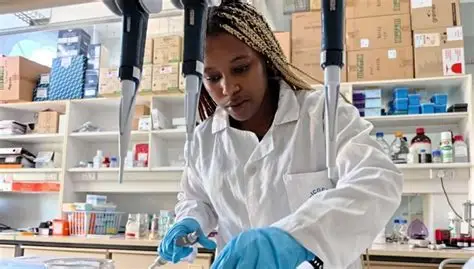
“South Africa has officially launched Phase 2 of its Active Pharmaceutical Ingredient (API) Innovation Cluster, a biotechnology program aimed at localizing drug production and reducing dependence on imports. The initiative strengthens healthcare resilience, fosters innovation, and positions South Africa as a pharmaceutical hub for Africa.”
South Africa’s biotechnology industry has taken a bold step forward with the launch of Phase 2 of the API Innovation Cluster, a program designed to transform the country’s pharmaceutical landscape. This initiative, spearheaded by the Council for Scientific and Industrial Research (CSIR) in collaboration with the Department of Science, Technology and Innovation (DSTI) and the Technology Innovation Agency (TIA), represents a strategic effort to reduce reliance on imported medicines and strengthen healthcare resilience.
Why APIs Matter
Active Pharmaceutical Ingredients (APIs) are the essential compounds that form the active components of medicines, from antibiotics to antiretrovirals. Historically, South Africa has relied heavily on imports from India and China, leaving the country vulnerable to supply chain disruptions. The COVID-19 pandemic exposed these weaknesses, as global shortages led to delays in critical medicine availability. By localizing API production, South Africa aims to safeguard its healthcare system against future crises while simultaneously building industrial competitiveness.
Achievements of Phase 1 (2020–2025)
The first phase of the API Innovation Cluster laid the groundwork for this ambitious project. Key achievements included:
- Infrastructure development: Establishment of laboratories and pilot manufacturing facilities.
- Capacity building: Training scientists, engineers, and technicians in pharmaceutical chemistry.
- Collaboration: Strengthening ties between academia, industry, and government.
This foundation enabled Phase 2 to shift focus from preparation to large-scale implementation.
Objectives of Phase 2
Phase 2 of the API Innovation Cluster has four primary goals:
- Localisation of API production: Develop homegrown manufacturing technologies to reduce imports.
- Strengthening regional value chains: Position South Africa as a pharmaceutical hub for Africa.
- Enhancing medicine security: Ensure consistent access to essential medicines.
- Driving industrial development: Create jobs, foster innovation, and boost competitiveness.
Strategic Importance
The launch comes at a time when global supply chains remain fragile. South Africa’s move to localize API production is not only about healthcare resilience but also about industrial competitiveness. By investing in biotechnology infrastructure, the country is positioning itself as a leader in pharmaceutical innovation across Africa.
Economic and Social Impact
The initiative is expected to generate thousands of jobs in biotechnology, engineering, and regulatory compliance. It will also stimulate South Africa’s biotech ecosystem, encouraging innovation and investment in related fields such as biologics and diagnostics.
Global Context
South Africa’s biotechnology push aligns with global trends toward regional pharmaceutical independence. Countries worldwide are investing in local production to reduce reliance on imports, and South Africa’s API Innovation Cluster places it at the forefront of this movement in Africa.
Expert Opinions
Dr. Thandiwe Mokoena, a leading oncologist, described the initiative as “a turning point in pharmaceutical sovereignty.” International experts have praised South Africa’s leadership in advancing biotechnology, noting that the API Innovation Cluster could serve as a model for other African nations.
Challenges Ahead
Despite its promise, the initiative faces challenges, including:
- High capital investment requirements.
- Need for regulatory adaptation to accommodate biotechnological innovations.
- Ensuring global competitiveness in pricing and quality.
Conclusion
The launch of Phase 2 of the API Innovation Cluster marks a pivotal moment in South Africa’s biotechnology journey. By localizing API production, the country is not only safeguarding its healthcare system but also laying the foundation for industrial growth and regional leadership in pharmaceuticals.



