




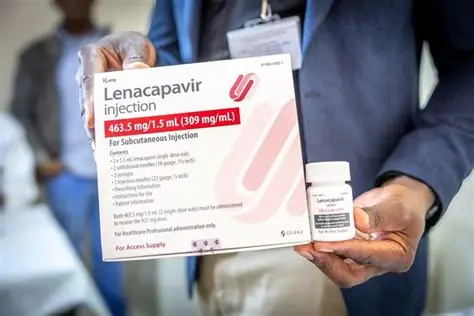
“South Africa has become the continent’s leader in deploying lenacapavir, a twice-yearly HIV prevention injection, with more than 31,000 users in just six weeks. Early rollout data shows overwhelming uptake, but challenges remain in ensuring equitable access across provinces and preparing for generic production.”
South Africa’s healthcare system has reached a pivotal moment in its fight against HIV/AIDS. On June 5, 2026, the Department of Health began rolling out lenacapavir (LEN), a long-acting HIV prevention injection administered every six months. Within six weeks, more than 31,297 South Africans had received the jab, accounting for over half of Africa’s total LEN users. This rapid uptake underscores both the promise of LEN and the urgency of addressing gaps in access and sustainability.
Background: Why LEN Matters
- HIV burden in South Africa: The country has one of the world’s highest HIV prevalence rates, with millions living with the virus.
- Challenges with daily oral PrEP: Adherence has been a persistent issue, as many individuals struggle to take pills consistently.
- LEN’s advantage: A twice-yearly injection reduces adherence barriers, offering a discreet, long-lasting solution.
Rollout Data
- Clinics involved: 360 government clinics (about 8% of public clinics) across six provinces.
- User uptake: 98.5% of HIV-negative individuals offered a choice between daily PrEP and LEN chose the injection.
- Provincial distribution: Gauteng and KwaZulu-Natal account for two-thirds of users, reflecting both population density and clinic availability.
Public Perception
Health Minister Aaron Motsoaledi acknowledged initial concerns about vaccine hesitancy, given lingering associations with COVID-19. However, uptake data suggests that LEN has overcome skepticism, with communities embracing the injection as a trusted prevention method.
Equity Concerns
Despite strong uptake, rollout data reveals disparities:
- Urban vs rural: Most clinics offering LEN are in urban centers, leaving rural populations underserved.
- Marginalized groups: Key populations, including sex workers and LGBTQ+ communities, face barriers in accessing services.
- Supply sustainability: Current doses rely heavily on donations, raising questions about long-term affordability until generics are produced locally.
Policy Implications
The LEN rollout is not just a medical intervention—it is a policy milestone. It aligns with South Africa’s broader 2026–2027 Health Plan, which prioritizes HIV prevention, cervical cancer elimination, and infrastructure reform. LEN is the flagship of this strategy, symbolizing the government’s commitment to universal health coverage and preparing for the eventual rollout of National Health Insurance (NHI).
International Context
At the International AIDS Conference in Rio de Janeiro, South Africa showcased its LEN rollout as a model for other African nations. With more than half of Africa’s LEN users, the country is setting the pace for regional adoption.
Challenges Ahead
- Funding: The R64.8 billion healthcare budget must stretch across multiple priorities, including infrastructure upgrades and cervical cancer elimination.
- Generics: Without local production, reliance on donated doses could create supply bottlenecks.
- Monitoring: Continuous data collection is needed to track effectiveness and ensure equitable distribution.
Expert Opinions
Public health experts argue that LEN could be a “game-changer” if scaled effectively. However, they caution that without addressing systemic inequalities, LEN risks becoming a solution for the privileged rather than a universal safeguard.
Conclusion
South Africa’s LEN rollout represents a bold step in healthcare policy, blending innovation with urgency. The injection’s popularity demonstrates public readiness for new prevention methods, but the government must ensure that equity, sustainability, and infrastructure keep pace with demand. If successful, LEN could help South Africa achieve its long-standing goal: reducing HIV transmission to the point where the epidemic is no longer a public health threat.



