




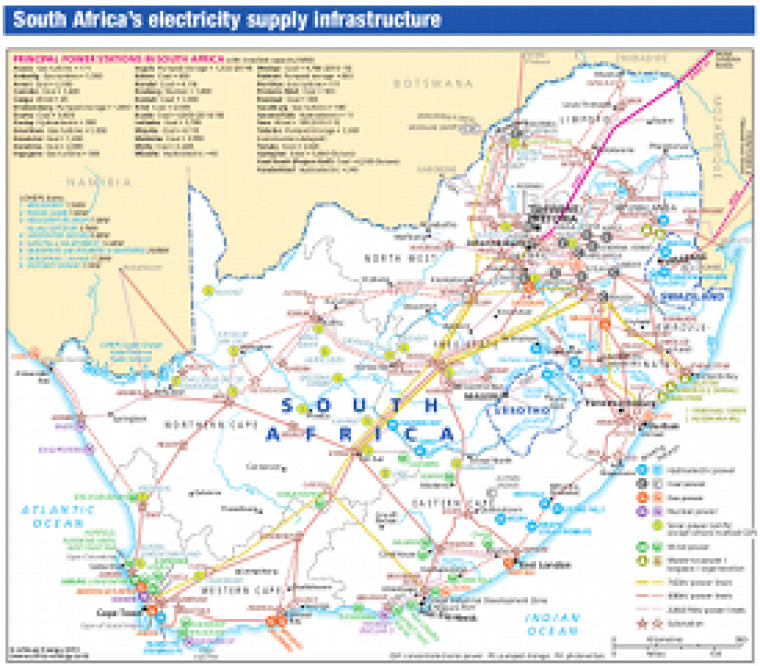
“South Africa’s Constitutional Court has halted offshore oil exploration, setting a precedent for stricter environmental regulation, while Gauteng residents endure a scheduled 13-hour power outage amid grid maintenance and infrastructure theft. At the same time, President Ramaphosa announced accelerated clean energy reforms unlocking billions in renewable investment, and Eskom reported its strongest performance in six years, removing the Eastern Cape from load reduction schedules.”
South Africa’s energy landscape is undergoing a dramatic transformation, marked by legal rulings, infrastructure challenges, and ambitious reforms. On 15 August 2026, three major developments converged: the Constitutional Court’s landmark decision against offshore oil exploration, Gauteng’s prolonged power outage, and Eskom’s operational turnaround. Together, these events underscore the tension between fossil fuel dependency, renewable energy expansion, and the urgent need for infrastructure modernization.
1. Constitutional Court Blocks Offshore Oil Exploration
The Constitutional Court’s ruling against offshore oil drilling along South Africa’s coastline is a watershed moment. The judgment emphasized environmental protection, community rights, and regulatory compliance. This decision effectively halts exploration projects that had been criticized for threatening marine ecosystems and coastal livelihoods.
- Impact: Energy companies face stricter compliance hurdles, while environmental groups celebrate a victory for sustainable development.
- Regional Context: The ruling aligns with global trends where courts increasingly intervene to enforce climate commitments.
2. Gauteng’s 13-Hour Power Outage
Residents and businesses in Gauteng endured a scheduled 13-hour blackout to allow critical grid maintenance. The outage highlights the fragility of South Africa’s municipal infrastructure, compounded by theft and vandalism of power assets.
- Community Response: Protests erupted in Johannesburg, linking electricity disruptions with broader frustrations over water outages and municipal failures.
- Economic Cost: Extended outages disrupt commerce, reduce productivity, and erode investor confidence.
3. Ramaphosa’s Energy Transition Push
President Cyril Ramaphosa reaffirmed South Africa’s commitment to a Just Energy Transition, announcing reforms that have unlocked more than R100 billion in renewable energy investment.
- Renewable Growth: Installed capacity has risen to nearly 16 GW, with another 32 GW expected by 2030.
- Household Adoption: Rooftop solar installations surged by 86% in three years, reaching 675,000 households.
- Policy Reforms: Removal of licensing thresholds for self-generation and restructuring Eskom’s transmission function aim to create a competitive electricity market.
4. Eskom’s Best Performance in Six Years
Eskom reported a year-to-date Energy Availability Factor (EAF) of 67.55%, its highest since 2020. This improvement allowed the removal of the Eastern Cape from load reduction schedules, benefiting 1.2 million customers.
- National Strategy: Eskom aims to eliminate load reduction nationwide by 2027.
- Operational Gains: Reduced unplanned outages and improved fleet management signal progress in Eskom’s turnaround plan.
5. Regional and Global Energy Context
South Africa’s developments are part of a broader regional and global energy shift:
- SADC Chairmanship: South Africa, now chairing the Southern African Development Community (SADC), pledged to prioritize infrastructure modernization and industrialization.
- West Africa: ECOWAS is advancing a $294 billion carbon market strategy, showing continental momentum toward climate-conscious energy policies.
- Global Benchmarking: South Africa’s transition is tied to the Zaronia benchmark rate, influencing capital flows into energy projects.
6. Risks and Challenges
Despite progress, risks remain:
- Legal Uncertainty: Energy companies may challenge the offshore oil ruling, prolonging uncertainty.
- Infrastructure Theft: Persistent vandalism undermines grid reliability.
- Coal Dependency: Renewable energy, though growing, still accounts for less than 10% of electricity generation, leaving coal dominant.
Conclusion
South Africa’s energy sector is at a crossroads. The Constitutional Court ruling signals a decisive shift toward environmental accountability, while Ramaphosa’s reforms and Eskom’s improved performance highlight momentum in clean energy and operational recovery. Yet, Gauteng’s blackout and infrastructure theft remind the nation of the urgent need for resilience. The coming years will determine whether South Africa can balance sustainability, reliability, and inclusivity in its energy future.



