




“South Africa’s startup ecosystem grew by 31.3% in 2026, making it the fifth-fastest growing ecosystem worldwide, with Cape Town driving innovation and talent attraction. Despite strong investment inflows and government support, entrepreneurs still face hurdles in financing and long-term sustainability.”
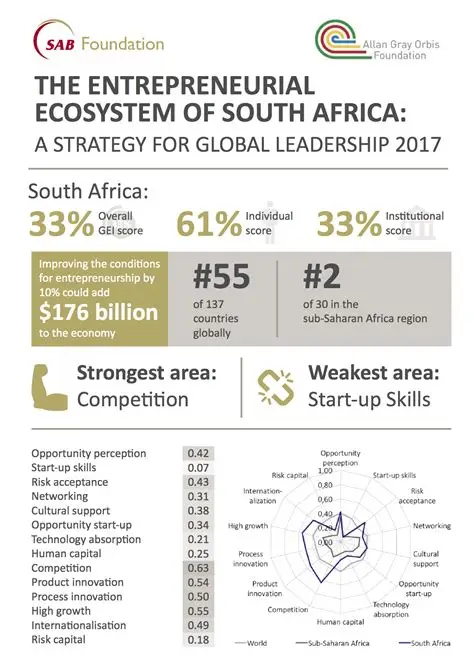
South Africa’s entrepreneurial landscape is undergoing a historic transformation. According to the StartupBlink Global Ecosystem Report 2026, the country posted a 31.3% growth rate, ranking fifth globally. This surge has placed South Africa firmly on the global innovation map, with Cape Town leading the charge as the continent’s most dynamic startup hub.
Cape Town: Africa’s Silicon Valley
Cape Town now accounts for over 40% of national startup activity, hosting accelerators, incubators, and funded startups. Its cosmopolitan environment, English-language proficiency, and 78% household broadband penetration make it an attractive base for distributed teams and international entrepreneurs. Increasingly dubbed “Africa’s Silicon Valley,” Cape Town is redefining the continent’s innovation narrative.
Talent Attraction
A 2026 survey revealed that 68% of international startups employing remote teams identified South African developers as “highly reliable” and “cost-effective.” This reputation is helping South Africa attract global contracts and remote work opportunities, embedding its role in the digital economy.
Investment Inflows
Foreign direct investment (FDI) into South African tech startups rose by 22% year-on-year, reaching approximately US$450 million by mid-2026. Fintech, edtech, and green technology sectors are scaling rapidly thanks to this capital injection.
Government Support
Initiatives such as the Township and Rural Entrepreneurship Programme (TREP) and SME-focused subsidies are diversifying participation beyond urban centers. These programs aim to bridge the gap between rural and urban entrepreneurship, ensuring innovation is not confined to metropolitan hubs.
Rising Entrepreneurial Intentions
Nearly 20% of South African adults intend to start a business within three years, compared to less than 10% in 2023. Early-stage entrepreneurial activity rose from 11.1% to 14.7%, though established business ownership declined from 6% to 4%, highlighting sustainability challenges.
Challenges Facing Entrepreneurs
Despite growth, entrepreneurs face hurdles:
- Access to Finance: Township and informal businesses struggle with limited funding.
- Sustainability: Many startups fail to transition from early-stage to established enterprises.
- Youth Unemployment: At 45.8%, youth unemployment underscores the urgency of entrepreneurship as a solution.
Global Comparisons
South Africa’s growth trajectory places it alongside emerging ecosystems in India, Brazil, and Eastern Europe, but with unique challenges tied to inequality and infrastructure gaps. Unlike Silicon Valley, where venture capital dominates, South Africa’s ecosystem relies heavily on government support and international partnerships.



